Santa Catalina Museum in Cusco

What to See at the Santa Catalina Museum
The Santa Catalina Museum is one of the most authentic cultural spaces—and one of the least crowded—in Cusco’s historic center. It operates inside the former Monastery of Santa Catalina de Siena, a cloistered religious complex founded in the 17th century. Today, it allows visitors to understand women’s monastic life, Viceregal-era art, and Cusco’s colonial architecture in a single visit.
Highlights include:
Cusco School Painting Collection
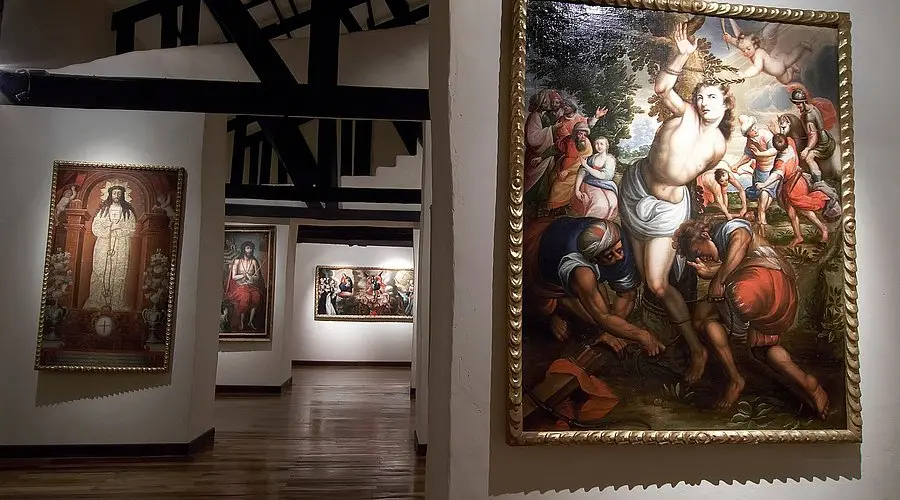
One of the museum’s greatest values is its collection of religious paintings from the Cusco School, an artistic movement that developed between the 17th and 18th centuries after the Spanish conquest.
What stands out most:
- Oil paintings with biblical and Marian themes, created for evangelization.
- Vivid colors, gold accents, and Andean symbolism integrated into Christianity.
- Works attributed to Cusco workshops connected to Diego Quispe Tito and his circle (often unsigned, as was common at the time).
These pieces hold not only artistic value, but also historical and anthropological importance, reflecting the process of cultural syncretism in colonial Peru.
The Cloister and Architecture of the Former Monastery
The museum route lets you appreciate the convent’s original architecture, preserved with remarkable authenticity.

Key architectural elements:
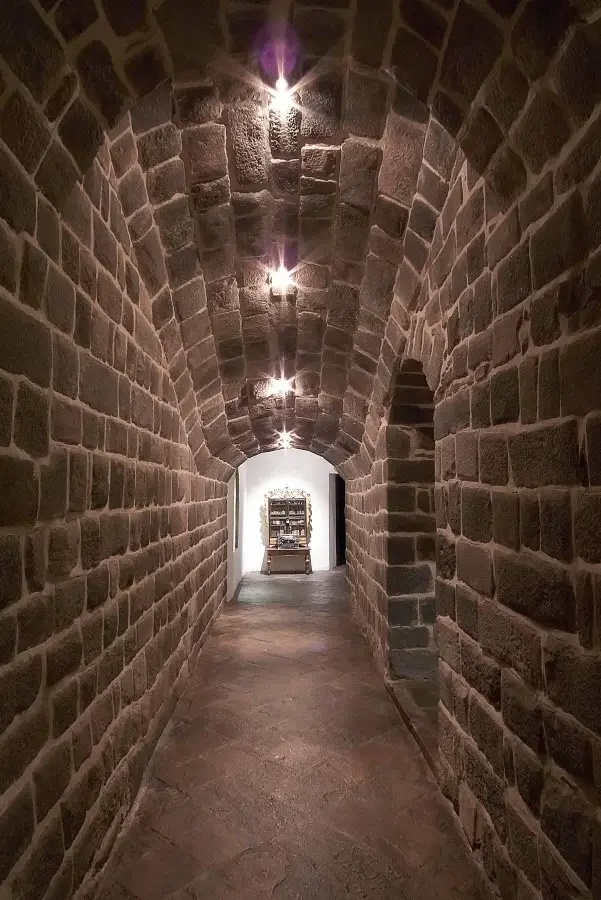
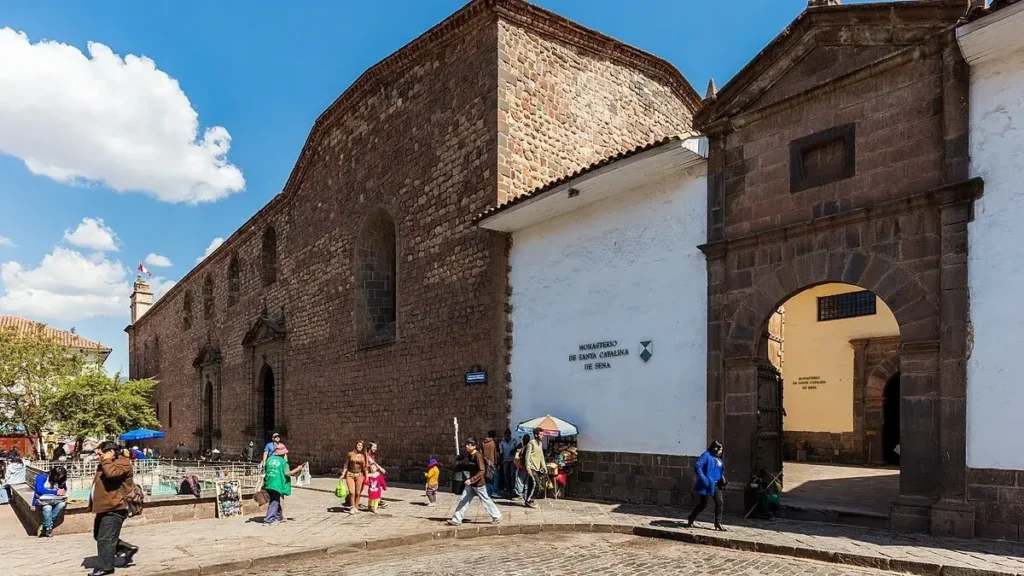
- Main cloister with stone arches.
- Adobe walls and stonework that reuses Inca stone.
- Quiet courtyards that reflect cloistered life.
- Narrow passageways and austere cells.
From a historical perspective, the monastery was also a space of social power, since only women from wealthy families could enter as nuns.
The Workroom and Daily Life of the Catalina Nuns
One of the most appreciated spaces for visitors is the Workroom, where daily life inside the monastery is explained.

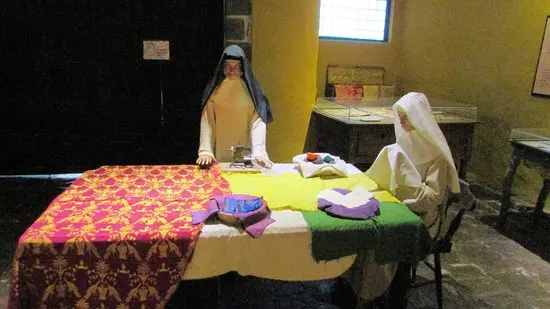
Here you can see:
- Tools used for embroidery and sewing.
- Household utensils from the colonial era.
- Liturgical objects used in daily practice.
- Re-creations of monastic cells.
This space helps you understand:
- The spiritual routine based on silence, prayer, and manual work.
- The convent’s economic role (embroidery, sweets, textiles).
- Women’s life in colonial Cusco—rarely told from this perspective.
Practical Visitor Information
Santa Catalina Museum ticket price
- General admission: S/ 10.00 (about $3.00).
- Students and Peruvian nationals: reduced rate (ask at the entrance).
Prices may vary slightly depending on the season.
Opening hours and best days to visit
Typical hours:
Monday to Saturday: 9:00 a.m. – 5:00 p.m.
Best days to visit:
Tuesday to Thursday, in the morning, when it’s less crowded and the visit feels quieter and more contemplative.
Is the Santa Catalina Museum included in the Cusco Tourist Ticket?
No. The Santa Catalina Museum is not part of the Cusco Tourist Ticket because it is independently managed by the religious congregation.
Location: Where Is the Santa Catalina Museum?
The museum is located right in Cusco’s historic center, just a short walk from the main attractions.
Reference address: Santa Catalina Ancha Street, very close to Cusco’s Plaza de Armas.
How to Get There from Cusco’s Plaza de Armas
- On foot (recommended)
Estimated time: 3 to 5 minutes
From the Plaza de Armas, take Santa Catalina Ancha Street heading west.
The museum entrance is clearly signposted.
- With a guided tour
Many cultural city tours include an external explanation of the monastery, although the interior visit is usually optional and self-guided.
If you’re interested in colonial Cusco history, religious art, women’s life in the Viceregal era, and authentic, quiet places, the Santa Catalina Museum is highly recommended—especially as a complement to the classic city tour.
Key Tips for Visiting the Santa Catalina Museum
Visiting this museum isn’t just entering an art space—it’s stepping into a former cloistered monastery, so it’s important to keep a respectful and contemplative attitude.
General tips:
- Wear comfortable shoes (the floors are colonial stone).
- Keep your voice low—it’s a place of quiet reflection.
- It’s ideal to combine this visit with other nearby museums in the historic center.
- Perfect for travelers interested in religious art, colonial history, and women’s monastic life.
Photo and video rules inside the museum
- Photos are allowed without flash.
- Flash is prohibited because it can damage colonial-era paintings.
- Professional recordings (tripods, large cameras, drones) are not allowed.
- Commercial filming is not permitted without prior authorization.
From a heritage preservation standpoint, these rules help protect original works from the 17th and 18th centuries.
Estimated visit duration
- Average visit: 30 to 45 minutes.
- In-depth visit (art/history lovers): up to 1 hour.
The museum is compact but rich in content—ideal for a well-organized cultural city tour without feeling tiring.
Frequently Asked Questions About the Santa Catalina Museum
Do I need to hire a guide for the museum?
It’s not mandatory, but it’s recommended if you want to:
- Understand the symbolism in Cusco School painting.
- Learn the real history of the Catalina nuns.
- Understand the convent’s architecture and its social role.
An official guide adds historical context that isn’t always explained on the museum panels.
What other religious art museums are there in Cusco?
Cusco is one of South America’s main centers of religious art. Besides the Santa Catalina Museum, top options include:
Museum of Religious Art of Cusco
Located in the Archbishop’s Palace next to the Cathedral. It houses masterpieces from the Cusco School.
Cusco Cathedral
Key to understanding Andean colonial art. It includes painting, metalwork, and religious sculpture.
Inca Museum
While not exclusively religious, it helps explain the pre-Hispanic context and the cultural clash after the conquest.
Visiting these places along with Santa Catalina gives you a more complete view of pre-Hispanic, colonial, and republican Cusco.
Can I visit the convent without entering the museum?
No. The former convent is only accessible through the museum because:
- The monastery no longer operates as an active cloister.
- Entry is regulated to preserve the heritage site.
- The areas open to the public are part of the museum circuit.
- You can’t enter only the cloister or courtyards without purchasing a museum ticket.
Final recommendation
The Santa Catalina Museum is ideal for:
- Travelers looking for authentic places that aren’t overcrowded.
- People interested in women’s history and colonial religious life.
- Cultural travelers who want to go beyond the “classic” highlights.
It pairs perfectly with a walk around the Plaza de Armas, the Cathedral, and nearby museums.