The 4 day Classic Inca Trail is the Inca footpath that reaches Machu Picchu through Inti Punku (the Sun Gate). It is part of the Qhapaq Ñan and crosses the Historic Sanctuary of Machu Picchu, a protected area of 32,592 hectares (80,540 acres), established in 1981 and listed by UNESCO in 1983 as a mixed World Heritage site.
Over four days you pass sites such as Llaqtapata, Runkurakay, Sayacmarca, Phuyupatamarca, and Wiñay Wayna, cross Warmiwañusca Pass (4,215 m / 13,829 ft), and descend from high grassland into cloud forest. The sanctuary covers several ecological zones, from high Andes to the edge of the high jungle. Surveys have recorded about 420 to 440 bird species and more than 340 orchid species, as well as mammals such as the Andean bear.
The program covers the named permit, campsites, meals, camping gear, and the work of the guide, cooks, and porters. You carry a daypack only.
Lugares que visitarás
Classic Inca Trail
Llaqtapata
Huayllabamba
Pacaymayu
Runkuraqay
Phuyupatamarka
Wiñay Wayna
Inti Punku sun gate
Machu Picchu
DAY 2: HUAYLLABAMBA – WARMIWAÑUSCA PASS – PACAYMAYO
Estimated hiking time: 6 to 7 hours.
Distance: 11 km (6.8 miles).
Highest point: Warmiwañusca Pass, 4,215 m (13,829 ft) a.s.l.
Campsite elevation: 3,620 m (11,877 ft) a.s.l.
DAY 3: PACAYMAYO – RUNKURAKAY – WIÑAY WAYNA
Estimated hiking time: 7 to 8 hours.
Distance: 16 km (10 miles).
Campsite elevation: 2,700 m (8,858 ft) a.s.l.
DAY 4: WIÑAY WAYNA – MACHU PICCHU – CUSCO
Estimated hiking time: 2 to 3 hours.
Distance: 5 km (3.1 miles) to the citadel via Inti Punku.
Elevation of Machu Picchu: 2,430 m (7,972 ft) a.s.l.
DAY 1: CUSCO – PISCACUCHO (KM 82) – HUAYLLABAMBA
Early hotel pickup in Cusco. The drive to Piscacucho (Km 82) takes about 2.5 to 3 hours, usually with a stop in Ollantaytambo. Piscacucho is the official checkpoint for the Classic Inca Trail. You register the permit there. Bring your original passport; the permit is issued in that name.
At the trailhead you meet the crew: guide, porters, cook, and campsite lead. Porters carry tents, food, and group gear; you carry a daypack. Before the bridge there is a short snack and the day’s briefing.
Day 1 follows the Urubamba (Vilcanota) River valley, then climbs the Cusichaca valley. The grade is moderate. You pass villages and working fields.
Qhanabamba. A small site visible from the trail. It shows that the valley held farming and control posts, not only a footpath.
Miskay. Rest stop (restrooms, water, photos). From here you can see the railroad toward Aguas Calientes. It is a trek logistics stop, not a major Inca site.
Willkaraqay and Llaqtapata (Patallacta). Willkaraqay sits on a hillside; from there you look down on Llaqtapata, at the meeting of the Urubamba and Cusichaca rivers. Llaqtapata was an agricultural and administrative center: terraces, buildings, and a plaza. It supplied the road network and was tied to the post at Willkaraqay. The stop is usually from the viewpoint.
Tarayoc. Usual lunch area on day 1.
In the afternoon, 3 to 4 hours remain to Huayllabamba (3,000 m / 9,843 ft), the last inhabited village on the classic route and the first campsite. The name refers to a grassy plain. There is a checkpoint and, at times, small stalls. After dinner the guide outlines day 2, the highest day of the trek.
Meals: lunch and dinner. Hiking time: 5 to 6 hours. Distance: 12 km (7.5 miles). Start: 2,720 m (8,924 ft) at Piscacucho. Campsite: 3,000 m (9,843 ft) at Huayllabamba.
DAY 2: HUAYLLABAMBA – WARMIWAÑUSCA PASS – PACAYMAYO
Wake-up around 5:00 a.m. Breakfast and coca tea, a common high-altitude drink; it does not replace time spent acclimatizing in Cusco or the Sacred Valley.
The day climbs from 3,000 m to the pass, then drops into the Pacaymayo valley. This is the largest elevation gain of the trek.
Ayapata (about 3,300 m / 10,827 ft). A rest stop, not tonight’s camp. Restrooms and water. From Huayllabamba it usually takes 1 to 2 hours.
Llulluchapampa (about 3,800 m / 12,467 ft). A high plain before the pass. Farmland gives way to grassland and, in places, Polylepis woodland. Lunch or a long break is often here. The air is thinner.
Warmiwañusca Pass (4,215 m / 13,829 ft). Also written Warmi Wañusqa; in English, Dead Woman’s Pass, from the ridge profile seen from the valley. Highest point of the four days. There is no Inca building on the summit; the place matters as geography and as the route’s high crossing. On clear days you can see trail already walked and, depending on the clouds, peaks such as Salkantay or Huayanay. The climb from Llulluchapampa is short in distance and hard because of the altitude.
The descent into the Pacaymayo valley takes 2 to 3 hours, with sections of stone steps. Pacaymayo (Paqaymayu) is usually glossed as “river of the pacay trees.” Camp is around 3,600 m (11,811 ft): the coldest night of the trek. Afternoon tea, dinner, and a briefing for day 3.
Meals: breakfast, trail snack, lunch, afternoon tea, and dinner. Boiled water. Lodging: camp. Difficulty: high. Distance: 11 km (6.8 miles). Hiking time: 6 to 7 hours. High point: 4,215 m (13,829 ft).
Longest day in distance, and the day with the most Inca architecture. You cross two passes lower than Warmiwañusca and drop toward the cloud-forest fringe.
Runkurakay. An oval or semicircular building beside the trail, read as a tambo (way station) and lookout for messengers and pack trains. It sits just before the second pass.
Runkurakay Pass (about 3,950–4,000 m / 12,960–13,123 ft). Second pass of the route. The climb from Pacaymayo is shorter than the day before.
Sayacmarca (Sayaqmarka; often translated as “dominant town” or “town on high ground”). A complex on a rock spur, with rooms, courtyards, and a narrow entrance. It controlled the pass and the valley. It is a node on the Inca road, not a city on the scale of Cusco.
Chaquicocha. Lunch and rest stop.
Next stretch: original stone pavement, a tunnel cut through rock, and cloud-forest plants (epiphytes, ferns, a change in birdlife). In one day the route drops from high grassland into high jungle.
Phuyupatamarca (“town above the clouds”). Terraces, buildings, and a system of fountains or channels. Fog is common because of height and humidity. Ceremonial use and control of the last stretch before Machu Picchu.
A long, uneven, often wet Inca staircase leads down to Wiñay Wayna (about 2,650 m / 8,694 ft), “forever young,” also the name of a local orchid. The site combines farming terraces, a run of cascading fountains, and living and ritual rooms on two levels linked by stairs. It is the largest complex on the trail before Machu Picchu. Camp is next to the ruins. In the evening many operators hold a farewell dinner with the porter crew.
Meals: breakfast, trail snack, lunch, tea, and dinner. Boiled water. Lodging: camp. Difficulty: moderate to high. Distance: 16 km (10 miles). Hiking time: 7 to 8 hours. Campsite: about 2,650 m (8,694 ft).
DAY 4: WIÑAY WAYNA – INTI PUNKU – MACHU PICCHU – CUSCO
Earliest start of the trek. Box breakfast. The Wiñay Wayna checkpoint opens on the sanctuary authority’s schedule (often around 5:30 a.m.; the time can change).
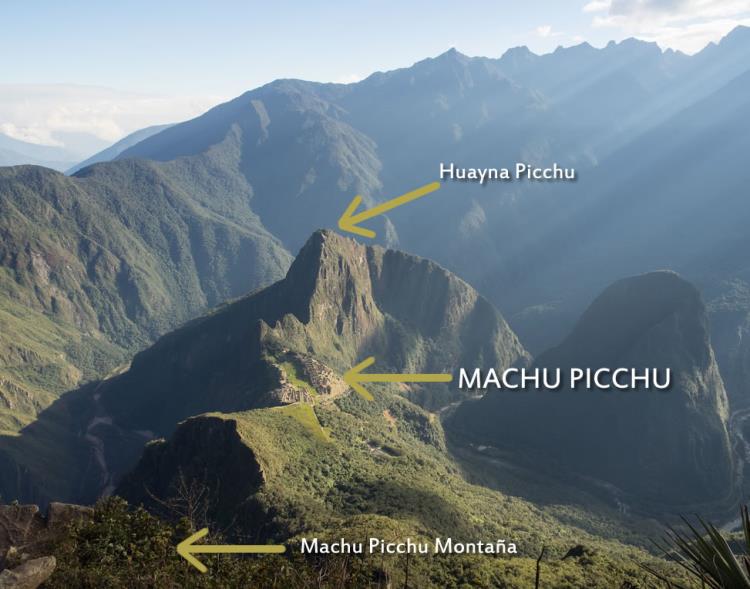
Inti Punku (Sun Gate). Inca entrance to Machu Picchu on the mountain road. From this stone gateway you see the citadel between Machu Picchu mountain and Huayna Picchu. About 2 hours of hiking from camp, including the final descent. Walking distance: about 5 km (3.1 miles).
Machu Picchu (2,430 m / 7,972 ft). A 15th-century Inca llaqta (settlement) with an agricultural sector and an urban sector, temples, a plaza, fine stonework, and a water system. Guided visit of about 2 to 3 hours on the circuit printed on your ticket.
Bus 25 to 30 minutes to Aguas Calientes. Lunch at a restaurant in town. Expedition train to Ollantaytambo, then a vehicle to your hotel in Cusco.
Meals: breakfast and lunch. Hiking time: 2 to 3 hours. Walking distance: 5 km (3.1 miles). Difficulty: easy to moderate. Citadel elevation: 2,430 m (7,972 ft)
What does the classic Inca Trail include?
Included
Briefing the night before at your Cusco hotel: itinerary, packing notes, and questions.
Hotel pickup 30 minutes before departure.
Transfer to Km 82, the start of the Inca Trail.
Guide in English or Spanish.
Inca Trail permit and Machu Picchu entry.
Three-person tents for two hikers (room for bags). Dining tent and kitchen tent, with tables and chairs.
Porter crew for tents, food, kitchen gear, and the dining tent.
Meals: 4 breakfasts, 4 snacks, 4 lunches, and 3 dinners. Camp meals are cooked on the trail. Day 4 lunch is at a restaurant in Aguas Calientes.
Day 1 breakfast is the en-route meal (usually in Ollantaytambo or similar). Breakfasts on the trail are on days 2, 3, and 4.
Morning coca tea in the tent on camping days.
Boiled water after breakfast and after lunch to refill bottles (1 liter per person at each service).
Hot drinks at lunch: coca tea, tea, and coffee.
Oxygen and a first-aid kit.
Vegetarian or other diets if requested at booking.
Guided visit at Machu Picchu (2 to 3 hours).
Bus down from Machu Picchu to Aguas Calientes.
Expedition train from Aguas Calientes to Ollantaytambo, then a private transfer to Cusco.
Sleeping bag rated to 5°F (−15°C).
Inflatable sleeping pads.
Duffel bag for personal gear.
Porter carry of up to 11 lb (5 kg) per person in the duffel (clothes and camp items). You carry your own daypack.
Two trekking poles per person.
Not included
Hike to Huayna Picchu or Machu Picchu Mountain: USD 75 per person, on request. Subject to availability; book several months in advance.
Tips for the guide, porters, and cook (customary; the amount is up to you).
Recommendations to bring
Original passport, valid for the travel dates. The Inca Trail permit is issued with those details and must match exactly.
Valid student ID (ISIC or other accepted card) only if you booked a student rate.
Broken-in hiking boots, plus sandals or light shoes for camp.
Layered clothing for day-to-night temperature swings: base layer, fleece or similar, gloves, neck gaiter or scarf, wool socks, hat, and shirts for hiking.
Headlamp.
Sunscreen, sun hat, and sunglasses.
Personal medication and a small first-aid kit.
Insect repellent (especially from day 3, in the cloud forest).
Rain jacket and rain pants.
Toilet paper.
Small towel.
Extra cash in Peruvian soles (dollars if you prefer) for drinks, tips, and purchases.
A 1-liter water bottle or canteen, at minimum, to refill with boiled camp water.
Immigration card (delivered on the airport upon entering Peru).
Good quality backpack (medium sized).
Water storage bottle or canteen: Camelbak bottles are recommended, but all need to be sufficient to hold 1-2 litres.
Comfortable shoes, preferably light with good soles (waterproof goretex for rainy seasons).
FOR YOUR BAGGAGE:
The train has a luggage limit of 7-8 kilograms per person. We therefore recommend bringing only important and necessary items to Machu Picchu.
4 Long sleeve shirts.
4 Breathable t-shirts.
4 Sets of underwear.
4 Pairs of socks.
2 Hiking trousers.
1 Shorts (suitable for hiking).
2 Fleece.
1 Waterproof coat and pants (for rainy seasons).
Sunglasses.
Sun hat.
Sandals – In case you want to visit the hot springs in Machu Picchu town.
Small quick-drying travel towel.
Portable battery charger for your phone and cameras.
TOILETRIES:
Sunscreen.
Facial moisturiser.
Insect repellent.
Hand sanitizer.
Wet wipes.
Toothbrush and toothpaste.
Toilet paper.
Personal medication.
First aid kit: band-aids, moleskin, etc.
INSIDE YOUR BACKPACK FOR THE MACHU PICCHU VISIT
Bring a small backpack; only backpacks up to 25 liters are allowed inside Machu Picchu. Larger ones must be left in the storage area located at the entrance to the Historic Sanctuary.
Water bottle.
Sun hat or cap.
Waterproof jacket or poncho.
Sunscreen.
Hand sanitizer.
Toilet paper and a small bag for waste.
Extra cash for souvenirs, drinks, and tips.
Información adicional
VISTADOME TRAIN FIRST CLASS OR INCA RAIL 360º TRAIN : For an additional payment of $40 USD per person, you can upgrade your tour package to the Vistadome class train or the Inca Rail 360º train for the return journey from Aguas Calientes to Ollantaytambo. The upgrade is subject to the availability of trains on the dates you wish to travel.
VISTADOME TRAIN
EXPEDITION TRAIN
PRIVATE SINGLE TENT:
* For an extra payment of 100 USD, you can get 01 private single tent for all the trip.
DISCOUNTS:
* Foreign tourists with a student card, under 25 years old, current expiration date of the same year, get a discount of 40 USD..
For more information write to us by email: machupicchuviajesperu@gmail.com or to WhatsApp +51 995050803
Huayna Picchu or Machu Picchu Mountain: USD 75 per person, on request.
Daily quotas are limited; book several months in advance, when you reserve the Inca Trail.
Once the quota is full, the hike cannot be added later.
Check availability with us before you pay.
Please read carefully the following information as it will help you answer all of your questions about our services and the Classic Inca Trail THE BRIEFING
The briefing will take place the night before the trek at 6 pm at your hotel “Any location in Cusco City” CAN I STORE MY LUGGAGE AT YOUR OFFICE?
Of course! During the Classic Inca trail to Machu Picchu, your main luggage can be stored at our office or at your hotel, both are free. Please pack what you will need for the trek! FOR BOOKING THE TOUR
We require a deposit of 30% of the total cost per person, in order, to purchase a permit for the Classic Inca Trail. You can make you deposit by VISA, MASTERCARD, AMERICAN EXPRESS or PAYPAL. WHAT ABOUT THE BALANCE?
The balance has to be paid in cash the date and time of the briefing. (we accept US dollars or Peruvian soles). We have many ATMs within the historical center of Cusco.
MAY I CHANGE THE DATE AFTER THE PERMITS HAVE BEEN BOUGHT?
Unfortunately Once permits have been bought the Peruvian government does not allow any changes so we can’t change any date after the permit has been bought. Permits are also not transferable nor refundable. If you cancel your Classic Inca Trail to Machu Picchu Trek, the deposit is not refundable. DO I NEED MY ORIGINAL PASSPORT ON THE CLASSIC INCA TRAIL TO MACHU PICCHU?
Yes! You have to bring your original passport and it is very important that it is the same passport number, you sent to us to book your Classic Inca Trail to Machu Picchu permit. Your passport will be checked when you enter Machu Picchu, the Inca Trail, and when you board the train. In case, you are renewing your passport, go ahead and send us a copy of your old passport to secure your permit and we can change it when you get your new passport. If so, please send us a copy of your new passport as soon as possible.
WHAT IS THE WEATHER LIKE?
The weather is very unpredictable and it’s difficult to foresee. We recommend to always dressing in layers as it is easier to adjust to different climates.
WHAT ABOUT ALTITUDE SICKNESS?
In general, if you exercise regularly and spend a couple of days in Cusco or the Sacred Valley, you will be able to acclimate normally. It usually take between 24 hours to 2 days. The recommended remedy for altitude sickness is to drink a lot of WATER and COCA TEA.
HOW MANY COOKS/PORTERS FOR THE GROUP?
You will have 1 cook per group. The number of porters will depend on the size of the group. For a group of 2 trekkers, there will have 4 porters, 4 trekkers will have 6 porters, 6 trekkers will have 8 porters, 8 trekkers will have 10 porters. DUFFEL BAG AND SMALL BACKPACK
The evening before you start your trek, you will be given a SMALL DUFFEL BAG to pack your clothes for the next four days. Your weight allowance is up to 7kg/15lbs. Your team of porters will carry your duffel bag, together with the food and camping gear. It’s important to be aware that you will not have access to your items in the duffel bag until the end of each day, as the porters will always be ahead of the group. During the trek, you will need a day backpack big enough to carry your personal belongings such as a warm jacket, a rain jacket, your camera, sunscreen, snacks, water, etc. A 30 to 50L backpack is sufficient. IS THE TREK DIFFICULT? DO I NEED TO BE FIT?
The Classic Inca Trail to Machu Picchu is a 42km (24.4 miles) hike through the Andes within the Cusco region. The maximum altitude reached is at (4,217m/13,907ft). On the second day of the trek, we will climb two mountains. The trail is a fairly difficult trek and you should be well prepared and healthy prior to starting it. You have to be moderately fit and take regular exercise. In preparation: try walking 15kms/9 miles in a day or working out in the months leading up to the trek. It is also important to be well acclimatized to the altitude. Try to spend at least 2 or 3 days in Cusco (3,350m/11,047ft) prior to starting the trek. ARE THERE TOILETS ALONG THE TRAIL?
Along the Inca trail to Machu Picchu, in all the camping sites and lunch points, you will find our private flushing toilets.
“Machu Picchu Viajes Peru” toilet facilities have an individual tent and a camping toilet with a seat. Our toilet is always set up a comfortable distance from our campsite. At night if you need to use the toilet it is readily accessible and clean, unlike the dirty facilities supplied by the government.
You will also find there sinks and water pipes to wash your hands after you use the facilities. WHAT HAPPENS IF I AM UNABLE TO FINISH THE TRAIL?
In the scenario that you are unable to finish the trek due to health reasons, we will assist you to go to the nearest town for help with transportation. We always carry oxygen on our treks for any respiratory problems. (Travel insurance is required and recommended). There are no refunds in the unlikely situation that you are unable to finish the trek.
Generally, those who have to be assisted off the trail are taken to Ollantaytambo and if they recover quickly they continue the journey towards Aguas Calientes (cost incurred by trekker) and visit Machu Picchu according to the original plan. ARE WE DROPPED OFF AT OUR HOTEL AFTER THE CLASSIC INCA TRAIL?
Absolutely!! Hotel pick-ups and drop-offs are included with all of our packages! If you have booked your hotel in Sacred Valley, we will drop you off there and vice versa.
AT WHAT TIME IS THE TRAIN’S DEPARTURE?
It will depend on the train availability but the idea is to give you as much time as possible in Machu Picchu and enjoy the amazing views on the way back to Cusco while on the train. Therefore, you will take the train at 4:22pm (Expedition or Inca Rail Train).
TIPPING
If you’re happy with the services provided, a tip – though not compulsory – is appreciated. While it may not be customary, it’s of great significance for the people who will take care of you during the trek. Of course, you are free to tip as much as you want, depending on your perception of the quality and the length of your trip.
Where does the tour start and end?
All ours tours begins with the pick up to the tourists at the door of their hotels “We pick up to our clients from any hotel located in the city of Cusco”, We recommend to stay close to the historical center of the city of Cusco, it will make it easier to find your hotel.
All our tours ends at the door of the hotels, it means the tours will finish with transfer to your respective hotel located in Cusco.
How to prevent altitude sickness?
The altitude sickness or soroche can cause you some discomfort during your visit such as dizziness, fatigue or nausea. Try to avoid alcoholic beverages and fatty foods before the visit.
To reduce symptoms, try to acclimatize yourself one day before to the altitude of the city of Cusco. We recommend to drink infusions of coca leaf (natural plant used by the Incas) is an excellent option to avoid the actitude sickness.
How is the accommodation?
For all the tours which include hotels. We offer hotels of 3* and 4* category, it has spacious and comfortable rooms, bathrooms, hot showers and bueffet breakfast. If the tourist like, you can change the accommodation to a better service. You just have to request it via email for an additional cost.
Which season is the best time to visit Cusco and Machu Picchu?
The dry season months between April to December are the best time to come and visit Cusco. During those days the possibility of rain is very little, so the roads are not swampy and the landscapes can be better to enjoy and takes the best pictures. On the other hand, the months with the most rain are January, February and March.
What are the coldest months in Cusco Peru?
The coldest season in Cusco are in the months from May to July. During this time the sun is strong in the day, but once it goes down or you spend much time in the shade, it can get very cold. It can go below zero at night, so warm clothes and Jackets are necessary to bring during these months.
How long in advance can I request the tour?
We recommend to purchase the tours weeks or months in advance, this because the train and Machu Picchu tickets has a limit of spaces, dont wait until the lust minute to book your tour, other ways you will not be able to find spaces.
During the trip to Machu Picchu, where the big luggages will stay?
The train company that operates to Machu Picchu does not allow the traveler to carry a suitcase that weighs more than 7 kilograms. To go up and visit the city of Machu Picchu, it is recommended to carry a light and small backpack for your convenience; the rest of the luggages you can leave them without any problem at the storage of your hotel in Cusco, or you can also leave at our office in Cusco city, we have an storage too.
Very Important in case you want to book the Inca trail to Machu Picchu:
CLASSIC INCA TRAIL 4 DAYS: If you want to book the Classic Inca Trail 4 days, you must to book early to get your desired date. Depending on the month you prefer to do the hike, you may need to book 6 months or more in advance, the limit of spaces for the inca trail 4 days is 400 people per each day.
SHORT INCA TRAIL: If you are booking the 1 or 2 day Inca Trail, it is preferred that you also book in advance, however 2 to 4 month in advance would be good, the limit of spaces for the short inca trail is 200 people per each day.
When is the best season to hike the Inca Trail?
The best time of year to do the inca trail is between May to October, with August and September being the best months of all. The trail is dry and the weather is lovely. During the rainy season between November to April the trail will be wet and can make it more difficult.
Inca Trail to Machu Picchu 4D/3N
Desde $871.2
/ por persona
En Machu Picchu Viajes Perú nuestro objetivo es crear la mejor experiencia posible para todos nuestros clientes. Prueba de nuestro esfuerzo son nuestras recomendaciones.
Our guide and driver could not have been more helpful. The bus was just for us but was modern, clean and tidy. The visits to the archaeological sites and the weavers were fascinating and breaks were timed around our needs. I can't recommend this outing too highly.
Doug C|Jan 2026
5.0
Sacred Valley, Machu Pichu, Rainbow Mountain
We spent 3 full days with Domingo combining the 2-day Sacred Valley/Machu Pichu tour
with 1-day Rainbow Mountain, both originated in Cusco. The entire trip was awesome! Domingo
provided everything we could as and more for our small group. He was punctual, helpful,
knowledgeable, and a pleasure to travel with. His experience and local knowledge was evident
as he (and our drivers) guided us across and through these cultural and geographic spectacles.
Domingo provided insight we couldn't have achieved on our own,
while giving us our space to explore and enjoy the surrounding at our own pace. Domingo
also provided technical assistance if required, such as assisting us with train schedules.
Domingo help make this trip a marvelous and memorable adventure..
Agos B|Jan 2026
5.0
An unforgettable tour
Excellent planning and accompaniment of the whole team. A lot of professionalism on the part of agents and guides.
The only thing we didn't like was the little lunch option. While the buffet was optional, there were no other options either or told us in any previous village if we wanted to buy our lunch beforehand. We were practically forced to buy that lunch which by the way we found expensive.
Meena G|Dec 2025
5.0
Above and Beyond! The Best Way to See Peru
Our 14-day trip to Peru with Machu Picchu Valjes was absolutely seamless from start to finish. Traveling to a new continent with children where there is a language barrier can be daunting, but this team made us feel completely at home. From the moment we landed until the moment we departed, we had professional, prompt guides and drivers by our side.
Mitzi A|Dec 2025
5.0
Positive experience for private tour
Very pleasant, clear and close experience from the point of view of doubts for quotation, simple and totally secure contract and international payment process, very personalized treatment and quick responses after payment and contract for the logistics of the activity, I highly recommend it, all the team very prepared and extremely friendly.
Excelente experiencia!!! Realmente es un lugar maravilloso donde se conjuga la naturaleza con el ingenio del inca. Ademas nuestro guia Yorgan nos acompaño a traves de estos dos dias brindando sus excelentes conocimientos academicos como asi tambien su respeto, compromiso y calidez en su trabajo!!!! Excelente!!!! La proxima pensamos recorrer el camino del inca de 65 km!!!! La empresa Machu Pichu Viajes es muy recomendable, horarios, los guias en gral. diempre muy atentos como asi tambien los hoteles muy buenos!!!
Hermoso viaje en familia!!!
Avis Bosso |Jul 2025
5.0
Excellent travel agency we are very happy to find them. we're all had wonderful time in this trip. Their service were so professional and helpful. I will 💯 % to recommend this agency. Special thanks for miss blossom she makes our trip so unforgettable. This is the trip of the life time .…
claudio strasorier |Abr 2025
5.0
Excelente empresa donde su gran cualidad es la comunicación antes durante y después del programa de viajes. Hicimos Cusco y Machu Picchu con yorgan el guía que con su humildad y robustez estos 4 días hizo una muy buena experiencia..las unidades de traslado los choferes, la ayuda en la gestión de entradas fueron de gran valor agregado..gracias seguro que volveremos
Jennifer Lewis |Feb 2025
5.0
this tour was a highlight of our trip to Peru! Our guide William was so knowledgeable, kind, and patient and took probably 100 fantastic photos of us. this was a day to remember and a highlight of our trip to Peru. having your company coordinate everything made it so much easier and was such a relief. thank you!
4.9/5 Opiniones
Más de 10,000 viajeros atendidos
¿Por qué reservar con Machu Picchu Viajes Perú?
Más que un viaje, creamos experiencias auténticas en Perú
Somos especialistas en diseñar viajes personalizados a Machu Picchu y los principales destinos del Perú, combinando organización impecable, atención cercana y profundo conocimiento local.
Trayectoria Comprobada
Años de experiencia operando rutas como Camino Inca, Salkantay y tours culturales, Paquete en todo el Perú.
Equipo Local Especializado
Guías certificados y personal capacitado que garantizan calidad y acompañamiento profesional.
Operación Segura y Formal
Empresa registrada y autorizada por entidades oficiales del sector turismo en Perú.
Compromiso con la Comunidad
Trabajamos con proveedores locales fomentando desarrollo sostenible y turismo responsable.
Machu Picchu Viajes Peru es un Empresa altamente Recomendado en Tripadvisor, calificado como una de las mejores empresas de turismo tour operador a nivel nacional, Ganadores del premio de excelencia 2025.
Machu Picchu Viajes Peru es una empresa que cuenta con todas las autorizaciones por parte del gobierno Peruano, autorizaciones que nos certifican como una empresa legalmente constituida, con multiples certificados de excelencia.
Machu Picchu Viajes Peru cuenta con los más altos estándares sociales y ambientales en el mercado de operadores turísticos, lo que significa que practicamos un turismo sostenible y responsable con el medio ambiente.
Explore Peru in 13 Amazing Days: History, Nature and Adventure.
(GROUP TOUR)
DestinationsLima City Tour, Ballestas Islands, Ica Huacachina, Nazca Lines, Arequipa City Tour, Chivay, Colca Canyon, Lake Titicaca Puno, Uros Taquile Islands, Cusco City Tour, Sacred Valley of the Incas, Moray, Machu Picchu, Rainbow Mountain













 10% OFF
9 Days - 8 Nights
10% OFF
9 Days - 8 Nights