Inca Museum of Cusco: Prices, Opening Hours, and Visitor Guide 2026

What to See at the Inca Museum in Cusco?
The Inca Museum is one of the most important cultural spaces in Peru for understanding the history, science, religion, and social organization of the Andean world—from pre-Inca cultures to the Inca Empire. Its collection is made up of thousands of original artifacts, carefully classified.
The collection of Inca mummies and trepanned skulls
This section reveals the high medical and scientific level achieved by the Incas:
- Trepanned skulls with surgical perforations made to treat trauma, infections, or medical rituals.
- Evidence of bone healing, showing that many patients survived these surgeries.
- Use of medicinal plants, natural anesthetics, and advanced techniques—without modern metal instruments.
- Human remains associated with funerary rituals, social status, and worldview.
Historical value: Inca cranial trepanation is considered one of the most advanced surgical practices in the pre-Hispanic world.

Textiles, metallurgy, and Inca quipus
This area helps you understand how the Inca Empire sustained its economic, political, and symbolic power.
Inca textiles:
- Fine cumbi textiles, reserved for the nobility and the Inca.
- Made with alpaca, vicuña, and llama fibers.
- Geometric designs indicated social rank, administrative function, or ethnic identity.
Metallurgy:
- Ceremonial and utilitarian objects in gold, silver, and copper.
- Highly developed smelting, hammering, and alloying techniques.
- Gold represented Inti (the Sun god) and was not used as currency.
Quipus:
- Systems of cords and knots used for accounting, censuses, tributes, and historical records.
- Each color, knot type, and position had a specific meaning.
- They reflect a complex and efficient state administration—without alphabetic writing.
The architecture of the Admiral’s House
The museum is housed inside the historic Admiral’s House, one of the best examples of colonial architecture in Cusco:
- Built in the 17th century on perfectly fitted Inca foundations.
- Combines Inca stone walls with Spanish colonial balconies, arches, and a courtyard.
- Represents the process of cultural layering after the conquest.
- Its earthquake-resistant structure shows Inca engineering later reused by the Spanish.
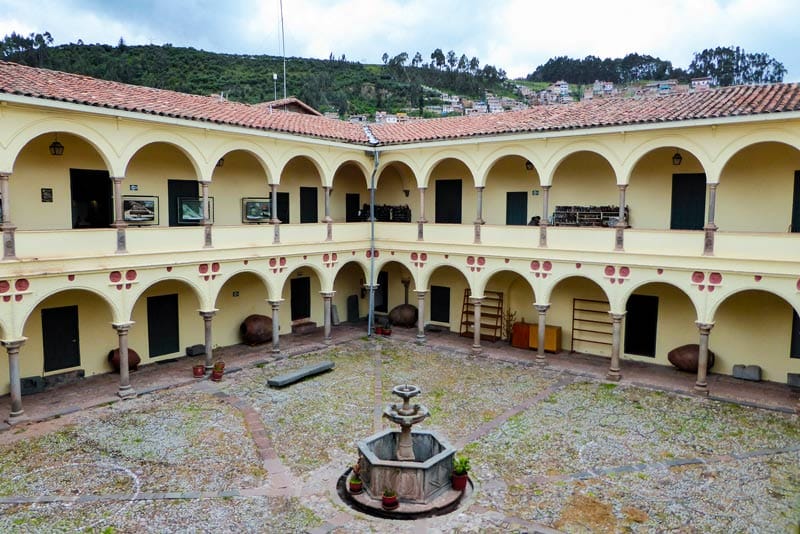
Historical interpretation: The building itself is a living lesson about the encounter—and conflict—between two civilizations.
How to Get to the Inca Museum
Location: Cusco’s Historic Center, just a few meters from the Main Square (Plaza de Armas).
Ways to get there:
- Walking: 3 to 5 minutes from the Plaza de Armas.
- Taxi: Ask to go to “Admiral’s House – Inca Museum”.
- City Tour: Included in many cultural tours in Cusco.
Tip: Visit it before exploring archaeological sites like Sacsayhuamán or Pisac to better understand what you’ll see out in the field.
Helpful visitor information
- Recommended time: 1.5 to 2 hours.
- Recommended: visit with a specialized guide.
- Suitable for all types of travelers.
- Photography allowed (no flash).
Inca Museum Entrance Fee in 2026
As of early 2026, the Inca Museum maintains an affordable admission policy to promote education and the dissemination of cultural heritage.
Estimated rates
- Peruvian or foreign adult: approx. S/ 10.00 – $3.00
- Students (valid ID required): approx. S/ 5.00 – $2.00
- Children: free entry or a symbolic fee (depending on age)
Prices may change due to regulations from Peru’s Ministry of Culture, but historically the museum has kept low costs considering its high historical value.
Is admission included in the Cusco Tourist Ticket?
Yes. Admission to the Inca Museum is included in the Cusco Tourist Ticket (BTC), both in the full version and in some current partial tickets.
This means:
If you already have the BTC, you don’t need to pay an additional entrance fee.
It’s an excellent option for travelers who plan to visit museums and archaeological sites in Cusco.
Guide tip: The Inca Museum is ideal as your first stop before visiting archaeological parks like Sacsayhuamán, Pisac, or Ollantaytambo, because it gives you the context for everything you’ll see later.
Opening Hours and Location
Typical opening hours
- Monday to Friday: 8:00 a.m. – 6:00 p.m.
- Saturdays: 8:00 a.m. – 4:00 p.m.
- Sundays and holidays: reduced hours or closed (recommended to confirm)
Location
It’s located in Cusco’s Historic Center, just a few meters from the Plaza de Armas.
It operates inside the historic Admiral’s House.
Live artisans: the Inca Museum courtyard
One of the most valued aspects for visitors is the presence of traditional artisans working live inside the museum’s courtyard.

What can you see?
- Andean weavers using ancestral looms.
- Textile-making with alpaca and sheep wool, dyed with natural pigments.
- Techniques passed down from pre-Hispanic and colonial times.
- Direct explanations of the process, symbolism, and traditional use of the garments.
This experience connects the past with the present and shows that Inca culture is not extinct—it’s alive in Andean communities.
Is the Inca Museum worth visiting?
Definitely yes. For a very affordable cost (or even free with the BTC), visitors get:
- A deeper understanding of the Inca civilization.
- Historical context before visiting Machu Picchu.
- Direct contact with living traditions.
- One of the best-preserved museums in Cusco.