What to Pack for the Inca Trail
Packing your backpack for the Inca Trail is not the same as packing for just any hike. The route crosses very different ecological zones in just a few days, climbs above 4,200 meters above sea level at Warmiwañusca Pass, and exposes hikers to sudden temperature changes between day and night. That is why, more than a generic trekking list, what you need is luggage specifically prepared for the real conditions of the trail.
In this guide, you will find what clothing, footwear, documents, and accessories to bring according to the route and season, along with the weight limits established by the porter system and the rules that must be respected inside the Historic Sanctuary of Machu Picchu.
What to Bring to the Inca Trail According to the Route and Season
Your luggage will vary depending on the trek version you choose. The Classic 4-day, 3-night Inca Trail requires more warm clothing because it includes two nights of high-altitude camping, while the Short 2-day, 1-night Inca Trail, which starts at Km 104 in Chachabamba, requires lighter luggage because there is only one night away from accommodation with services.
The season also determines what you should bring. Between April and September, during the dry season, sunny days and very cold nights are common, so the focus should be on thermal clothing and sun protection. Between October and March, during the rainy season, the weight is divided between waterproof clothing and light layers, as daytime temperatures rise but rainfall is frequent. It is worth remembering that the Inca Trail network closes throughout February for maintenance, so that month is not an option for this route.
Required Documents for Hiking the Inca Trail
The Inca Trail is a protected area regulated by Peru’s Ministry of Culture, so document control is strict at every access point. These are the documents you must bring without exception:
- Original physical passport, valid through the date of travel. Digital photos, scans, or photocopies are not accepted at the checkpoint, as the permit is linked to the exact details of the document.
- The Inca Trail permit, provided by the operating agency. It is personal and non-transferable: the name and passport number must match exactly with the information registered at the time of booking.
- Machu Picchu entrance ticket, which is currently purchased separately from the trekking permit.
- If your passport was renewed after booking the permit, it is essential to also bring the previous document used to make the reservation.
Because daily access is limited to 500 people, including tourists, guides, cooks, and porters, any mistake in the documents may result in denied entry at the checkpoint, with no possibility of correcting it on the spot.
Best Time to Hike the Inca Trail and How to Prepare Your Backpack
The dry season, from April to September, offers the clearest skies and firmest trails, making it the most requested time of the year. If your trip falls during these months, your backpack should prioritize layers for cold nights and stronger sun protection, since ultraviolet radiation above 4,000 meters above sea level is 25% to 30% more intense than at sea level.
March, October, and November work as shoulder season: there are fewer crowds on the trail, but the weather is more unpredictable, so it is best to bring both warm clothing and a lightweight waterproof layer in case unexpected rain appears.
In any season, the rule for packing is the same: if you are unsure whether you need something or not, it is better to leave it behind. The weight limit forces you to prioritize.
Weather on the Inca Trail: Temperatures, Rain, and Changes Along the Route
The Inca Trail crosses several ecological zones, from warm valleys to puna highlands, so the weather can change noticeably within just a few hours of hiking.
During the day, in low and middle areas, temperatures can reach 20 to 25 degrees Celsius under strong sun. However, as you approach Warmiwañusca Pass, also known as Dead Woman’s Pass, the highest point of the route at more than 4,200 meters above sea level, the wind and cold can be felt even under clear skies.
At night, especially at high-altitude campsites during the first two days, temperatures can drop below 0 degrees Celsius, especially during the dry season. During the rainy season, nights are slightly less cold, but rainfall can occur at any time of the day, usually as short but intense afternoon showers.
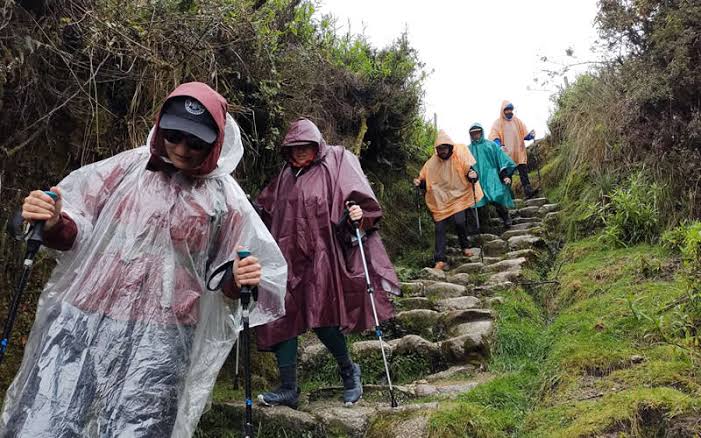
This variability is the reason why dressing in layers is the most effective strategy throughout the entire route, not just a generic recommendation from a catalog.
Recommended Clothing for the Inca Trail
Clothing for Hiking During the Day
During hiking hours, it is best to wear quick-drying technical clothing, never cotton, because cotton retains moisture from sweat and rain and takes a long time to dry, which can cause hypothermia in the higher parts of the route. Lightweight shirts and pants made of synthetic or technical-blend materials, along with a fleece-type mid-layer, are the most practical combination for adapting to temperature changes between sunny and shaded sections.
Warm Clothing for the Nights
For nights at camp, especially the first and second nights, additional thermal clothing is needed: a down or synthetic jacket with good thermal performance, a hat that covers the ears, and gloves. In this case, it is useful to bring a thick cotton or fleece garment to change into when arriving at camp, as it helps retain body heat while the body recovers from the day’s effort.
Waterproof Clothing for the Rainy Season
Regardless of the month you travel, a lightweight waterproof jacket is a non-negotiable item in your backpack. During the rainy season, it is best to add waterproof pants and a backpack rain cover, as rain along the Inca Trail corridor is usually short but intense and can appear without warning, even during months considered part of the dry season.
Proper Footwear for the Inca Trail
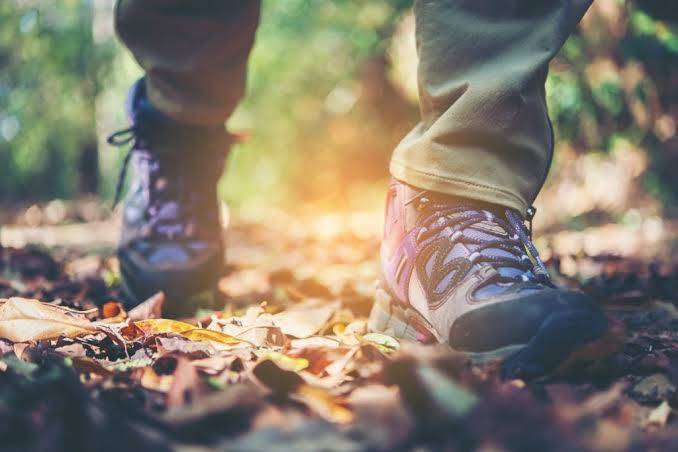
Footwear is probably the most important item in your entire luggage. Trekking boots with good traction are recommended, and they should already be broken in—never worn for the first time on the hike—to avoid blisters on terrain where there is no quick way to solve that problem. The trail combines uneven stone steps, damp sections caused by mist, and steep descents, so ankle support and a sole with good grip are more important than the weight or appearance of the boot.
In addition to boots, it is useful to bring light sandals or camp shoes to wear at the campsites at the end of each day, allowing your feet and main footwear to air out overnight.
Personal and Hygiene Items to Bring on the Inca Trail
Within the Inca Trail corridor, there are environmental restrictions that directly affect which hygiene products you can bring. Recommended items include:
- A small quick-dry towel, so it does not take up too much space or weight.
- Biodegradable soap and shampoo, as conventional products are prohibited inside the corridor due to environmental regulations.
- Toilet paper and biodegradable wet wipes.
- Hand sanitizer.
- Lip balm with sunscreen.
- Perfumes and colognes should be avoided because they attract insects and are not suitable in protected natural areas.
Basic First Aid Kit for the Inca Trail
Although authorized operators are required to carry a first aid kit and an oxygen tank for the group, each traveler should bring a basic personal first aid kit with:
- Regular medication if you are following any treatment.
- Common pain relievers and anti-inflammatory medication.
- Altitude sickness tablets, if previously recommended by a doctor.
- Band-Aids and some gauze for minor blisters or scrapes.
- Oral rehydration salts.
- Insect repellent, especially for the cloud forest sections where mosquitoes are common.
This personal first aid kit does not replace the group’s kit, but it does help cover immediate needs without depending on the guide for every minor discomfort.
What Backpack or Luggage to Bring on the Inca Trail
Daypack for the Hike
The backpack each hiker carries during the walk, known as a daypack, should have a capacity of 30 to 40 liters and carry only what is needed while hiking: water, sunscreen, camera, snacks, a lightweight waterproof layer, and your passport. This backpack is the traveler’s sole responsibility throughout the entire route.
Bag or Luggage for the Porter
In addition to the daypack, you are given a special bag or duffel, usually made of canvas, where you pack everything you do not need while hiking: spare clothes, sleeping bag, inflatable sleeping pad, and hygiene items. This bag is carried by the porter and is only available at the campsites, never along the trail.
Allowed Weight and How to Organize Your Luggage
The weight limit for personal luggage carried by the porter is usually between 6 and 7 kilos, depending on the operator, and includes the sleeping bag and sleeping pad if they are not carried separately. The daypack each person carries should not exceed 7 kilos in total, as carrying more weight without good physical condition directly affects performance, especially during the ascent to Warmiwañusca on the second day.
To organize your luggage better within these limits, compression bags or packing cubes are very useful: they allow you to separate clean, damp, and dirty clothing, and quickly access what you need without having to empty your entire backpack at every stop.
Useful Accessories for the Hike
Trekking Poles, Headlamp, and Water Bottle
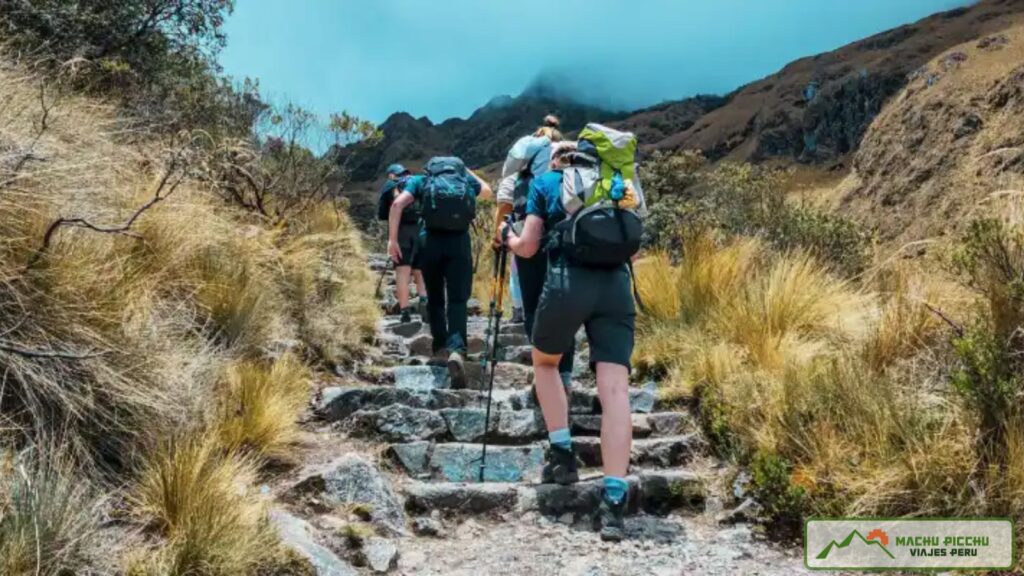
Trekking poles help reduce impact on the knees during long descents with uneven steps. It is important that they have rubber tips, as metal tips damage the original stone paving of the trail, and their use without protection may be restricted in some sections.
A headlamp is essential for the departure toward Inti Punku, the Sun Gate, which in several itineraries begins before sunrise, around 3:30 a.m., in order to reach Machu Picchu with the morning light.
For water, the most practical option is a reusable bottle or a camelback-style hydration system, since single-use plastic bottles are restricted inside the Inca Trail corridor and Machu Picchu.
Sunscreen, Insect Repellent, and Sunglasses
Sunscreen should be SPF 50 or higher, water- and sweat-resistant, and reapplied every two hours during the hike because of the level of ultraviolet radiation at high altitude. Sunglasses with UV protection are just as important, especially in open sections near Warmiwañusca. Insect repellent is essential in the cloud forest sections, especially near Wiñay Wayna.
What Not to Bring on the Inca Trail
Some items are better left out of your backpack, either because of weight, environmental regulations, or because they simply have no real use on the route:
- Cotton clothing such as jeans, T-shirts, or cotton underwear, because it retains moisture and does not dry quickly.
- Single-use plastic bottles, as their entry is restricted.
- Soap, shampoo, or hygiene products without a biodegradable formula.
- Perfumes or colognes.
- Drones, as their use is prohibited inside the Historic Sanctuary of Machu Picchu and the Inca Trail corridor without express authorization from the Ministry of Culture.
- Professional-size photography tripods, which may be retained at checkpoints. Small flexible mini tripods are usually allowed.
- Canned food or food packaged in glass, due to the extra weight and waste-management restrictions inside the sanctuary.
- Trekking poles without rubber tips.
Tips Before Packing for the Inca Trail
Check the Weather Before Your Trip
The weather in the Andes changes quickly and varies by season, so it is a good idea to check the forecast for Cusco and the Inca Trail area in the days before departure. This helps you decide whether to add an extra warm layer or prioritize waterproof gear.
Pack Light and Prioritize What You Need
Available weight is limited, and you cannot improvise halfway through the route. Before putting something in your backpack, it is worth asking yourself whether you will really use it during the four days of hiking. Anything without a clear purpose is usually unnecessary.
Keep the Inca Trail Rules in Mind
The Inca Trail is an archaeological and natural protected area managed by the Ministry of Culture, DIRCETUR, and SERNANP. Camping outside designated areas, lighting campfires, leaving trash on the trail, or using products that harm the ecosystem is prohibited. All waste generated must be carried back in bags and disposed of at the end of the trek. Following these rules not only helps avoid penalties, but also helps preserve one of the world’s most important trekking routes for future generations of travelers.
Rate us and share it on your social media