Best Time to Visit Machu Picchu: Month-by-Month Guide 2027

Visiting Machu Picchu takes some planning, especially when it comes to choosing your travel dates. The weather in the Andes changes a lot depending on the time of year, and that directly shapes your experience: from how clearly you can see the mountains to how many other visitors you’ll share the site with.
When is the best time to visit Machu Picchu? It depends on your priorities. If you want clear skies and less rain, the dry season (May to September) is your best bet. If you’d rather avoid crowds and don’t mind the chance of rain, the rainy season (November to March) has its advantages. There are also shoulder months that offer the best of both.
In this guide, you’ll find practical information on temperatures, rainfall, crowd levels, prices, and special events for every month of the year, so you can decide which period best fits your expectations and budget.

Tour Lima, Cusco, Machu Picchu, Rainbow Mountain, Lake Titicaca, Puno 9D/8N
Machu Picchu weather: two distinct seasons
Unlike destinations with four clearly defined seasons, Machu Picchu’s year is split into two main periods: dry and rainy. Each has its own characteristics that will shape your visit.
Dry season (May to September): clear skies and high demand
Main months: May, June, July, August, September
Shoulder months: April and October
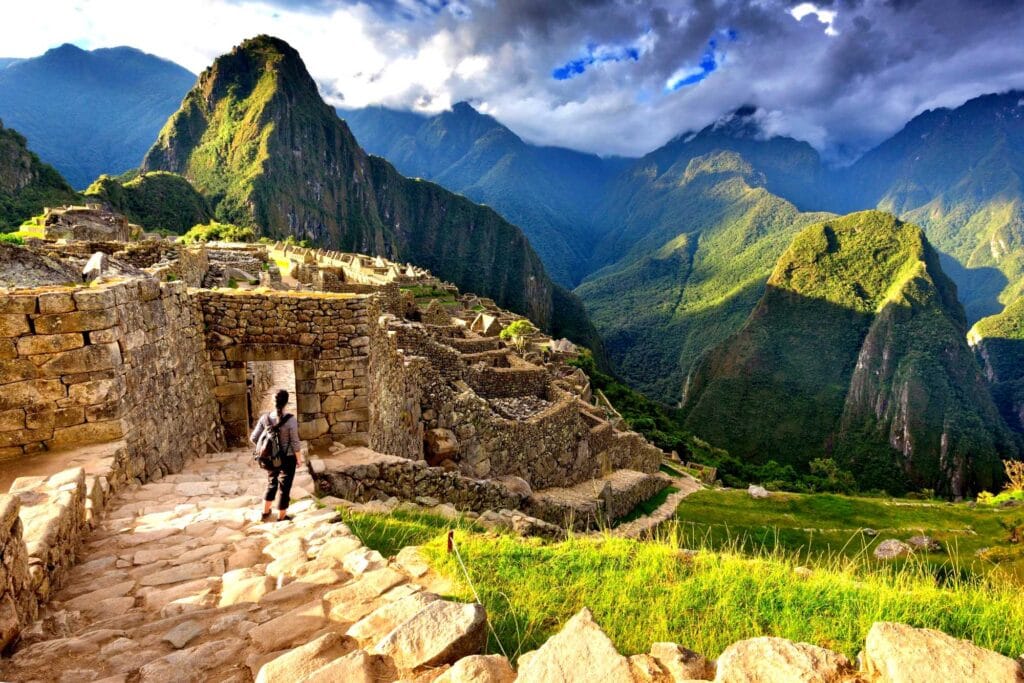
During these months, the chance of rain drops significantly. Mornings usually start with clear skies, although clouds can build up in the afternoon. Daytime temperatures range from 19°C to 21°C (66°F to 70°F), while nights drop to 0°C to 7°C (32°F to 45°F), especially in June and July.
- Pros: fog-free panoramic views, dry and safe trails, ideal for photography
- Cons: more visitors (up to 5,600 people per day in July and August), higher prices for hotels and tours, tickets need to be bought months in advance
- Rainfall: fewer than 5 rainy days per month on average
- Occupancy: 90% to 100% of daily capacity
This season lines up with winter break in the Southern Hemisphere and summer vacation in the Northern Hemisphere, which explains the high demand. If you plan to travel in July or August, buy your tickets at least 2 to 3 months ahead.

Rainy season (November to March): green landscapes and fewer tourists
Main months: December, January, February, March
Shoulder month: November
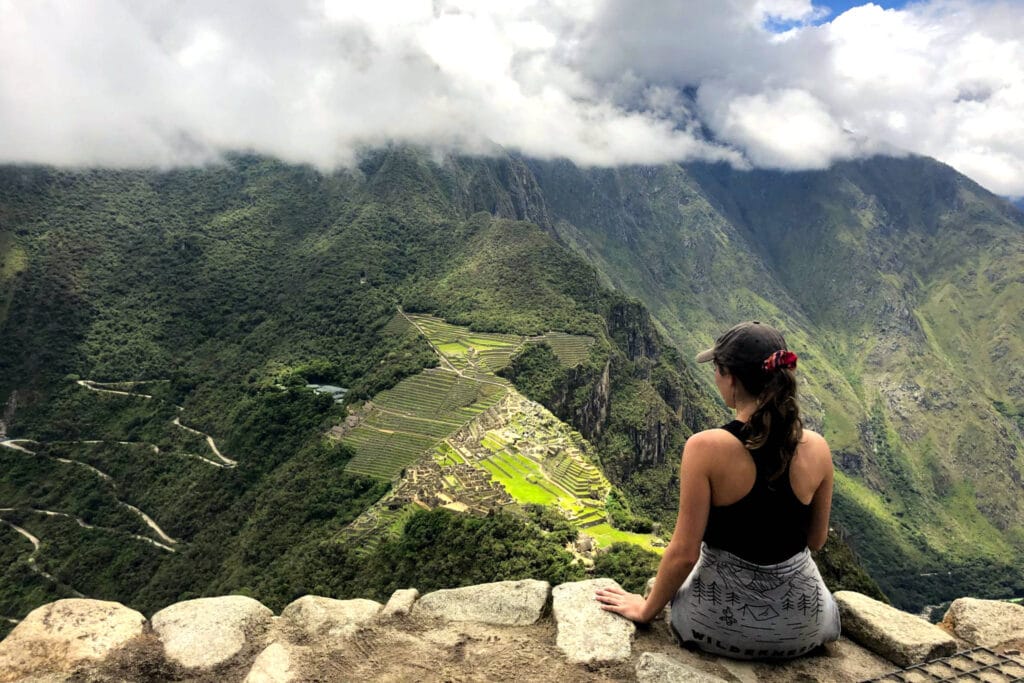
The rainy season brings frequent showers, especially in the afternoon. January and February are the wettest months, with rainfall that can reach 160 mm (6.3 inches) per month. On the bright side, that also means lush vegetation and mountains covered in deep green.
- Pros: fewer visitors (50% to 60% occupancy), lower prices (up to 30% off at some hotels), greener and more photogenic scenery
- Cons: frequent rain (15 to 20 days per month in January and February), fog that can hide the views, slippery trails
- Rainfall: 12 to 20 days of rain per month
- Occupancy: 50% to 70% of daily capacity
Important: The classic 4-day Inca Trail closes completely in February for maintenance. If you plan to hike this route, avoid that month.

Best time to go based on your priorities
For the best weather: May and September
These shoulder months offer an ideal balance. The weather is dry (fewer than 5 rainy days a month), but high season hasn’t hit its peak yet or is already winding down. September is especially worth considering: the weather is similar to July and August, but with 30% to 40% fewer tourists.
- Daytime temperature: 18°C to 20°C (64°F to 68°F)
- Nighttime temperature: 5°C to 8°C (41°F to 46°F)
- Occupancy: 70% to 80%
- Rainfall: very low
To avoid crowds: December to February
Although these are the rainiest months, they’re also the quietest in terms of visitors (except for the last two weeks of December because of the holidays). You’ll find the main lookout points almost empty, especially in January.
- Daytime temperature: 19°C to 21°C (66°F to 70°F)
- Nighttime temperature: 8°C to 10°C (46°F to 50°F)
- Occupancy: 50% to 60%
- Rainfall: high (bring good rain gear)
Tip: Rain tends to fall in the afternoon (after 2:00 p.m.). Plan your visit for the morning and you’ll have a better chance of staying dry.
To save money: November and March
These shoulder months offer low-season prices without the heavy rain of midsummer. November gets less rain than March, but both are significantly cheaper than the high-season months.
- Hotel discounts: 20% to 30%
- Ticket availability: high (you can buy 1 to 2 weeks in advance)
- Occupancy: 60% to 70%
To experience Inti Raymi: June 24
Inti Raymi, the Festival of the Sun, is the most important Inca celebration of the year. Although the main ceremony takes place in Cusco, visiting Machu Picchu that week lets you experience the city at its most cultural and festive.
- When: June 24
- Weather: peak dry season (ideal)
- Keep in mind: it’s one of the busiest times of the year, so book 4 to 5 months ahead
- Prices: go up 40% to 50% that week
What to pack for each season
Dry season (May to September)
- Layers: thermal base layer, light fleece, windbreaker
- Sun protection: SPF 50+ sunscreen, wide-brimmed hat, UV sunglasses
- Footwear: hiking boots (trails can be dusty)
- Hydration: reusable water bottle (refill points available)
- For the evenings: a wool beanie and gloves if you’re staying in Aguas Calientes
Rainy season (November to March)
- Good rain gear: a sturdy rain poncho or Gore-Tex jacket (disposable ponchos don’t hold up in the wind)
- Water-resistant pants: ideally quick-dry
- Waterproof footwear: hiking boots with a waterproof membrane
- Backpack with a rain cover: to protect your camera and electronics
- Change of clothes: extra socks and a T-shirt in a waterproof bag
- Insect repellent: the humidity brings out more mosquitoes
In either season, bring: your passport or ID (required for entry), energy snacks (no food is sold inside the site), and a basic first-aid kit with pain relievers for the altitude.
Best times of day to visit by season
Dry season: early entry (6:00 a.m.)
During the busiest months, the first entry slot is key to enjoying the site with fewer people. Between 6:00 and 8:00 a.m., the main lookout points are relatively clear. After 9:00 a.m., crowds pick up considerably.
- Best time for photos: 6:30 to 7:30 a.m. (golden light)
- Fewest people: 6:00 to 8:30 a.m.
- Busiest: 10:00 a.m. to 2:00 p.m.
Rainy season: mid-morning entry (8:00 to 10:00 a.m.)
With fewer visitors, getting up early isn’t as critical. Mornings between 8:00 a.m. and noon tend to be drier than afternoons. Avoid staying past 2:00 p.m., when the chance of rain goes up.
- Lowest chance of rain: 8:00 a.m. to 1:00 p.m.
- Highest chance: after 2:00 p.m.
- Advantage: it’s easier to find a different entry time if the forecast gets worse
Price comparison by season
The cost of visiting Machu Picchu varies significantly depending on the time of year. Here’s an estimate of the percentage differences:
High season (June to August):
- Hotels in Aguas Calientes: base rates plus 40% to 60%
- Hotels in Cusco: base rates plus 30% to 40%
- Train to Machu Picchu: standard fares with no discounts
- Group tours: regular prices
Shoulder season (April, May, September, October):
- Hotels: base rates plus 10% to 20%
- Train: occasional discounts of 10% to 15%
- Tours: regular prices
Low season (November to March, except holidays):
- Hotels: 25% to 35% below base rates
- Train: promotions of up to 20% off
- Tours: more availability and room to negotiate group rates
Note: Machu Picchu entrance tickets cost the same all year round. The price differences come from the other services.
Month by month: quick guide
- January: heavy rain, 50% occupancy, low prices, very green scenery
- February: heavy rain, Inca Trail closed, 40% occupancy, best month to save money
- March: moderate rain, 60% occupancy, affordable prices, end of the green season
- April: transition month, occasional rain, 70% occupancy, good balance of price and weather
- May: start of the dry season, 75% occupancy, excellent weather, moderate prices
- June: dry season, 90% occupancy, Inti Raymi (June 24), ideal weather, high prices
- July: peak high season, 100% occupancy, excellent weather, highest prices, book months in advance
- August: high season, 95% occupancy, dry weather, high prices
- September: best month overall, 75% occupancy, dry weather, fewer people than July and August
- October: transition month, occasional rain, 70% occupancy, good prices
- November: start of the rainy season, 60% occupancy, moderate rain, low prices
- December: rainy season, 70% occupancy (rising in the last 2 weeks for the holidays), frequent rain, low prices until December 15

Final recommendations
There’s no single “best time” to visit Machu Picchu. Each season has its pros and cons, and the right choice depends on your priorities:
- If your priority is perfect weather: May, June, or September
- If you want to avoid crowds: January, February, or November
- If you want a balance of weather, price, and crowds: September or October
- If you’re on a tight budget: February or March
- If you want a cultural experience: the week of June 24 (Inti Raymi)
Whichever month you choose, a few tips always apply:
- Buy your tickets in advance (at least 2 to 3 weeks in low season, 2 to 3 months in high season)
- Consider spending at least one night in Aguas Calientes so you can catch the first bus at 5:30 a.m.
- Check the weather forecast a few days before your trip
- Carry cash (many places in Aguas Calientes don’t accept cards)
- Acclimatize in Cusco for at least 1 to 2 days before heading to Machu Picchu
Machu Picchu Viajes Perú offers packages for every season of the year, with itineraries designed around the conditions of each period. Our guides know the best strategies for every month: from alternative routes in high season to making the most of dry windows during the rainy season. Contact our team to plan your visit around your available dates and travel preferences.
Rate it and share it on social media