


Urubamba in the Sacred Valley: what to see, how to get there, and what to do
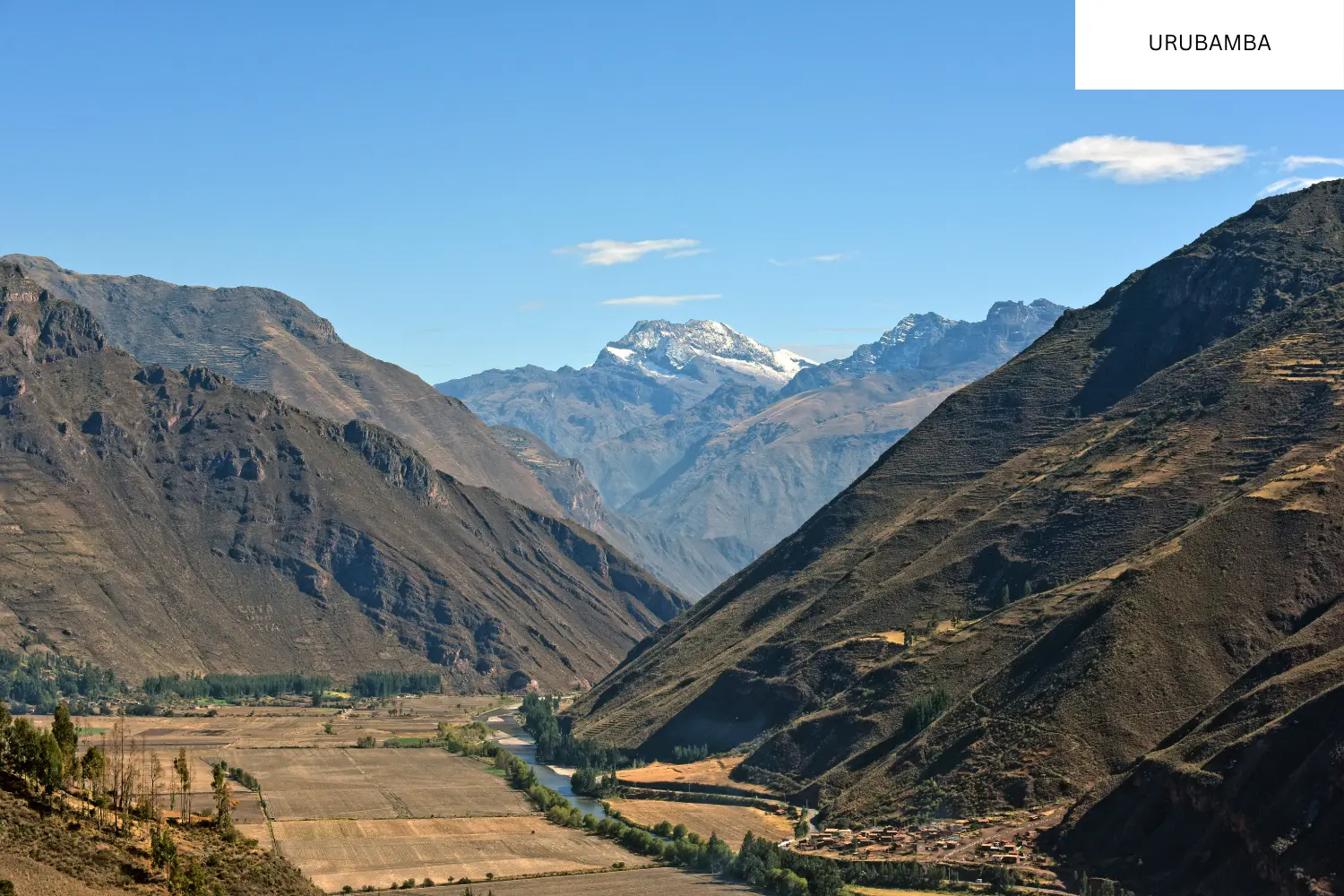
Urubamba is one of the most important places in the Sacred Valley of the Incas. It is located in a strategic area between Cusco, Pisac, and Ollantaytambo, making it ideal for visiting nearby attractions, enjoying local gastronomy, and acclimatizing before continuing to Machu Picchu.
Where is Urubamba located?
Urubamba is located in the heart of the Sacred Valley of the Incas, in the department of Cusco, Peru. It is situated approximately 53–60 km from the city of Cusco and at an altitude of around 2,870 meters above sea level.
Strategic location between Cusco and Machu Picchu
Urubamba has a strategic location within the Sacred Valley. It is close to Ollantaytambo, where many travelers take the train to Machu Picchu. In addition, its lower altitude compared to Cusco helps with the acclimatization process.
Altitude, climate, and natural surroundings
Urubamba’s altitude is approximately 2,870 meters above sea level. Its climate is usually mild and pleasant, making it a good option for resting and acclimatizing before taking other tours.
History of Urubamba
The province of Urubamba includes several of the most important tourist districts in the Sacred Valley, such as Ollantaytambo, Chinchero, Maras, and Machu Picchu Pueblo. Due to its location and agricultural surroundings, it has been an important area since pre-Hispanic times.
Andean origins and Inca legacy
The Vilcanota River, also known as the Urubamba River, was considered a sacred river within the Andean worldview. Thanks to its climate and fertile soil, Urubamba became known as an agricultural area, especially for corn cultivation.
The transformation of Urubamba during the colonial period
During the colonial period, Urubamba maintained its agricultural importance. Haciendas and religious buildings were also developed, transforming part of its urban organization.
What to do in Urubamba
In Urubamba, visitors can walk around the town center, visit the main square, explore the local market, try local gastronomy, and use it as a base to visit nearby attractions in the Sacred Valley.
Walk through the town center and experience the local atmosphere
You can visit the Main Square, the Church of San Pedro Apóstol, and the central market, where you can learn more about local life and Andean culture.
Enjoy the gastronomy of the Sacred Valley
Urubamba is a great place to try traditional dishes from the Sacred Valley, such as pachamanca, roasted guinea pig, trout, corn with cheese, and Creole food.
What to see in Urubamba and its surroundings
From Urubamba, visitors can explore nearby attractions in the Sacred Valley, such as Maras, Moray, Ollantaytambo, and Chinchero.
Main Square, church, and traditional markets
In the center of Urubamba, highlights include the Main Square, the Church of San Pedro Apóstol, and the traditional market, surrounded by mountains and local life.
Maras, Moray, and other nearby attractions
Maras and Moray are located near Urubamba and are two of the most visited attractions in the Sacred Valley. Moray is known for its circular terraces, while Maras stands out for its salt mines.
How to get to Urubamba from Cusco
Urubamba is located approximately 53–60 km from the city of Cusco, depending on the chosen route.
Private transportation and tour options
It is possible to reach Urubamba by private transportation, shared transport, or through tours that travel around the Sacred Valley. Some itineraries combine Pisac, Maras, Moray, Chinchero, or Ollantaytambo.
Travel time and most commonly used routes
The trip from Cusco to Urubamba usually takes between 1 hour and 15 minutes to 1 hour and 30 minutes by private transportation. One of the most commonly used routes is through Chinchero.
When to visit Urubamba
Urubamba can be visited throughout the year, although the experience changes depending on the season.
Dry season and rainy season
The dry season offers better conditions for visiting tourist attractions and enjoying the landscape. During the rainy season, the surroundings become greener, although precautions should be taken due to weather changes.
What to expect depending on the time of year
Depending on the season, you may find more or fewer visitors, greener landscapes, or drier weather. The best option is to choose your travel dates according to the type of experience you want to have.


