Tambomachay Archaeological Complex
Location: Where is Tambomachay?
This archaeological site is located 8 km northeast of the city of Cusco, at an approximate altitude of 3,700 m (12,140 feet), on the route to the Sacred Valley and the Antisuyo (direction towards the Amazon).
It is located very close to other important archaeological sites such as Puca Pucara and Qenqo, making it a key stop within the Cusco City Tour.
How to get to Tambomachay from Cusco
Recommended options:
- Taxi: 15–20 minutes from the historic center.
- Guided City Tour: the most complete option if you want historical context.
- Bus + walk: buses to Pisaq/Sacred Valley drop you off near the entrance.
How to walk from Puca Pucara to Tambomachay
From Puca Pucara, Tambomachay is only 300–400 meters away.
Easy walk: 5 to 10 minutes, flat terrain and well-marked.
Ideal for taking your time and enjoying the Andean landscape.
Guide’s tip: It’s better to visit Puca Pucara first and end at Tambomachay, where the sound of water creates a more relaxing experience.
Practical Information for Your Visit
Entrance Price and Cusco Tourist Ticket
Tambomachay does not sell individual tickets. Access is provided with the:
Most common options:
Partial Ticket – Circuit I
- For foreigners S/. 70.00 or approx. $25.00
- For nationals S/. 40.00 or approx. $15.00
Full Ticket
- For foreigners S/. 130.00 or approx. $45.00
- For nationals S/. 70.00 or approx. $25.00
Includes: Sacsayhuamán, Qenqo, Puca Pucara, and Tambomachay. (City Tour)
❌ No individual tickets are available.
Operating Hours and Best Time to Visit
- Every day:
- 09:00 a.m. – 05:00 p.m.
- Last recommended entry: 4:30 p.m.
The best time to visit is in the morning, when there are fewer visitors and better light for photos.
In the dry season (April–October), the experience is ideal.
Is it Necessary to Hire a Guide for Visiting Puca Pucara?
Yes, it is highly recommended.
- Explains the water worship, invisible to the naked eye
- Interprets the hydraulic engineering (the most important aspect of the site)
- Connects Tambomachay with Inca religious thinking
Meaning and History of Tambomachay
What was the purpose of Tambomachay during the Inca era?
According to the most accepted historical vision, Tambomachay was:
- A ceremonial center dedicated to water.
- A ritual space associated with the Inca elite.
- Possibly a resting place for the Inca on trips to Antisuyo.
- It was not a fortress or just a “bath”.
The Water Worship and Inca Hydraulic Engineering
Water was sacred to the Incas, linked to:
- Life
- Fertility
- The balance of the world (Pachamama)
At Tambomachay:
- The water flows continuously from Inca times
- The channels maintain constant pressure
- There are no visible leaks
Key historical fact:
The Incas designed the system so that the flow would not stop even in the dry season, something that still amazes modern engineers.
What does the name Tambomachay mean?
The name comes from Quechua:
Tampu = resting place
Mach’ay = cave or sacred place
The most accepted interpretation:
“Sacred resting place” or “ceremonial inn”
What to See in the Archaeological Complex
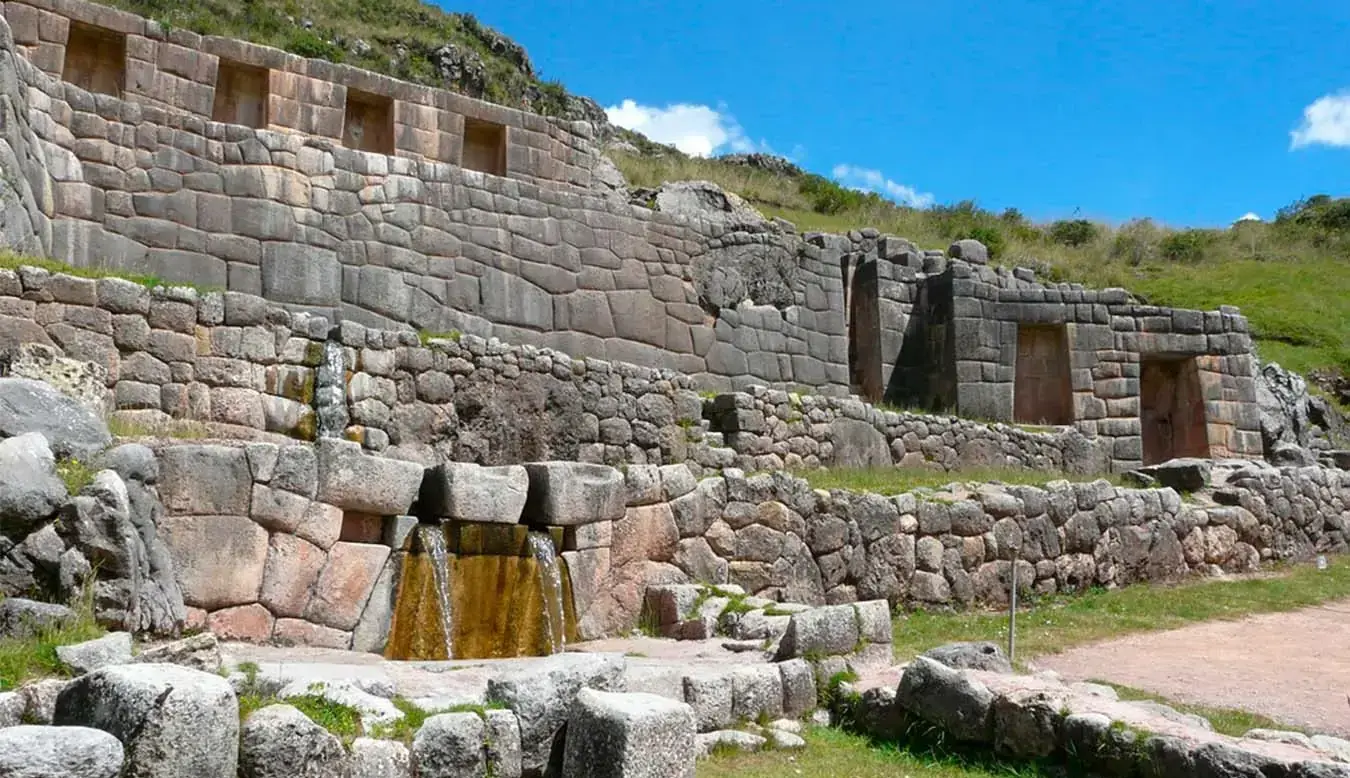
The Inca Baths and Water Sources
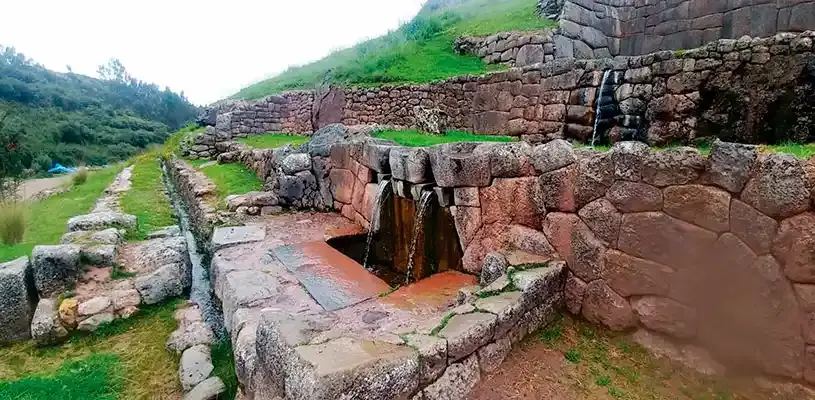
The most famous features of the site:
- Two main sources carved with precision.
- Continuous water flow.
Symbolically associated with the power and purification of the Inca, although they are called “baths”, their function was ritual, not domestic.
The Architecture of Niches and Stone Walls

They were:
- Finely worked walls.
- Trapezoidal niches (sacred shape).
- Use of local limestone.
These niches probably housed:
- Idols.
- Offerings.
- Ceremonial elements.
The Natural Surroundings and Flora of the Area
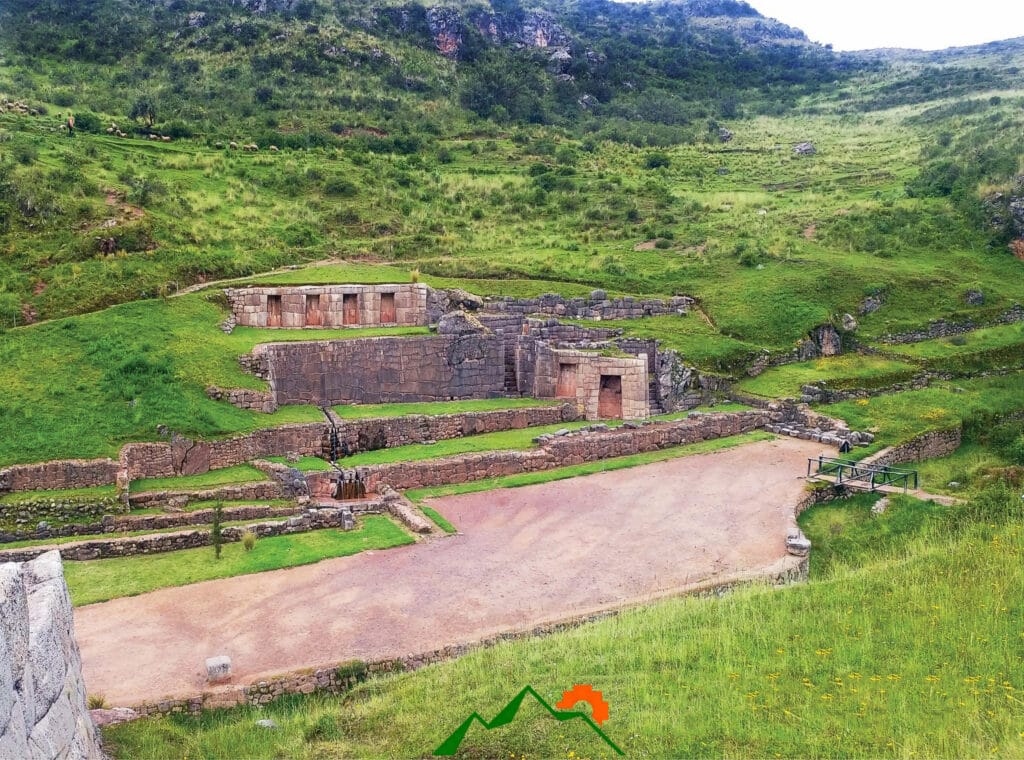
Tambomachay is surrounded by:
- Ichu (Andean grass).
- High Andean shrubs.
- Local birds like kestrels and hummingbirds.
Weather and Altitude Recommendations
The weather is cool and windy, ideal for a short but meaningful visit.
Altitude of Tambomachay and Practical Tips for Altitude Sickness
Altitude: 3,700 m (12,140 feet)
How to Avoid Altitude Sickness (What Works for Short Tours)
- Acclimate first: If you just arrived in Cusco, try to make Tambomachay the second day (or at least after a light morning).
- Walk slowly and breathe “short” (take short steps, don’t rush, no “sprints” for photos).
- Hydration + salts: Drink water constantly (not all at once) and, if you sweat or have a headache, an electrolyte drink helps.
- Light food: Avoid greasy or large portions before heading up.
- Coca / muña: Useful as support (not magic, but helpful for some).
- Avoid alcohol and cigarettes the same day (they worsen symptoms).
Warning Signs
Normal/mild: Mild headache, shortness of breath when climbing stairs, tiredness.
Stop exertion and go down/rest if you have a strong headache that won’t go away, vomiting, intense dizziness, confusion, or difficulty walking straight. (In tours, resting and/or descending altitude is usually the most effective.)
What to Wear According to Season (Dry vs Rainy)
Cusco has two distinct seasons: dry and rainy.
And the key thing: in altitude, there are always sudden changes (strong sun + wind + cold).
Dry Season (approx. May–September)
- Layers: T-shirt + fleece/light jacket + windbreaker.
- Hat or cap + sunscreen (the sun is strong).
- Comfortable pants (jeans work, better for trekking).
- Shoes with good soles.
For evening: an extra layer (temperature drops).
Rainy Season (approx. October–March, peak in January–February)
- Waterproof poncho or jacket (better with a hood).
- Sturdy or waterproof shoes (with good grip soles).
- Cellphone/camera protection (Ziploc bags work).
- Also bring sunscreen: the sun may peek through the clouds.
Frequently Asked Questions about Tambomachay
How long does the tour of Tambomachay last?
On-site: Normally 30 minutes to 1 hour, depending on how many photos you take and how detailed you are.
Total experience from Cusco (round trip, visit): Typically takes ~3 hours if you go by taxi/car with waiting time.
Can you visit Tambomachay without the Tourist Ticket?
In practice, Tambomachay is visited with the Cusco Tourist Ticket (BTC) (it is included in the circuit with other sites like Sacsayhuamán, Qenqo, and Puca Pucara).
Guide’s Tip: If you only want these 4 sites, it is usually better to get the partial BTC for the circuit (depending on validity and option).
What time is best for taking photos at Tambomachay?
The site is usually open from approximately 8:00 a.m. to 5:00–5:30 p.m. (depending on source/season).
For beautiful photos:
- Morning (8:00–10:00): fewer people and clean light.
- Afternoon (3:30–5:00 p.m.): warmer light and softer shadows for stone and water.
During the rainy season, mornings are also better because the rain often falls heavier in the afternoon.
Are there bathrooms or shops near the site?
Yes, there are bathrooms near the entrance/ticket booth; there are none inside. Use them before entering.
There are usually small sales stalls around (water/snacks/crafts), so it’s a good idea to carry some cash.
Mini-guide checklist (so you go “safe”)
- Water + light snack
- Sunscreen + hat
- 1 warm layer + (poncho if it rains)
- Walk slowly, altitude 3,700 m (12,140 feet)
- Bathroom before entering
- Tourist Ticket (BTC) ready