Salkantay Trek Difficulty: Fitness Level, Altitude, and How Challenging the Route Is

If you are thinking about hiking to Machu Picchu through one of the most spectacular routes in southern Peru, it is normal to wonder how difficult the Salkantay Trek is. This trek combines snowy landscapes, deep valleys, and high jungle in a single route, but that variety of scenery also means your body goes through different types of effort in just a few days. Before booking, it is important to clearly understand what to expect physically and what role altitude plays throughout the experience.
How difficult is the Salkantay Trek?
The Salkantay Trek is considered a moderate to high-difficulty route, mainly because of the combination of altitude, distance, and sudden temperature changes. You do not need to be an athlete to complete it, but you should arrive with a reasonable level of physical fitness and, above all, enough time to acclimatize in Cusco. Most people who complete the route are not high-performance athletes, but travelers who prepared with previous hikes and respected the pace required by the mountains.
Why it is considered a challenging trek to Machu Picchu
What makes Salkantay demanding is not just one obstacle, but the combination of several factors over several consecutive days. You walk for many hours each day, climb to more than 4,600 meters above sea level, and then descend toward warm and humid climate zones, all within a short period of time. This constant contrast between intense cold and tropical heat, along with accumulated fatigue, is what turns this route into a real challenge, even for people with good physical condition.

What type of effort it requires compared to other routes
Unlike short one-day hikes, Salkantay requires sustained endurance. It is not about an explosive effort, but about maintaining a steady pace for several hours, day after day, with the wear and tear this causes on your legs and your body’s overall energy. It is an effort more similar to a long-distance race than a sprint, which is why prior preparation makes a noticeable difference in how you experience the trek.
Factors that influence the difficulty of the Salkantay Trek
Altitude, elevation gain, and duration of the trek
Three elements determine the real difficulty of this route: the maximum altitude you reach, the accumulated elevation gain you climb and descend each day, and the number of hours you spend walking. The highest point of the route is over 4,600 meters, and reaching it involves a long uphill section that tests your cardiovascular endurance. In addition, several days include more than six hours of hiking, so fatigue gradually builds up as the days go by.
Climate changes, terrain, and accumulated fatigue
The terrain changes constantly along the route. You begin in high, cold areas with stone paths and loose dirt, and end in sections of high jungle where humidity and heat are much more intense. This change of environment forces your body to adapt quickly, and the physical wear from the first few days is often felt in the knees and leg muscles during the long descents.
Altitude and its impact on the Salkantay Trek
How the Salkantay Pass affects international travelers
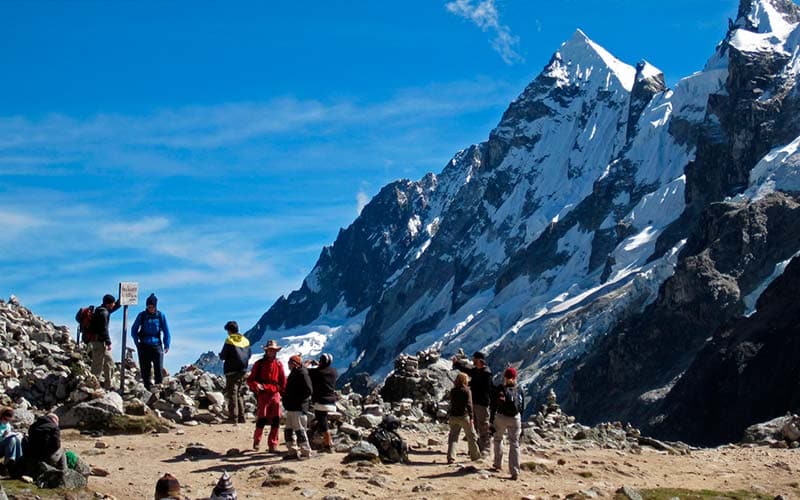
The Salkantay Pass is the highest point of the entire route and also the moment when altitude is felt the most. If you come from a city near sea level, you will likely notice shortness of breath, fatigue faster than usual, and a general feeling of heaviness as you climb. This does not mean something is wrong with you; it simply means your body is reacting to an altitude much higher than what it is used to.
What altitude sickness symptoms may appear
The most common symptoms include headache, mild nausea, unusual fatigue, and difficulty breathing during physical effort. In most cases, these discomforts are manageable and decrease as you continue and descend in altitude. If the symptoms become intense or do not improve, it is important to inform your guide immediately, since a quick descent is usually the most effective solution.
Recommended fitness level for the Salkantay Trek
What physical condition you need to enjoy the route
You do not need athletic training, but you do need a basic level of endurance. If you can walk for four to five hours in a row without becoming completely exhausted, and you can climb stairs or hills without major difficulty, the Salkantay Trek will likely feel demanding but manageable. The key is general endurance rather than pure strength, because the effort lasts for hours and not just in short moments of high intensity.
Is the Salkantay Trek suitable for beginners?
Yes, it is possible to complete it without previous trekking experience, as long as you arrive with basic physical preparation and respect the acclimatization time. Many people who had never done a multi-day hike have managed to complete the route without major complications, following the guide’s pace and relying on the support of the team throughout the journey.
What is the most difficult section of the Salkantay Trek?
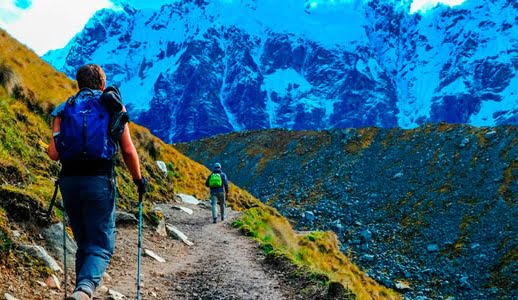
The ascent to the Salkantay Pass
Most travelers agree that the ascent to the Salkantay Pass is the hardest section of the entire route. The combination of extreme altitude, thinner air, and a steady uphill climb for several hours makes this segment require the greatest physical and mental effort of the trek. It is also the point where a slow pace and frequent breaks make the difference between struggling through it or enjoying the moment.

The wear and tear of descents and long hiking days
Although going downhill may seem easier than climbing, long descents create a different type of strain, especially on the knees and ankles. After several hours of continuous downhill walking, many travelers feel more tired in their legs than during the climb itself, which is why trekking poles are often very helpful for reducing impact on the joints.
Salkantay Trek vs. Inca Trail: which one is more difficult?
Differences in physical and technical difficulty
Salkantay is usually considered more physically demanding than the classic Inca Trail, mainly because it reaches a higher maximum altitude and includes longer hiking days. The Inca Trail, on the other hand, has a more technical component due to its original stone stairways and uneven terrain, although its maximum altitude is lower. In general terms, the cardiovascular effort is greater on Salkantay, while joint strain and balance are more noticeable on the Inca Trail.
Which route to choose according to your experience and goals
If you are looking for high mountain landscapes, a greater variety of climates, and are not as focused on a direct historical connection with Machu Picchu, Salkantay is an excellent option. If, on the other hand, you are interested in walking original sections built by the Incas and arriving through the Sun Gate, the Inca Trail may be a better fit for what you are looking for, although it requires booking several months in advance due to the daily permit limit.
How to prepare for the difficulty of the Salkantay Trek
Recommended training before the trip
Training for six to eight weeks before the trip can make a big difference in your experience. Long hikes on uneven terrain, regularly climbing stairs, and cardiovascular endurance exercises such as light jogging or cycling will help you arrive with your legs and lungs better prepared for several days of sustained effort.
How to acclimatize in Cusco before starting the route
Arriving in Cusco at least two or three days before starting the trek is one of the most important decisions you can make. During those days, walk slowly, avoid alcohol, stay well hydrated, and consider doing a short hike at a moderate altitude before taking on the full route. This prior acclimatization considerably reduces the risk of altitude sickness affecting you intensely.
Tips to make the Salkantay Trek more manageable
How to walk at your own pace and save energy
One of the most common mistakes is trying to keep up with other members of the group instead of maintaining your own pace. Walking slowly and steadily, while controlling your breathing, helps you save energy for the following hours. Guides often recommend moving forward without rushing, especially in the highest-altitude sections, where going slower truly makes a difference.
What to bring to reduce effort during the trek
Previously worn trekking shoes, layered clothing that you can remove or add depending on the weather, trekking poles, and a good supply of water and energy snacks are items that significantly reduce physical strain during the route. It is also recommended to bring sunscreen and a waterproof jacket, since the weather can change suddenly at any point along the trail.
Mistakes that make the Salkantay Trek more difficult
Arriving without acclimatization or physical preparation
Arriving directly from sea level and starting the route the next day is one of the most common mistakes and also one of the things that can make the experience much more difficult. Without time to adapt, altitude sickness symptoms usually appear more intensely, which can turn an already demanding trek into an experience that is truly hard to enjoy.
Underestimating the weather and packing incorrectly
Another common mistake is not preparing the right clothing for temperature changes. Many people pack thinking only about the cold nights in the high mountains and forget that in the lower sections, heat and humidity can be intense. Packing in layers and bringing both warm clothing and lightweight clothing allows you to adapt to each stage without suffering more than necessary.
Is the Salkantay Trek worth it despite its difficulty?
What rewards the effort on this route
Despite the physical demands, most travelers agree that the effort is completely worth it. The landscapes you pass through, from imposing snow-capped mountains to high jungle valleys, offer a variety of scenery that few trekking routes in the world can match. Finally reaching Machu Picchu after several days of hiking adds an emotional value that is difficult to describe in words.
What type of traveler this experience is ideal for
This route works especially well for those who enjoy direct contact with nature, are looking for a moderate physical challenge, and prefer to avoid the most crowded routes. If you also value date flexibility compared to the Inca Trail, which requires booking far in advance, Salkantay becomes a practical and equally rewarding alternative.
At Machu Picchu Viajes Peru, we work with experienced guides who know every section of this route in depth and adjust the group’s pace according to each traveler’s physical condition. If you want to experience the Salkantay Trek with the right support and all the logistics arranged, you can review our itineraries and choose the option that best suits your level of experience.
Frequently asked questions about the difficulty of the Salkantay Trek
Can you do the Salkantay Trek without previous experience?
Yes, many travelers without previous trekking experience successfully complete the route. The important thing is to arrive with basic physical preparation, respect the acclimatization days in Cusco, and follow the pace set by the guide throughout the trek.
What age is recommended for this trek?
There is no strict age limit, and people from teenagers to older adults have completed the route without problems. What truly matters is each person’s general health and physical condition, rather than age itself.
Is Salkantay harder because of the altitude or the distance?
Both factors play a role, but altitude is usually the element that affects travelers the most, especially during the ascent to the Salkantay Pass. The distance and duration of the hiking days contribute to accumulated fatigue, but it is the altitude that creates the most noticeable symptoms during the route.
Is it better to do it with an agency if you are concerned about the difficulty?
Yes, traveling with a specialized agency makes it much easier to manage the difficulty of the route. Having guides who monitor your physical condition, horsemen who carry the heavy equipment, and a well-planned group pace significantly reduces the risk of complications and makes the experience much safer and more enjoyable.