Places to See on the Inca Trail to Machu Picchu

What Is the Inca Trail and Why Is It So Special?
The Inca Trail is part of the Qhapaq Ñan, the vast road network of the Inca Empire. This trekking route has two main variants:
Route 104 (short inca trail) covers approximately 11 km (6.8 miles).
Route 84 (4-Day Inca Trail) extends for about 43–45 km (26–28 miles) to Machu Picchu.
The trail crosses Andean landscapes, cloud forests, and high jungle, showcasing the region’s ecological diversity. Along the route, several archaeological sites reveal the advanced engineering of the Incas. Historically, the Qhapaq Ñan connected six South American countries: Argentina, Chile, Colombia, Ecuador, Bolivia, and Peru, with Peru being the cradle of the Tahuantinsuyo. Today, many sections of the Inca road system are protected as cultural heritage.
Best Time to Hike the Inca Trail
The months from April to October offer drier and more stable weather conditions, making the hike easier. During this period, visitor flow is constant.
The Inca Trail is closed every February for maintenance and restoration. This closure allows conservation work and helps prevent accidents caused by landslides during the peak rainy season. If you plan to visit during this time, be sure to consider these restrictions when organizing your trip.
Key Places to Visit Along the Inca Trail
Natural Viewpoints
Along the route, there are several viewpoints offering panoramic views of the Andes, including rugged mountains, deep valleys, and mountain ranges.
Cloud Forests
The Inca Trail’s cloud forests are home to more than 300 species of orchids and a wide variety of exotic birds. These ecosystems allow visitors to observe local flora and fauna in their natural habitat.
Archaeological Sites on the Inca Trail
Llactapata: The First Archaeological Site
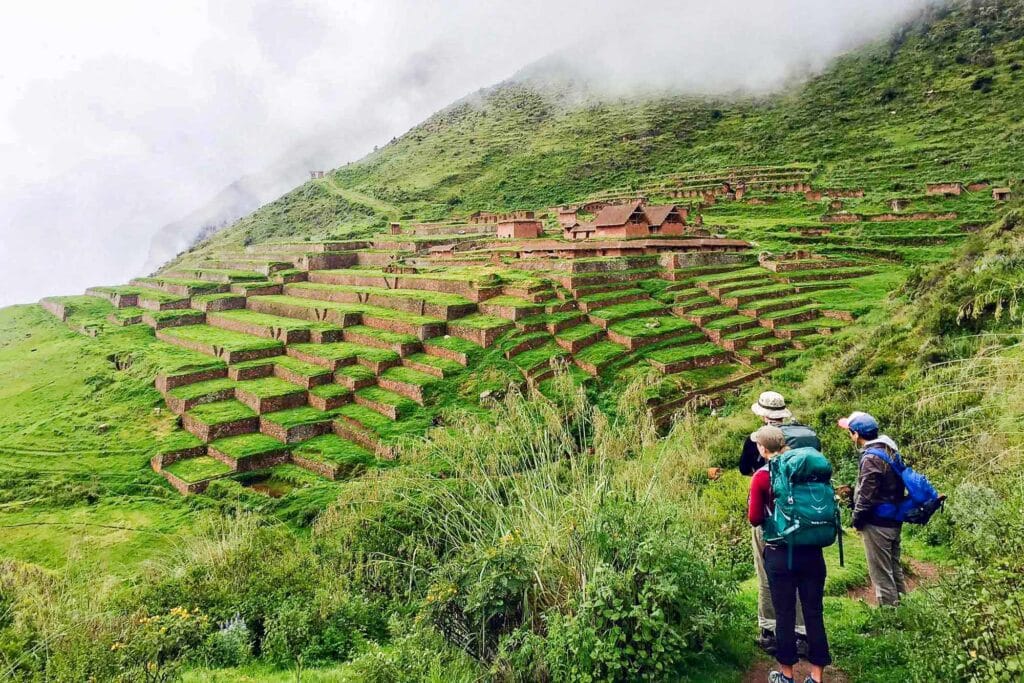
One of the first sites encountered at the start of the Inca Trail. It stands out for its agricultural terraces near the Vilcanota River, demonstrating how the Incas adapted farming techniques to mountainous terrain.

Warmiwañuska: The Highest Pass
Known as the “Dead Woman’s Pass,” Warmiwañuska is the highest point on the Inca Trail, reaching 4,215 meters (13,828 feet) above sea level. From here, hikers enjoy panoramic views of surrounding valleys and mountains.

Runkurakay: An Inca Resting Point
This site likely functioned as a tambo, or resting point, for the chasquis (Inca messengers), as well as a control and surveillance post along the trail.

Sayacmarca: The Inaccessible City
Sayacmarca is notable for its architecture adapted to steep mountainous terrain. The site features stone stairways connecting ceremonial and residential areas, as well as a canal system that supplied water throughout the complex.

Phuyupatamarca: Above the Clouds
Its name means “Place Above the Clouds.” From this point, visitors can see mountains wrapped in mist and, on clear days, spot Machu Picchu in the distance.

Wiñay Wayna: The Last Stop Before Machu Picchu
Wiñay Wayna, meaning “Forever Young,” is an archaeological complex with well-preserved agricultural terraces. It is located near the final campsite before reaching Machu Picchu.

Inti Punku: The Sun Gate
Inti Punku means “Sun Gate” in Quechua. This point marked controlled access to the Qhapaq Ñan. From here, hikers get their first view of Machu Picchu, especially at sunrise.

Machu Picchu: Final Destination of the Trek
Both the 4-day and 2-day routes end at Machu Picchu. Travelers who complete the Inca Trail enter the citadel early in the morning, when there are fewer visitors.

Practical Tips for the Inca Trail
Physical Preparation
The Inca Trail requires prior preparation. It is recommended to arrive in Cusco at least 2–3 days before the trek to acclimatize to the altitude and reduce the risk of altitude sickness. Training hikes with a loaded backpack help prepare your body for long days. Staying well hydrated is essential during the trek. Experienced guides know the route and can provide assistance when needed. Mental preparation also plays a key role in successfully completing the Inca Trail.
What to Pack
Recommended basic equipment:
- Mosquito repellent
- Sunscreen
- Rain poncho or waterproof clothing
- Reusable water bottle
Why Book the Inca Trail in Advance?
- Visitor limit: The Peruvian government limits entry to 500 people per day, including tourists, guides, and porters, to protect the trail and archaeological sites.
- High demand: The Inca Trail is one of the most sought-after treks in the world. During peak season (April to October), spots sell out months in advance.
- Logistical planning: Booking early allows proper coordination of guides, porters, and campsites under required safety and quality standards.
- Altitude acclimatization: Early planning allows you to include acclimatization days in Cusco or similar-altitude areas, reducing health risks.
- Avoid inconveniences: Early booking provides more flexibility in choosing travel dates.
- Guaranteed availability: Booking in advance gives you time to research and select the tour operator that best fits your needs and budget.