Piquillacta Archaeological Park

Urban Planning and Architecture in Piquillacta (Wari City)
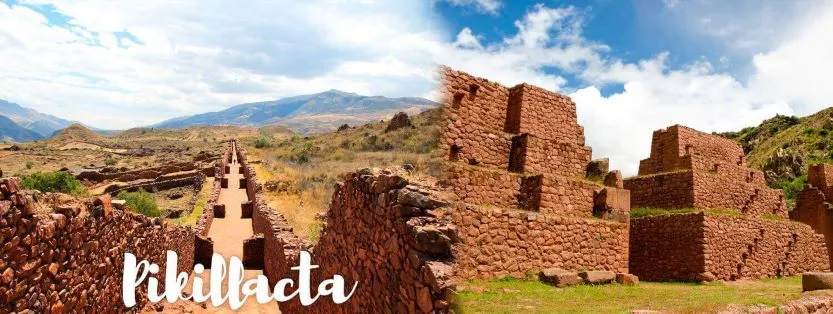
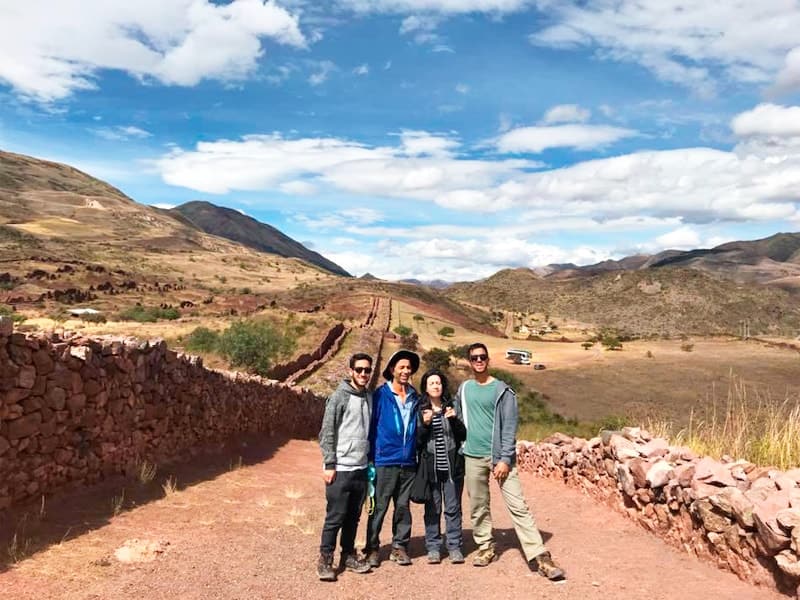
Piquillacta (or Pikillaqta) is, for many archaeologists, the best “living lesson” in Wari urban planning in Cusco: a carefully planned city with a grid layout, well-defined blocks, long straight walls, and a clear logic of spatial control (who enters, how people move, and where goods are stored). This geometric organization, dominated by rectangular forms, is a clear hallmark of the Wari culture.
Architectural highlights include:
- Tall walls (in several sectors the monumental scale is still visible).
- Enclosures grouped into “canchas” (walled complexes with internal courtyards), typical of residential and administrative use.
- Evidence of plastered finishes in some areas, indicating buildings with important functions.
The Sectors of the Citadel: Plazas, Storehouses, and Residential Areas
Although the site is explored on foot like a large “maze” of walls, it is easier to understand if you read it this way:
1) Squares and open spaces (public and ceremonial life)
The Squares functioned as gathering points, spaces for organization, and possibly ceremonial activities, connected by circulation axes. Their wide open areas contrast with narrow passageways, reinforcing the idea of a planned and administered city rather than an improvised one.
2) Storehouses (qolqas) and economic control
Piquillacta features areas with a large number of structures interpreted as storehouses or storage and supply zones. This fits perfectly with its role as a Wari center: resource management, redistribution, and logistics to sustain population and regional authority.
3) Residential areas and “canchas” (daily life)
The canchas (walled compounds) are interpreted as residential and/or administrative spaces, with internal courtyards that organized daily life. Some descriptions suggest that certain buildings may have had two or three stories, giving an idea of the high level of construction.
4) The Rumicolca Gate: the ancient “customs checkpoint”
Very close to Piquillacta lies Rumicolca, a monumental gateway next to the highway. Its importance lies in its role as a strategic control point on the route to Collasuyo (the southern region of the Inca Empire), functioning like an ancient customs post where the movement of people and goods was monitored.
Key guide insight: Rumicolca has pre-Inca foundations associated with the Wari culture and was later enhanced by the Incas, making it an ideal place to explain “layers of history” at a single site.
Where Is Piquillacta Located and How to Get There?
Location: approximately 33 km southeast of Cusco, in the area of the districts of Oropesa, Lucre, and Andahuaylillas, in the South Valley.
How to get there (practical options)
- On your own: take a bus or shared van toward Urcos via Av. de la Cultura; ask to get off at Piquillacta or Rumicolca (depending on your route), then walk a short distance.
- Taxi or private service: ideal if you want to combine Tipón + Piquillacta + Andahuaylillas + Rumicolca without rushing.
- South Valley Tour: the easiest option for most visitors, as it optimizes travel time and includes expert guide explanations at each stop.
Opening Hours and Entrance Fees for Piquillacta in 2026 (Updated)
Official visiting hours
According to the Cusco Regional Office of the Ministry of Culture, Piquillacta is open from 7:00 a.m. to 4:30 p.m.
Entrance fee (via the Cusco Tourist Ticket – COSITUC)
Piquillacta is included in Circuit II (City & South Valley) of the Cusco Tourist Ticket.
Frequently Asked Questions about Piquillacta
Was Piquillacta built by the Incas or the Wari?
Piquillacta was not built by the Incas, but by the Wari culture between the 6th and 9th centuries AD, several centuries before the Inca Empire. It is one of the best examples of pre-Inca urban planning in the Cusco region. The Incas did not occupy it as a city, but they respected the site and reused nearby routes and strategic points.
Can Piquillacta be visited with the same ticket as Tipón?
Yes. Piquillacta and Tipón are included in the Cusco Tourist Ticket – Circuit II (South Valley).
With the same ticket, you can visit both sites on the same day, along with other South Valley attractions.
What does the name Piquillacta mean in English?
Piquillacta (from the Quechua Pikillaqta) means “city of fleas.”
The name does not have a negative literal meaning; it refers to the large number of small enclosures and narrow passageways, which from a distance give the impression of a city “packed” with structures.
How much time is needed to visit the Piquillacta complex?
The visit takes between 45 minutes and 1 hour, depending on whether you explore on your own or with a guide.
With an official guide, the visit becomes much clearer, as the walls gain historical and urban meaning-not just visual appeal.
What is the weather like in Piquillacta and what should I wear?
Weather: Mild and dry most of the year.
Elevation: approx. 3,250 m above sea level (10,663 ft).
Recommended items to bring:
- Sunscreen.
- Cap or hat.
- Light jacket (wind is common.)
- Comfortable walking shoes.
During the rainy season (November–March), add a rain poncho or waterproof jacket.
Is it safe to visit Piquillacta and Huacarpay Lagoon on your own?
Yes, it is safe to visit both Piquillacta and Huacarpay Lagoon independently during the day.
That said, if you want to optimize your time, better understand Wari history, and avoid inconveniences, joining an organized tour is highly recommended.
Discover Pre-Inca History on Our South Valley Tour
Explore Piquillacta, Tipón, Rumicolca, and Andahuaylillas in a single journey and discover how the Wari laid the foundations of Andean urbanism before the Incas.
An ideal tour for travelers seeking deeper history, fewer crowds, and authentic landscapes close to Cusco.