Tipón Archaeological Park

History of Tipón
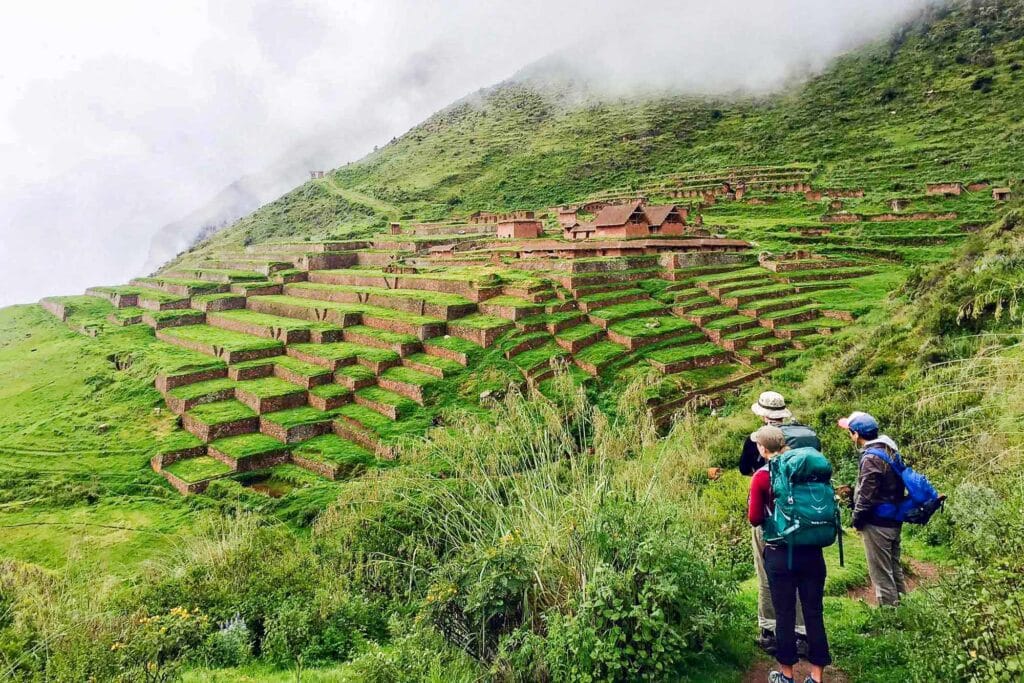
The Tipón Archaeological Park is one of the finest examples of Inca hydraulic engineering. Built during the Inca Empire, this complex served as an important agricultural, ceremonial, and ritual center, where water was considered a sacred element.
Its precisely carved stone channels are still functioning today, demonstrating the Incas’ advanced knowledge of hydraulics, agriculture, and environmental management. The agricultural terraces of Tipón optimized irrigation and cultivation in harmony with nature.
Visiting Tipón means discovering how the Incas mastered water without disrupting the natural balance, creating a space where engineering, spirituality, and landscape are perfectly integrated.
What to See at the Tipón Archaeological Park?
1) Monumental Agricultural Terraces

These are not just terraces; they were designed to regulate humidity, erosion, and microclimates, with finely crafted stone walls. Tipón is one of those places where you understand that the Inca Empire was sustained not only by warfare, but by technology applied to everyday life.
2) Inca Water Fountains and Channels
This is the heart of Tipón. You will see stone-carved channels that guide water with remarkable precision and fountains where the flow falls cleanly, as if the design sought beauty as well as function. What stands out is observing:
- How the water is distributed across different levels.
- How it maintains continuity without overflowing.
- How the sound of water becomes part of the landscape.

3) The Intihuatana and Royal Enclosures
The complex includes structures associated with the elite: enclosures, residential-style spaces, and control areas. Several guides describe the site as having rooms, qollqas (storage buildings), and an intihuatana (a ritual altar associated with the Sun).
Guide tip: When standing in front of these spaces, pay attention to the quality of the stone fitting, the strategic location (views and control), and the proximity to water. In the Andean world, water is not a “resource”—it is sacred.

Opening Hours and Best Time to Visit Tipón
Most operators and local guides manage visiting hours from Monday to Sunday, from 7:00 a.m. to 6:00 p.m.
Practical recommendation: Arrive early (7:00–9:00 a.m.) to enjoy better light, fewer visitors, and cleaner photos.
Best season:
- April to October (dry season): firmer paths and clearer skies.
- November to March (rainy season): Tipón looks greener and water flow is stronger, but bring a rain poncho and good footwear.
Entrance Fee: How to Buy the Ticket for Tipón
Tipón is included in the Cusco Tourist Ticket (BTC), specifically within Circuit II (City and South Valley).
Rates published by COSITUC (as of January 12, 2026)
Foreign tourists
- Full BTC (10 days): S/ 130 – USD 42
- Partial BTC Circuit II (2 days): S/ 70 – USD 23
Domestic tourists (promotional)
- Full BTC (10 days): S/ 70 – USD 23
- Partial BTC Circuit II (2 days): S/ 40 – USD 13
Expert tip: If your plan includes the South Valley (Tipón + Pikillacta) and a few museums, the Partial Circuit II ticket is usually the most efficient option.
Location: How to Get to Tipón from Cusco
Tipón Archaeological Park is located south of the city of Cusco, in the district of Oropesa, Quispicanchi Province, Cusco Region – Peru.
- Distance: approximately 25 km from Cusco.
- Travel time: between 45 minutes and 1 hour.
- Altitude: around 3,600 m above sea level (11,800 ft).
The local and budget-friendly way (how Cusco locals do it):
Go to the shared-van stop (colectivos) heading to Urcos / Saylla (Av. de la Cultura, near the Regional Hospital area).
Take a colectivo that says Oropesa / Saylla / Tipón.
Comfortable alternative: Book a service with a local tour operator to join a South Valley tour (ideal if you want complete explanations along the route).
Frequently Asked Questions about Tipón (Complete & Updated Guide)
Is admission to Tipón included in the Tourist Ticket?
Yes. Tipón is included in the Cusco Tourist Ticket (BTC) under Circuit II (City & South Valley). This means:
- You don’t need to pay an extra entrance fee if you already purchased the BTC that includes Circuit II.
- With this ticket you can visit Tipón along with other sites such as Pikillacta, Huchuy Qosqo, and Andahuaylillas, depending on the type of partial ticket you have.
- The ticket can be printed or digital, and you must present it at the entrance.
Expert tip: If you’re visiting Tipón along with other South Valley destinations, the Partial Ticket II is usually the most efficient and budget-friendly option. If you want to visit multiple sites on different days, the General/Integral Ticket gives you more flexibility.
How long does the visit take?
A visit to Tipón usually takes about 1 to 2 hours, depending on your pace:
- 1 hour: general visit, main viewpoints, and a few quick explanations.
- 1 hour 30 minutes: relaxed walk with photos and several interpretation stops.
- 2+ hours: with an official guide and a complete exploration of fountains, terraces, and enclosures.
Guide tip:
If you want to fully understand the hydraulic function of the channels—its engineering and ceremonial meaning—an ideal visit is 1.5 to 2 hours with a local guide.
What is Tipón’s altitude and how can I avoid altitude sickness?
Tipón altitude: approximately 3,600 meters above sea level (11,800 ft).
Because it’s higher than Cusco (3,400 m), some visitors may feel mild altitude discomfort.
Recommendations to prevent altitude sickness:
- Stay well hydrated in the days before your visit.
- Avoid heavy meals in the morning.
- Walk slowly and breathe deeply.
- Chewing coca leaves or drinking coca tea helps many visitors.
- Get a good night’s rest—especially if you just arrived from another city.
Guide advice: Start walking slowly and pair it with water or herbal tea—most people adapt quickly.
Do I need to hire a guide to visit Tipón?
It’s not required, but it’s highly recommended.
An official guide can:
- Explain the importance of the Inca fountains and water channels.
- Interpret the agricultural terraces and their role in the Inca Empire.
- Share stories and details you won’t catch by only looking at the stones.
- Recommend the best photo spots with historical context.
What’s the difference between the partial and the general tourist ticket for Tipón?
Partial Ticket II (City & South Valley)
- Includes Tipón + Pikillacta + other South Valley sites.
- Ideal if you plan to visit only sites that are geographically close.
General/Integral Ticket
- Includes all circuits of the Cusco Tourist Ticket.
- Great if you also plan to visit Sacsayhuamán, Qorikancha, Moray, etc.
- More flexibility across multiple days.
Traveler tip:
If your itinerary includes Tipón + Pikillacta + Andahuaylillas, the Partial Ticket II is enough. If you want a more complete experience (historic center + nearby valleys + the South Valley), the general ticket is a better investment.
Book Your South Valley Tour and Discover Tipón
If you want to enjoy the experience to the fullest and make the most of your time, booking a guided South Valley tour is the best option. Tipón is part of a complete cultural route that may include:
- Typical guided itinerary.
- Tipón.
- Pikillacta.
- Andahuaylillas (the “Sistine Chapel of the Andes”).
- Urcos (lake and natural viewpoints).
- Optional sites depending on the season.
Benefits of booking with a local expert guide:
- Comfortable transportation from Cusco.
- Bilingual guide (Spanish/English).
- Context-rich explanations.
- Optimized schedules for photography and cultural experiences.
Tipón is not just another archaeological site—it’s a window into how the Incas transformed their environment without destroying it.
Book your South Valley tour and discover Tipón with Machu Picchu Viajes Perú.