What to See in Machu Picchu: Top Attractions, Temples, and Hikes
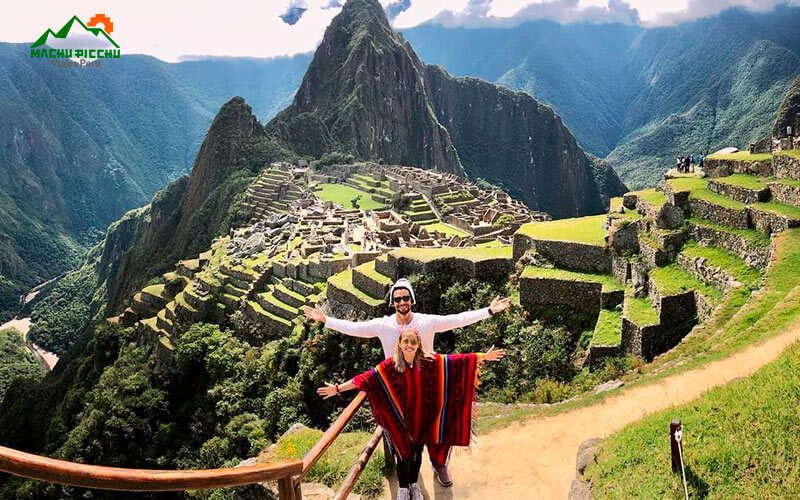
Machu Picchu is one of the Seven Wonders of the Modern World and the most visited archaeological site in South America. The Inca citadel, built in the 15th century at more than 7,874 feet above sea level in the Peruvian Andes, was abandoned after the arrival of the Spanish conquistadors and rediscovered in the 20th century. Today, it welcomes visitors from all over the world who come to explore its temples, ceremonial plazas, and natural viewpoints. Knowing what to see in Machu Picchu before you arrive helps you plan your time better and choose the circuits and tickets that match what you want to experience.
Most Important Places Inside Machu Picchu
The citadel is organized into clearly defined sectors: agricultural areas with stepped terraces, urban areas with temples and residential enclosures, and ceremonial spaces with controlled access. Each sector has its own architectural logic and its own meaning within the Inca worldview. Exploring the most important places inside the sanctuary takes between two and four hours, depending on the circuit you choose and your walking pace.
The Machu Picchu Citadel: A Tour of the Inca Sanctuary
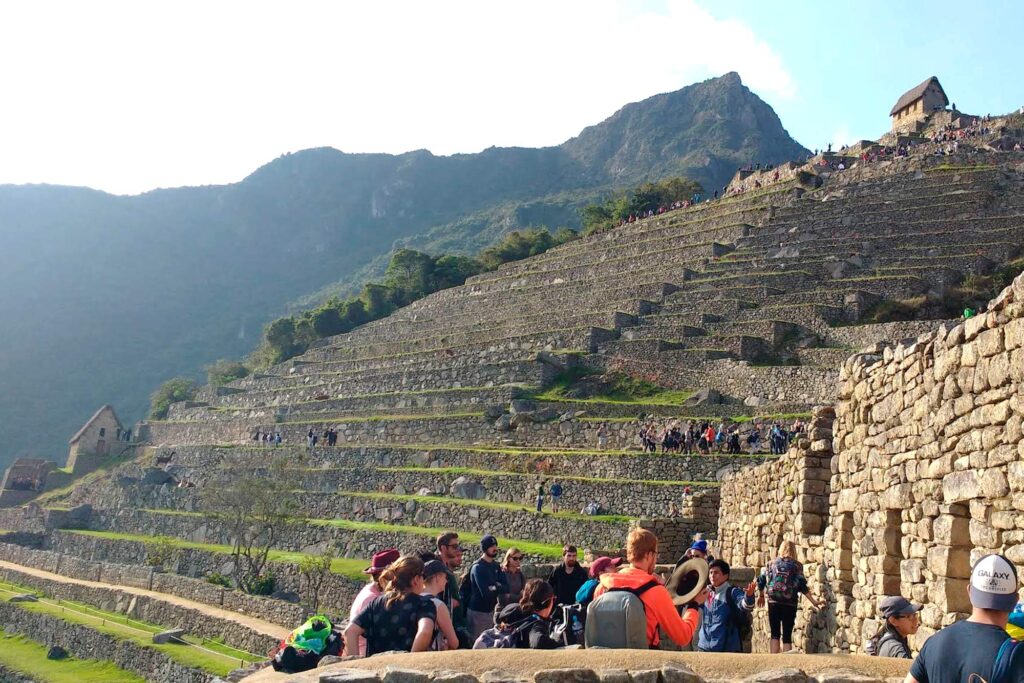
The citadel is the heart of the sanctuary and the starting point for all visitor circuits. It is an archaeological complex that combines agricultural areas with farming terraces, urban sectors with finely carved stone enclosures, and ceremonial spaces used exclusively by the Inca elite. Upon entering, the first area you encounter is the agricultural zone with its stepped terraces, where you can already get a general view of the entire complex. As you move toward the urban sector, the size and precision of the structures become noticeably greater.
To explore it fully, you should review the different Machu Picchu entrance circuits and choose the one that best fits the time you have available and the attractions that interest you most. Each circuit covers different areas of the sanctuary, so choosing in advance can make the difference between a complete visit and a partial one.
Guardian’s House: The Best Viewpoint for the Classic Photo

The Guardian’s House is the stone structure located at the highest point of the agricultural area, just above the farming terraces that flank the main entrance to the sanctuary. From its terrace, you get the most complete panoramic view of Machu Picchu: the citadel in the foreground, Huayna Picchu in the background, and the vegetation-covered mountains framing the scene. This is the angle from which the most widely reproduced photo of the site was taken, making it a must-stop for any visitor arriving in the early morning.
The building itself was a three-level structure that served as an access control point and resting area for the guards who protected the entrance to the sanctuary. Today, it is partially restored, and you can enter the structure to understand the typical spatial layout of domestic Inca architecture.
Temple of the Sun: One of the Most Important Sacred Spaces
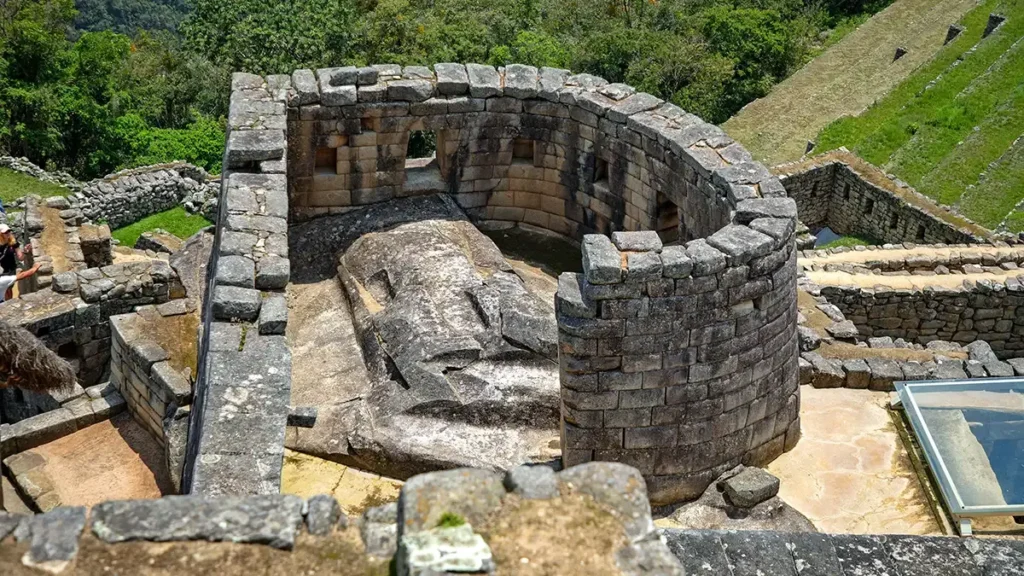
The Temple of the Sun is one of the most refined structures in the entire archaeological site. It is located in the upper urban sector and was built over a natural rock that the Incas integrated as the central element of the structure. What sets this temple apart from the others is the exceptional quality of its masonry: the granite blocks are carved and fitted together with such precision that there is no space between them, without the use of any mortar.
The temple’s most important window is oriented so that during the June solstice, the first rays of sunlight enter directly through it and illuminate the central altar rock. This astronomical alignment confirms that the building had a ritual function linked to the Inca solar calendar. Access to the interior is restricted, but from the outside you can appreciate the construction technique and the design of the trapezoidal windows.
Main Plaza: The Ceremonial Heart of Machu Picchu
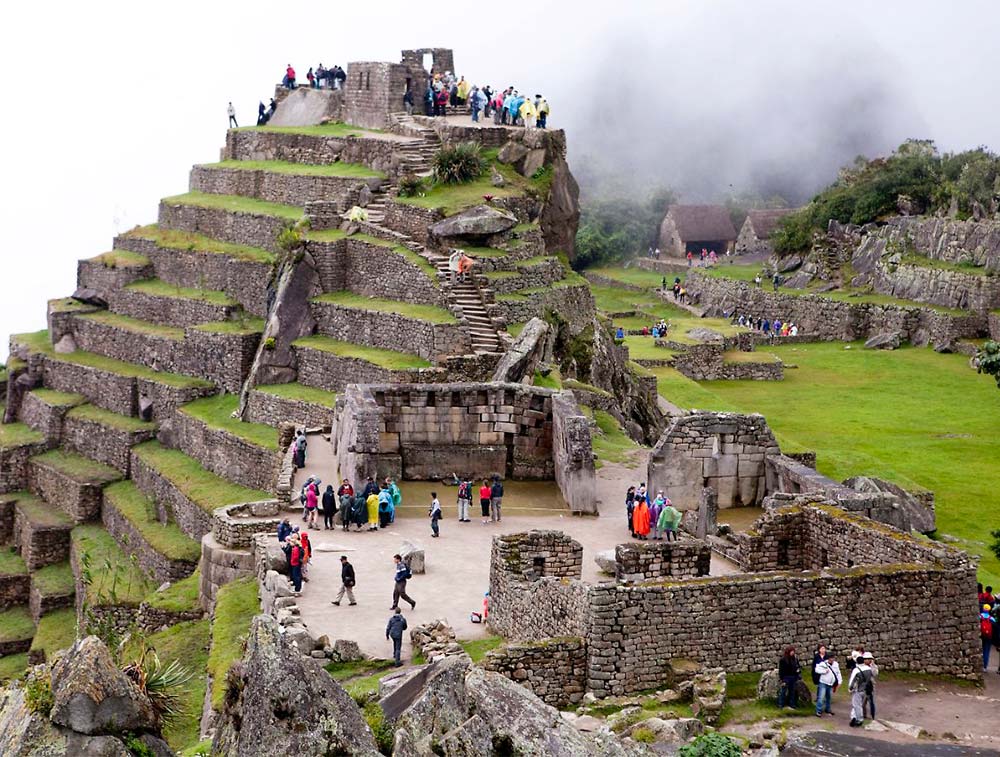
The Main Plaza is the largest open space in the citadel and served as the center of ceremonial and public activities within the sanctuary. It is surrounded by some of the most important buildings at the site: the Temple of the Three Windows to the east, the Main Temple to the north, and the Sacristy. The space was designed to gather a significant number of people during Inca calendar festivities.
From the plaza, you have a privileged view of the architecture of the sacred sector and the mountains surrounding the citadel. It is also one of the places where the contrast in scale between the Inca constructions and the natural landscape becomes most evident, which explains why many visitors choose this space to pause and take in the complex calmly.
Temple of the Three Windows: Inca Architecture and Symbolism

The Temple of the Three Windows is attached to the Main Plaza and is one of the buildings with the greatest symbolic significance at the site. Its three trapezoidal windows, opened toward the east to receive the morning light, have led to many interpretations among researchers. Some believe they represented the three regions of the cosmos in the Andean worldview: the upper world, the world of the living, and the underground world. Others associate the number with the mythical origins of the Inca Empire.
What is undeniable is the technical quality of its construction. The stone blocks that form the windows and walls are carved with geometric precision that continues to be studied by architects. The floor of the inner chamber still preserves remains of the original rock on which the building was constructed.
Intihuatana: The Sacred Stone of Machu Picchu
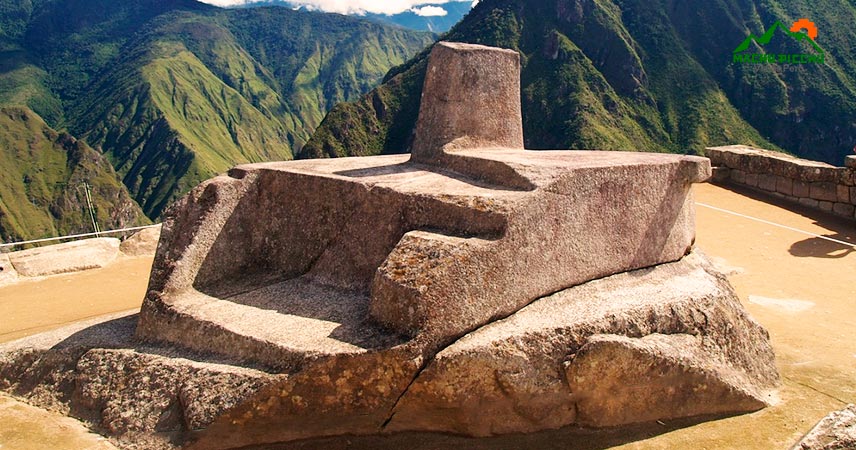
The Intihuatana is a monolith carved directly into the living rock and located at the highest point of the sacred sector of the citadel. Its name in Quechua means approximately “place where the sun is tied,” reflecting its ritual function: the Incas believed that this stone element kept the sun connected to the earth during the winter solstice, ensuring the return of longer days. During the June solstice, the sun stands directly above the monolith at noon, casting no shadow.
The Intihuatana of Machu Picchu is one of the few that survived intact after the Spanish conquest, since the conquistadors systematically destroyed these elements at other Inca sites they encountered. Its state of preservation and elevated position with views toward the four cardinal points make it one of the most important archaeological and spiritual highlights of the sanctuary.
Temple of the Condor: A Sacred Representation in Stone

The Temple of the Condor is one of the most original spaces in Machu Picchu because it uses the natural shape of two slanted rocks to represent the outstretched wings of a condor in flight. On the ground, between the two rocks, the Incas carved the bird’s head with its distinctive collar of white feathers. Together, the elements form a complete image of the condor, a sacred animal in the Andean worldview because of its association with the upper world and the gods.
Below the temple is an underground chamber that some researchers interpret as a place of confinement or ritual preparation. Access to this space has been restricted in recent years to protect the carved rock, but the figure of the condor is perfectly visible from the upper level of the temple.
Hikes and Scenic Routes in Machu Picchu
In addition to the attractions inside the citadel, the historic sanctuary offers several hiking routes that provide different perspectives of the archaeological complex and the mountain landscape surrounding it. These routes have limited availability, require an additional ticket, and in most cases must be booked weeks in advance.
Machu Picchu Mountain: Wide Views of the Citadel
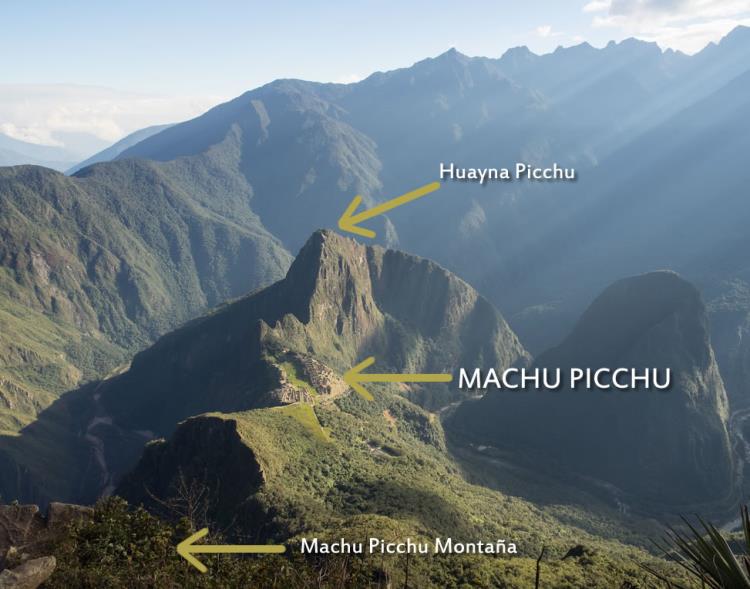
Machu Picchu Mountain rises behind the citadel to 10,112 feet above sea level and offers the widest view of the sanctuary and the Urubamba River valley. The ascent takes between 60 and 90 minutes on a trail of dirt paths and stone steps, with moderate to steep inclines in some sections. From the summit, you can see the entire citadel from above, including the llama-shaped layout that some people attribute to the original design of the Inca complex.
Daily entry is limited, and tickets sell out several weeks in advance during the high season. Entry to the mountain has an early opening time, so the best option is to combine the climb with the first morning entry slot to take advantage of the light and avoid the largest crowds at the summit.
Huayna Picchu: The Most Famous Hike Above Machu Picchu
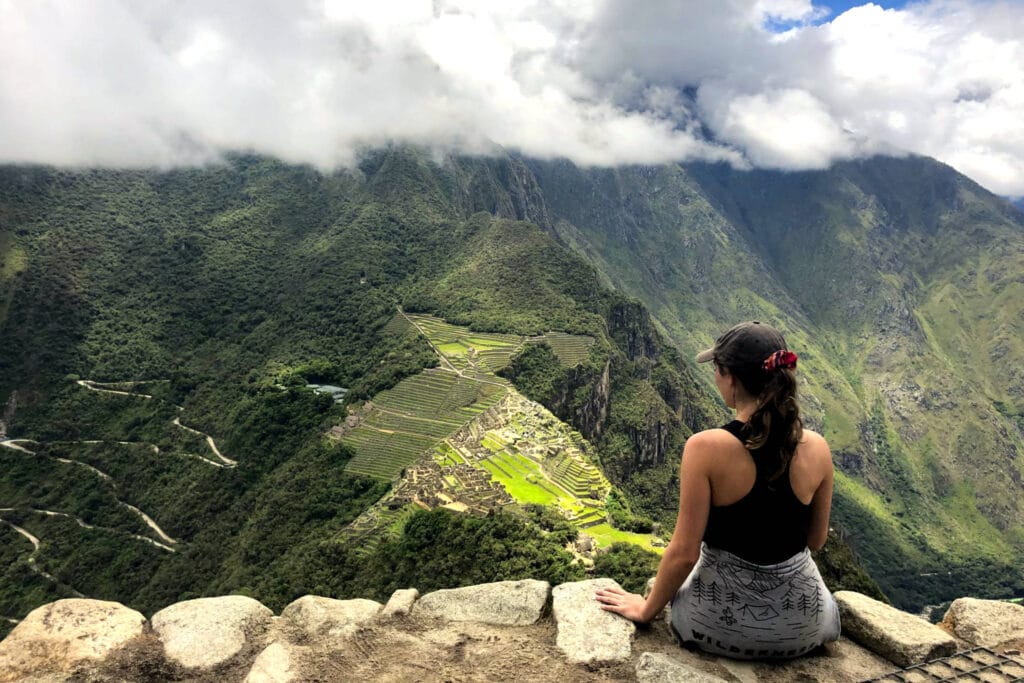
Huayna Picchu is the mountain that appears in the background of the classic Machu Picchu photo. Its pointed silhouette and its position directly behind the citadel make it the most requested hike in the sanctuary. The ascent is demanding: the trail climbs almost 1,181 feet in just over half a mile, with very steep stone steps and narrow passages along the rock. The climb takes between 45 and 75 minutes, depending on each person’s pace and physical condition.
From the summit, the view of the citadel from above is unique and completely different from any other perspective of the sanctuary. Daily availability is limited to 400 people divided into two time slots, making it the most limited ticket in Machu Picchu. If you want to climb Huayna Picchu, book at least two months in advance during the high season.
Inca Bridge: A Short Route with History and Scenery

The Inca Bridge is an alternative access route to the citadel that the Incas used to control entry from the south. The trail starts near the storage areas of the citadel and follows a path carved into the mountainside until it reaches a structure made of removable logs that functioned as a natural drawbridge over a cliff. The round-trip walk takes approximately 45 minutes and does not require an additional ticket, as it is included in Circuit 3.
The trail is narrow and runs along a rock wall with a steep drop on one side, so access is restricted to the bridge viewpoint and visitors are not allowed to cross. The vegetation surrounding the trail is different from the rest of the site, with species of orchids and bromeliads growing among the rocks.
Intipunku: The Sun Gate of the Inca Trail

Intipunku, or the Sun Gate, is the arrival point of the classic Inca Trail and the first place from which Inca pilgrims saw Machu Picchu at the end of their journey. It is located about a 45-minute walk from the citadel along a trail that climbs the mountainside with progressive views of the sanctuary. The gate is a stone structure with a trapezoidal entrance that marks the boundary of the sacred road.
The hike to Intipunku is one of the most accessible options for visitors who want to go beyond the citadel’s perimeter without taking on the physical challenge of Huayna Picchu or Machu Picchu Mountain. It does not require an additional ticket if it is included in your circuit, but you should verify this when choosing your entrance ticket.
Inca Trail to Machu Picchu
The Inca Trail is the most famous trekking route in Peru and one of the most recognized in the world. It connects the Sacred Valley with Machu Picchu through a pre-Hispanic stone path that crosses puna ecosystems, cloud forest, and high jungle, passing intermediate archaeological sites that provide historical context before the final arrival at the citadel.
Classic 4-Day Inca Trail
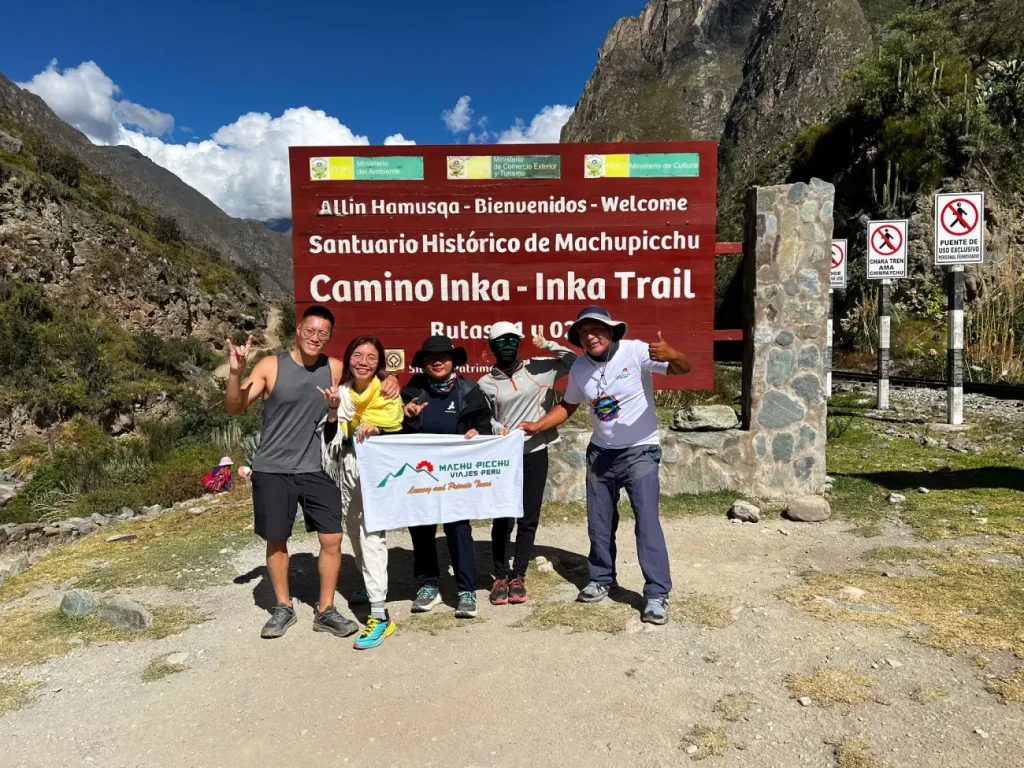
The classic route lasts four days and three nights. It begins at kilometer 82 of the Cusco–Aguas Calientes railway and covers approximately 27 miles before reaching Machu Picchu through Intipunku. Along the route, you cross three mountain passes, the highest of which exceeds 13,779 feet above sea level, and pass archaeological sites such as Llactapata, Runkurakay, Sayaqmarka, and Wiñay Wayna. On the fourth day, you arrive at Intipunku at sunrise to watch the sun rise over Machu Picchu before descending to the citadel.
This route requires reasonable physical condition and several days of prior acclimatization in Cusco. The trek is done in groups with an official guide, porters, and a cook included, ensuring full logistical support throughout the four days on the trail.
Short 2-Day Inca Trail

The short route lasts two days and one night. It begins at kilometer 104 of the railway and covers the final section of the Inca Trail, including the archaeological site of Wiñay Wayna, one of the most impressive places along the route, before reaching Intipunku and descending to Machu Picchu on the second day. This option is ideal for travelers with less time available or those who do not want to take on the full physical challenge of the classic route.
Although it is shorter, the route still involves several hours of walking with significant elevation changes, so previous physical preparation is still necessary. The night is spent at an authorized campsite along the route, with equipment provided by the agency.
When to Book This Route to Machu Picchu
The number of daily permits for the Inca Trail is limited to 500 per day, including tourists, guides, and porters. In practice, spaces for tourist groups sell out four to five months in advance during the high season, between May and August. If you plan to do this route, book with your agency as soon as possible once you have your travel date confirmed. During the low season, availability is greater, but even then it is best not to leave your reservation until the last minute.
Tickets and Circuits to Visit These Attractions
The Machu Picchu entrance ticket system is organized by numbered circuits that determine which areas you can visit and in which direction. Each circuit has a specific price and daily capacity, and some include access to the mountains or external routes within the sanctuary.
Which Ticket to Choose Based on the Places You Want to Visit
If your priority is to visit the main temples and ceremonial spaces of the citadel, Circuits 1 and 2 are the most complete options for a first visit. Circuit 1 includes the agricultural area, the Guardian’s House, the Temple of the Sun, the Main Plaza, the Intihuatana, and the Temple of the Condor. Circuit 2 shares much of Circuit 1’s route but follows a different direction and provides access to additional sectors. If you want to combine your visit to the citadel with a climb up one of the mountains, you need to purchase a combined ticket that includes both general entrance and specific access to Huayna Picchu or Machu Picchu Mountain.
Recommended Circuits for a First Visit
For travelers visiting Machu Picchu for the first time, Circuit 1 is the most logical starting point because it covers the sanctuary’s most representative attractions in a route that can be completed in approximately two hours at a relaxed pace. If time allows, complementing it with Circuit 2 on the same day or booking a second entry with Circuit 3, which includes the Inca Bridge and Intipunku, provides a much more complete view of the complex.
Routes That Require Advance Booking
Huayna Picchu and Machu Picchu Mountain are the routes with the most limited availability and the first to sell out. Both must be booked weeks or months in advance, depending on the time of year. As mentioned earlier, the Inca Trail requires booking four to five months in advance during the high season. Standard citadel circuits also sell out during the busiest months, so booking at least two weeks in advance is recommended at any time of year.
Recommendations for Visiting the Attractions of Machu Picchu
Machu Picchu has visitor regulations that are important to know before you arrive: food is not allowed inside the citadel, drones are prohibited, selfie sticks are not permitted inside the site, and entry must take place at the exact time shown on your ticket. Following these rules helps avoid issues at the entrance and ensures that your visit goes smoothly.
Best Time to Explore the Citadel
The first entry slot, between 6:00 and 7:00 a.m., is the most recommended for several reasons. The morning light is the best for photographing the site, the temperature is cooler for walking, and the number of visitors is significantly lower than after 9:00 or 10:00 a.m., when the larger groups begin to arrive. Entering during the first time slot also gives you enough time to explore the citadel calmly and, if you have a combined ticket, begin the climb up one of the mountains before the midday heat makes it more demanding.
What to Bring for a Comfortable and Safe Visit
Bring enough water, because there are no drink stands inside the citadel. High-SPF sunscreen is essential, as the radiation at high altitude is intense even on cloudy days. A lightweight rain poncho is useful at any time of year because rain can appear without warning, especially in the afternoon. Your shoes should have soles with good grip, since the stone surfaces can be wet and slippery. If you plan to climb one of the mountains, trekking poles with rubber tips are allowed and can make the descent easier.
Visit Machu Picchu with a Specialized Local Guide
Exploring Machu Picchu with an official guide makes a real difference in how well you understand the site. Authorized guides know the history, architecture, and Inca cosmology in a level of detail that is not available in any app or audio guide. They can adapt the route according to your interests, guide you toward lesser-known photo angles, and help resolve any issue that may arise during the visit. To book a Machu Picchu tour with a specialized local guide and all logistics included, you can arrange your reservation directly with a Cusco-based agency that knows the site in detail.
Give us your rating and share it on your social media