Museums in Puno: The Most Important Museums in Puno 🇺🇸

Exploring the museums of the city of Puno is like stepping back in time to the deepest roots of the Peruvian highlands. If you’ve ever wondered what makes Puno’s culture so special, its museums offer the most direct and authentic way to discover it.
From my personal experience, visiting these spaces not only allowed me to connect with ancient stories and traditions that are still alive today, but also changed the way I see the city. Every gallery, every artifact, and every story reflects the pride of a people deeply connected to their past. That’s why, if you’re planning a trip or simply interested in the history of southern Peru, the museums and tours in Puno are a must-see to truly understand the essence of the highlands.
Throughout this journey, you’ll discover everything from pre-Inca archaeological remains to present-day expressions of Andean culture. Get ready—because the experience goes far beyond any expectations you might have.
The most important museums in Puno you should visit
Here are the main museums:
- Carlos Dreyer Municipal Museum: Local history and art featuring unique pieces.
- Pucará Lithic Museum: Pre-Inca sculptures in a fascinating rural setting.
- Archaeological Museum of the National University of the Altiplano: An impressive archaeological collection.
- Coca Museum and Customs: Living traditions and ancestral knowledge.
Each museum has its own personality and charm, and together they form a truly impressive cultural mosaic. Now, let’s take a closer look at what makes each one so special.
Main museums and cultural centers in Puno
Coca Museum and Customs: highland traditions
Right in the heart of the city, you’ll find one of those places that surprises even those of us who have lived in the highlands for years. The Coca Museum and Customs is more than just an exhibition—it’s a tribute to the sacred leaf and the everyday life of Puno’s communities.

- Exhibition of traditional costumes at the Coca Museum in Puno.
- Main exhibition dedicated to the traditional use of the coca leaf in the highlands.
I’ve noticed that foreign visitors are often amazed by the explanations about the spiritual and medicinal significance of coca. The collection includes everything from tools used for chewing coca leaves to festive clothing and ritual objects, showing how coca is connected to almost every aspect of Andean life.
What stands out the most to me is how this museum helps break negative stereotypes about coca by highlighting its legitimate cultural value. If you want to understand the present through the past and grasp the true meaning behind many local traditions, this museum is an excellent starting point.
Archaeological Museum of the National University of the Altiplano
If you’re a fan of archaeology or simply curious about how civilizations lived before the Inca Empire, this museum is for you. Located on the university campus, it houses one of the most complete collections in southern Peru.

- Pre-Inca archaeological artifacts at the Archaeological Museum of Puno.
- Pre-Inca ceramics and mummies displayed in climate-controlled cases.
Here you’ll find everything from stone artifacts to textiles and mummies recovered from iconic sites such as Sillustani and Cutimbo. In my opinion, very few places allow you to get this close to the mysteries of the ancient highlands. I still remember seeing Peruvian and international students and researchers taking notes in front of a burial urn over a thousand years old—moments like that feel truly special.
Permanent collection of Pucará, Tiwanaku, and Colla ceramics.
- Temporary exhibits on recent archaeological discoveries.
- Educational programs for local school groups.
It’s inspiring to think that many children from Puno see artifacts created by their own ancestors here for the very first time. Walking through these quiet halls filled with living history naturally evokes a deep sense of respect.
Pucará Lithic Museum: pre-Inca art
About 100 kilometers north of Puno, the small town of Pucará safeguards one of the most important archaeological treasures of rural Peru. The Lithic Museum houses monoliths, zoomorphic sculptures, and stelae carved more than two thousand years ago.

- Pre-Inca monoliths at the Pucará Lithic Museum.
- Carved monoliths representing mythical figures and sacred animals.
I personally always recommend this museum to travelers looking for something beyond the conventional tourist route. The mystical atmosphere—surrounded by open fields and bluish mountains—adds a special, hard-to-describe charm. On my last visit, a local guide shared fascinating stories about the Pucará bull, now a symbol of the town inspired by these ancient sculptures.
- More than 20 monumental stone pieces preserved indoors.
- Local mythological stories explained by community experts.
- Combined visit with the original outdoor archaeological site.
Carlos Dreyer Municipal Museum: history of Puno
Located right next to the main square, this museum occupies a restored colonial mansion that is already an attraction in itself. The collection was started by Carlos Dreyer, a German artist deeply in love with Peru, who gathered unique pieces over several decades.
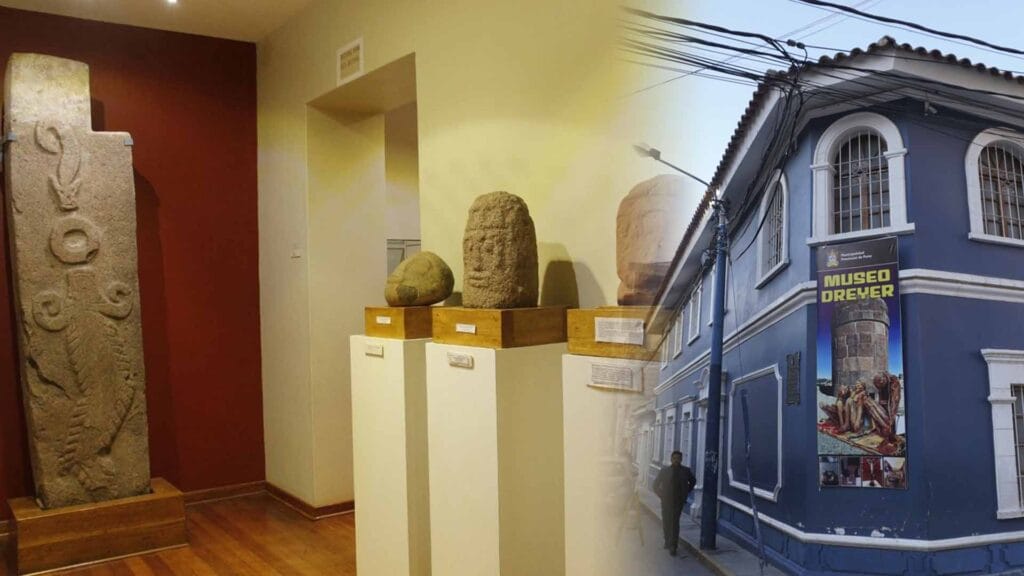
Interior of the Carlos Dreyer Museum featuring colonial and pre-Columbian artifacts
Room with festive masks and colonial reliquaries inside the Carlos Dreyer Museum
Here you’ll find everything from pre-Columbian art to colonial-era paintings and religious objects brought by the Spanish. What makes it special is the intimate atmosphere of a personal collection. In my opinion, walking through its rooms feels like opening the city’s most valuable memory chest.
- Permanent exhibit on Colla and Inca cultures.
- Room dedicated to Andean evangelization in Puno.
- Artifacts related to colonial foundations and local festivals.
I once came across a temporary exhibition dedicated to traditional dancers—it was deeply moving to see popular art in dialogue with formal history. Truly, it’s impossible to leave this museum indifferent; you can’t help but feel a sense of pride in the incredible cultural richness gathered under one roof.
Frequently asked questions about museums in Puno
Which museum is best to visit with children?
Almost all of them have educational areas, but the Archaeological Museum of the National University of the Altiplano often offers interactive workshops and guided tours designed especially for local school groups. Seeing original artifacts sparks curiosity in children—and adults alike.
Are there guided tours or only self-guided visits?
Both the Carlos Dreyer Museum and the Lithic Museum usually offer guided tours included in the entrance fee.
Is photography allowed inside the museums?
Most museums allow photography without flash in specific areas. However, some rooms are completely restricted to protect delicate artifacts, so it’s always best to ask beforehand.
When is the best time to visit?
The best time is usually during local festivals (for example, around February during the Virgen de la Candelaria celebrations), when some museums offer temporary themed exhibitions or special cultural activities open to the public.