Larco Museum: Collection, Erotic Gallery, and a Visit to Pueblo Libre
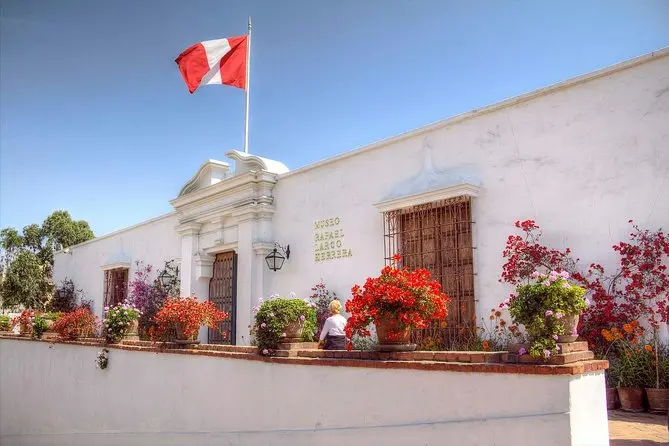
The Larco Museum is one of the pioneering museums of Peruvian archaeology and houses a fascinating collection of pre-Columbian art. It was founded in 1926 by Rafael Larco Hoyle and is located in an 18th-century viceregal mansion surrounded by beautiful gardens in the district of Pueblo Libre, Lima.
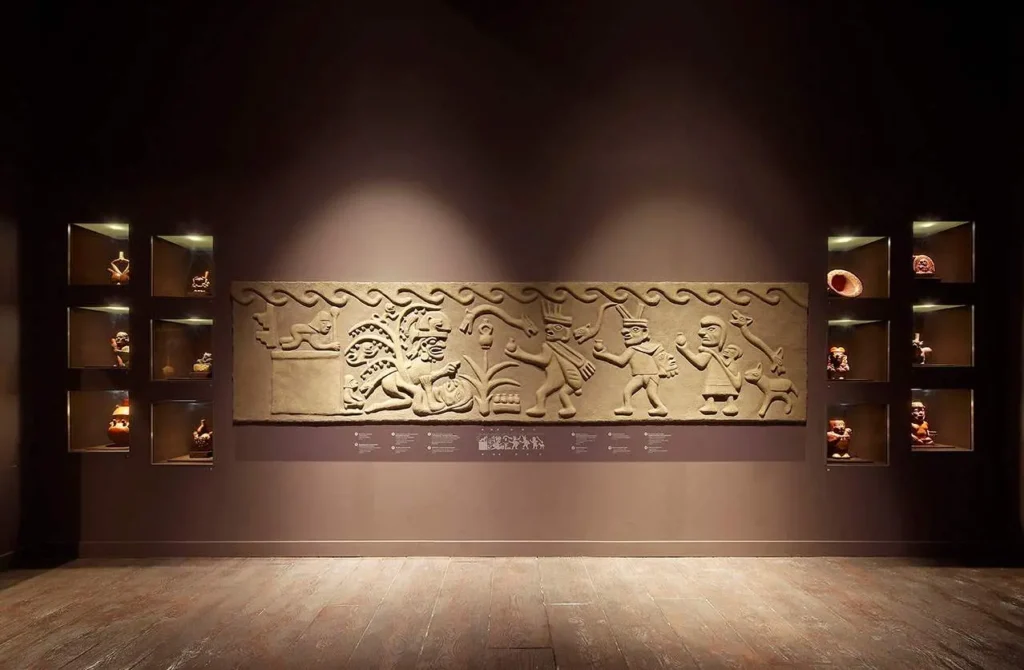
Inside the museum, several important spaces stand out, such as the famous gallery of pre-Columbian erotic art, the gold and silver room, and the open storage areas where visitors can observe thousands of archaeological pieces. This cultural legacy is unique, as it brings together more than 45,000 historical artifacts.
What to See at the Larco Museum
The Larco Museum houses approximately 45,000 archaeological pieces from different cultures of ancient Peru. It was founded in 1926 by Rafael Larco Hoyle and is located in an 18th-century viceregal mansion surrounded by gardens.
The museum is a space that allows visitors to understand the history of ancient Peru through different collections, including:
- The gold and silver vault
- The famous erotic pottery gallery
- Ceramics from the Moche, Nazca, and Chimú cultures

The Famous Pre-Columbian Erotic Art Gallery
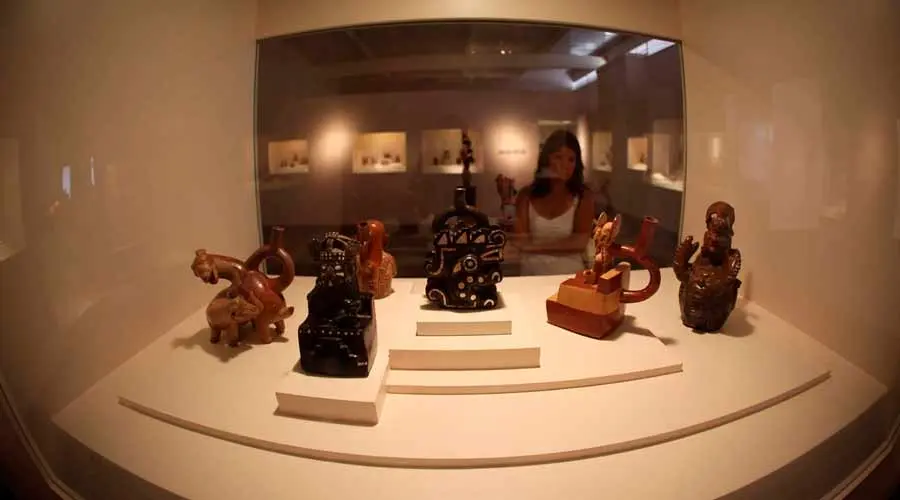
The Pre-Columbian Erotic Art Gallery displays pieces that illustrate the importance of sexuality in ancient Peruvian cultures.
Many of these ceramics were related to religious rituals and fertility ceremonies. Some of these pieces may surprise visitors, but they offer an interesting perspective on the beliefs and customs of pre-Columbian societies.
The Gold and Silver Room: Treasures of Ancient Peru
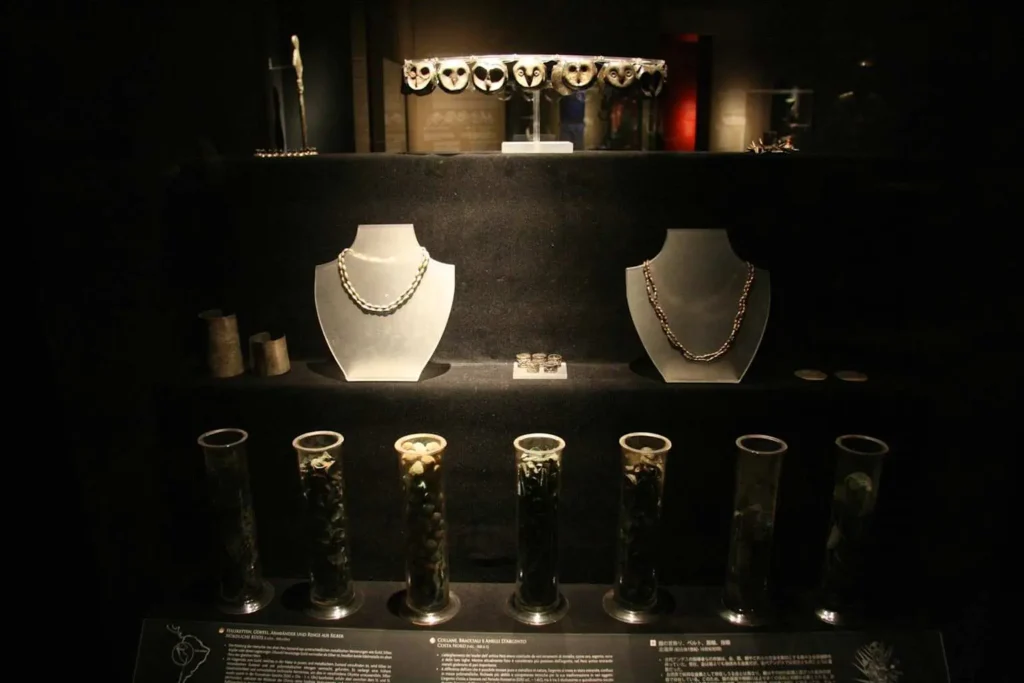
The Gold and Silver Room is one of the visitors’ favorite areas. Here you can appreciate the high level of development of pre-Columbian metallurgy, especially in ceremonial objects made of precious metals.
Among the most notable pieces are:
- Moche gold ear ornaments
- Chimú gold ear ornaments
- Chimú silver ear ornaments
- Chimú silver nose ornaments
These pieces reflect the technical mastery of ancient Peruvian cultures, which developed advanced techniques such as metal laminating, hammering, chiseling, and alloying.
Open Storage Areas: Thousands of Archaeological Pieces
In 2001, with the support of Fundación Telefónica, an electronic cataloging project for the collection began.
Since 2007, the museum has allowed visitors to access an important part of its storage areas, where more than 50,000 archaeological pieces are preserved.
This system allows visitors to observe the collections directly and facilitates scientific research, creating a closer connection between the public and Peru’s cultural heritage.
History and Architecture of the Museum
The origin of the museum is linked to the Peruvian archaeologist Rafael Larco Hoyle, who showed interest in Peru’s archaeology from a very young age.
Inspired by his father, he began collecting pre-Columbian ceramics and later expanded his collection through excavations, explorations, and acquisitions.
In 1926, he decided to create a museum to protect and study Peru’s archaeological heritage, especially that of the northern coast.
The initial collection began with 600 archaeological pieces, but over time it grew considerably to include tens of thousands of objects, including ceramics, textiles, and metal artifacts.
The 18th-Century Viceregal Mansion and Its Beautiful Gardens
The museum is located inside an 18th-century viceregal mansion built in traditional colonial style. It is surrounded by beautiful gardens that enhance the historical atmosphere of the site.
The building has been restored and adapted to function as a museum while preserving its original colonial architecture.
The Legacy of Rafael Larco Hoyle and Peruvian Archaeology
Rafael Larco Hoyle is considered one of the pioneers of Peruvian archaeology.
Thanks to his research on Peru’s northern coast, he managed to assemble one of the most important archaeological collections in the country. His greatest legacy is the Larco Museum, which allows visitors to learn about ancient Peru through an extensive archaeological collection.
Practical Information for Your Visit
Here you can learn more about the Larco Museum for your visit, as well as some important aspects to keep in mind.
Ticket Prices and How to Buy Online
Ticket Prices
- General admission: 45 soles
- Senior citizens (over 60 years old): 30 soles
- Students (9 to 17 years old with ID): 20 soles
Children from 3 to 8 years old: 1 sol
Opening Hours and Best Times to Avoid Crowds
The museum is open from Monday to Sunday, including holidays.
General hours:
9:00 a.m. – 7:00 p.m.
Special dates (December 24, 25, 31 and January 1):
9:00 a.m. – 6:00 p.m.
The Larco Museum Restaurant: Gastronomy in a Historic Setting
The Larco Museum restaurant offers Peruvian and international cuisine in a warm and welcoming atmosphere.
It is located on the terrace overlooking the museum’s gardens and provides a privileged view of the historic viceregal mansion.
Visiting the Larco Museum on a Tour
The Larco Museum can be visited independently or with a bilingual guide in Spanish and English.
During the visit, you can explore the main galleries of the museum, the gold and silver collection, the erotic art gallery, and the archaeological storage areas.