7 Ausangate Lagoons: Prices and How to Get There
Where are the 7 Ausangate Lakes located?
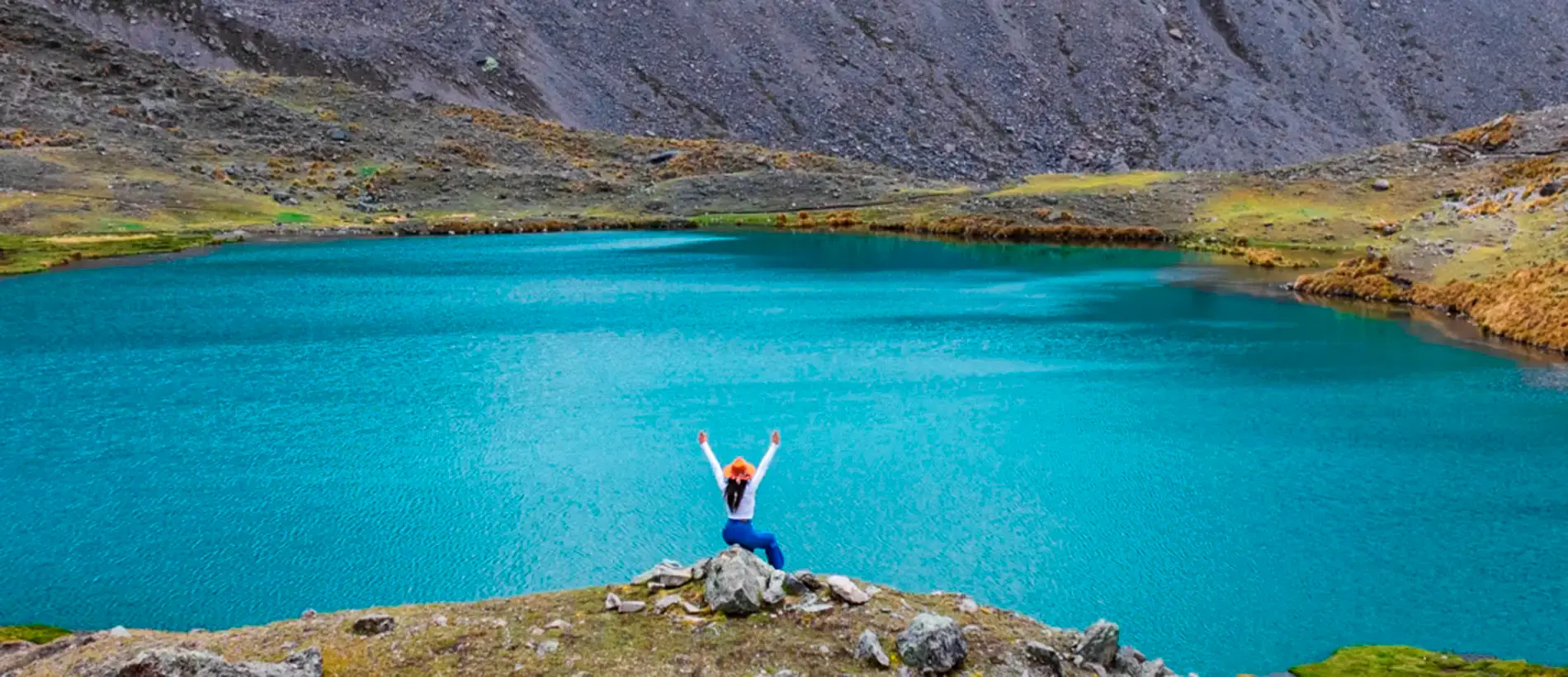
The 7 Ausangate Lakes are located in the Vilcanota Mountain Range, southeast of the city of Cusco, in the Cusco Region of Peru. They are part of the natural surroundings of the Ausangate snow-capped mountain, which has been considered since pre-Inca times one of the most important Apus (sacred mountain spirits) in the southern Andes.
Administratively, the lakes belong to the province of Canchis, district of Ocongate, and are associated with the rural community of Pacchanta, which manages access and conservation of the hiking circuit.
How to get to the 7 Lakes from Cusco
Access is exclusively by road and takes approximately 3.5 to 4 hours.
Typical route:
Cusco → Ocongate → Tinki → Pacchanta
The road to Ocongate is paved. From Tinki to Pacchanta, the road becomes a gravel surface. Pacchanta is the official starting point of the hike.
Pacchanta village: starting point of the hike
Pacchanta is an Andean community located at over 4,300 meters (14,100 feet) above sea level. It is home to Quechua-speaking families primarily dedicated to alpaca and llama herding.
For visitors, Pacchanta provides several key services:
- Visitor registration and entrance control.
- Starting and ending point of the hike.
- Basic services (restrooms and simple food stalls).
- Access to natural hot springs.
- Local guides and community-based tourism services.
From a cultural perspective, Pacchanta maintains a strong spiritual relationship with Apu Ausangate, believed to be a protector of water and life.
Entrance fees and prices (updated)
Entrance fee to the 7 Lakes circuit
Between S/ 20 and S/ 30 per person (approximately USD $10).
Paid directly to the Pacchanta community.
The entrance fee does not include a guide.
This fee helps maintain the trail, regulate visitor flow, and support environmental conservation.
Pacchanta hot springs entrance fee:
- Between S/ 10 and S/ 15 (approximately USD $5).
- Outdoor pools with naturally heated, volcanic-origin waters.
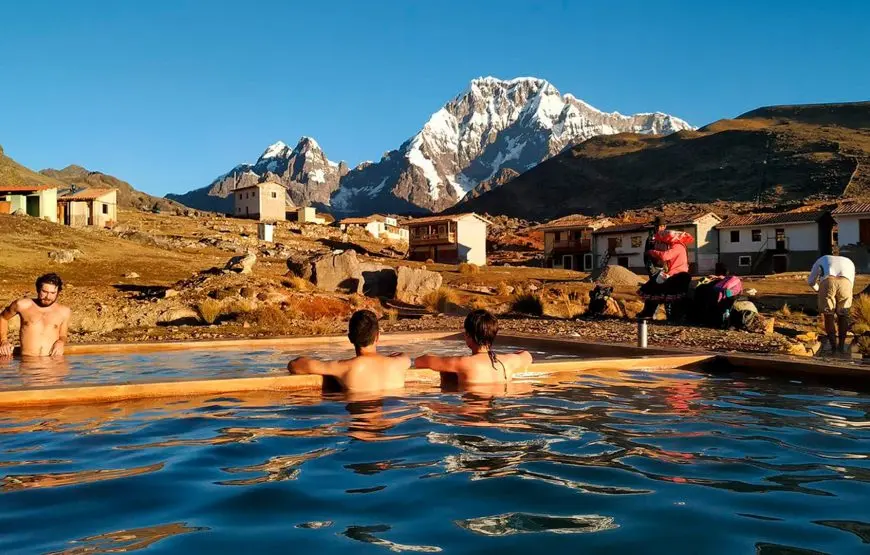
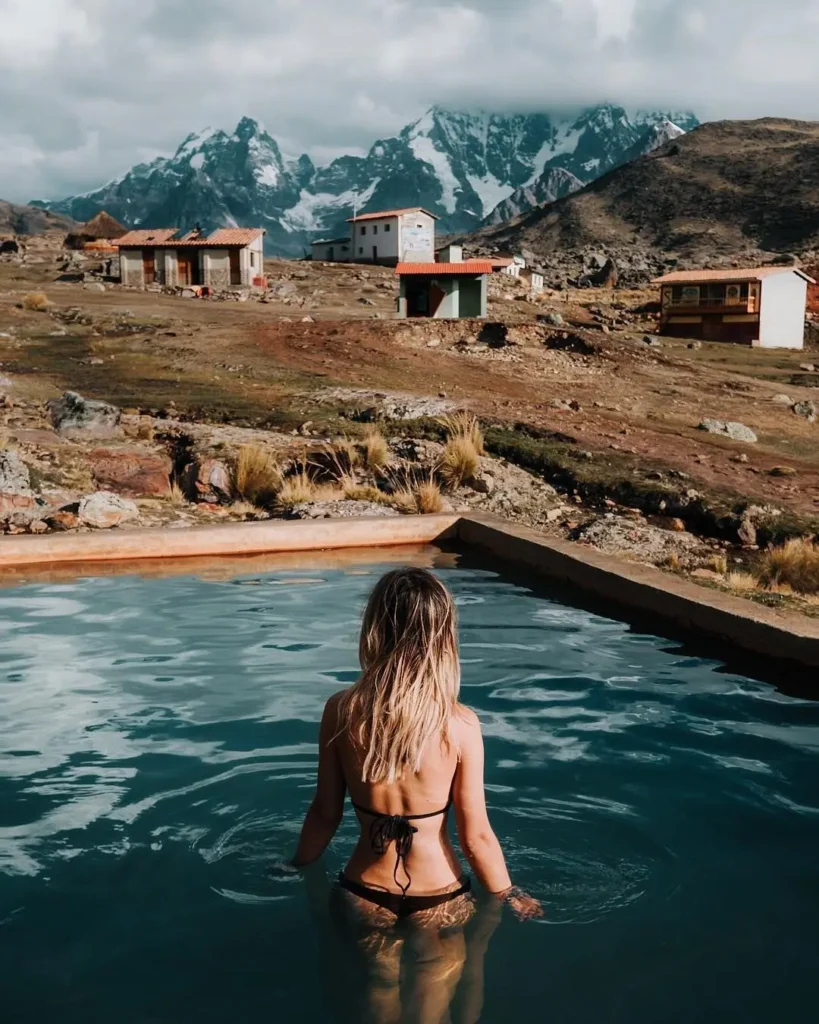
Highly recommended after the hike for muscle relaxation.
Is it better to go independently or with an organized tour?
Going independently
Pros:
- Lower cost.
- Flexible schedule.
Cons:
- No technical signage throughout the entire route.
- Risk due to sudden weather changes.
- Higher physical demand without supervision.
- No historical or cultural interpretation.
Going with an organized tour (most recommended option)
Pros:
- Round-trip transportation from Cusco.
- Professional certified guide.
- Breakfast and lunch included.
- Pace and time management.
- High-altitude assistance.
For international travelers or those without high-altitude trekking experience, the organized 7 Ausangate Lakes tour is the safest and most complete option.
Map and hiking route of the 7 Lakes circuit
The route is a loop trail that starts and ends in Pacchanta. It circles the Ausangate mountain and allows visitors to see all seven lakes in one day.
The order of the lakes may vary depending on weather conditions and the guide, but the circuit follows a clear and logical sequence.
Names of the 7 Ausangate Lakes
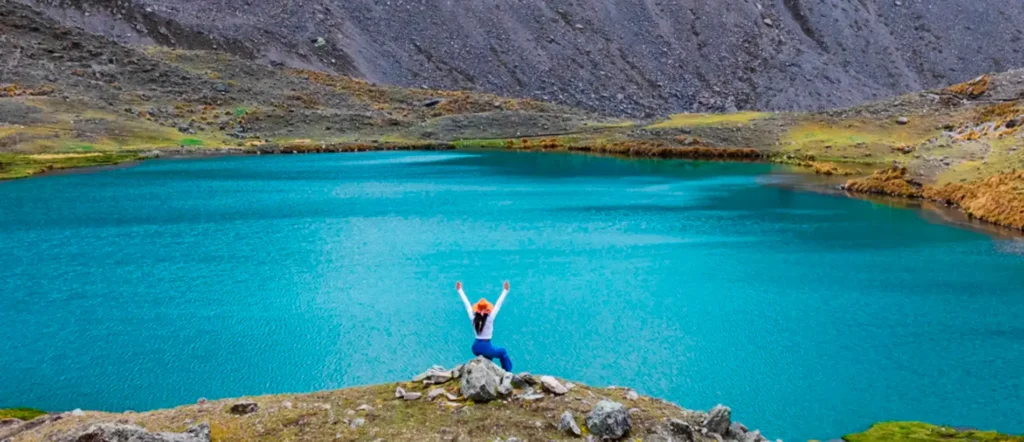
The lakes are named based on water color, wildlife, and Andean worldview:
- Pucacocha – reddish tones
- Patacocha – deep blue
- Alqacocha – light green
- Qomercocha – dark green
- Orco Otorongo – intense turquoise
- China Otorongo – natural mirror-like lake
- Azulcocha – crystal blue
Each lake displays different shades due to mineral content, depth, and glacial reflection.
Hiking time and total distance
- Total distance: 6.5–7 km (4–4.3 miles).
- Average hiking time: 3.5–5 hours.
- Moderate pace with stops for rest and photos.
- Time may vary depending on fitness level and acclimatization.
Altitude and difficulty of the Ausangate hike
- Starting altitude (Pacchanta): 4,300 m / 14,100 ft.
- Maximum altitude: approx. 4,800 m / 15,750 ft.
- Hiking duration: 3.5–5 hours.
- Total distance: 6.5–7 km.
- Difficulty level: Moderate to challenging.
- Route type: Loop circuit.
Key recommendations:
- Acclimatize in Cusco for at least 1–2 days.
- Stay well hydrated.
- Use trekking poles.
- Wear thermal and waterproof clothing.
- Bring sun and wind protection.
What is the highest altitude reached on the 7 Lakes route?
The highest point is reached between the fifth and sixth lakes, along the slopes of Ausangate, at approximately 4,900 meters (16,076 feet). At this altitude, oxygen levels are significantly lower, making prior acclimatization essential.
Physical difficulty level and recommended preparation
Difficulty level
Moderate to challenging, mainly due to the altitude rather than the distance.
No technical trekking experience is required, but a good basic level of physical fitness is necessary.
Recommended preparation
- Acclimatize for at least 1–2 days in Cusco or the Sacred Valley.
- Avoid alcohol and heavy meals the night before.
- Get a good night’s sleep before the tour.
- Maintain a steady pace during the hike.
- Not recommended as your first activity in Cusco.
Tips to prevent altitude sickness at Ausangate
Altitude sickness (locally known as soroche) can affect any visitor. Key recommendations include:
- Stay well hydrated (water or hot herbal teas).
- Walk slowly and practice deep breathing.
- Drink coca tea or use natural altitude remedies.
- Avoid running or overexerting yourself.
- Inform your guide immediately if you experience dizziness or nausea.
- Organized tours usually carry a first-aid kit and emergency oxygen.
Best time to visit the 7 Ausangate Lakes
Dry season (best option)
- April to October.
- Stable weather conditions.
- Clear skies.
- More intense lake colors.
- Better visibility of Ausangate Mountain.
Rainy season
- November to March.
- Frequent rainfall.
- Slippery trails.
- Occasional fog.
- Greener landscapes, but reduced visibility.
- January and February are the least recommended months.
Clothing and gear recommendations
- Essential clothing:
- Thermal and waterproof jacket.
- Layered warm clothing.
- Gloves and a warm hat.
- Trekking shoes with good grip.
- Recommended gear:
- Trekking poles.
- Sunscreen and UV-protection sunglasses.
- Sun hat or cap.
- Small daypack.
- Energy snacks.
Additional highlights of the tour
In addition to the lakes, the circuit offers a complete natural and cultural experience.
The medicinal hot springs of Pacchanta, located within the Pacchanta community, feature volcanic-origin waters rich in minerals. These hot springs are ideal for:
- Muscle relaxation.
- Post-hike recovery.
- Relief from the Andean cold.
Views of Ausangate and Mariposa snow-capped mountains
Along the route, you will enjoy privileged views of:
- Ausangate Mountain – 6,384 m (20,945 ft).
- Mariposa Mountain.
- Both are part of the sacred Andean landscape and dominate the entire circuit.
Alpaca, llama, and Andean wildlife spotting

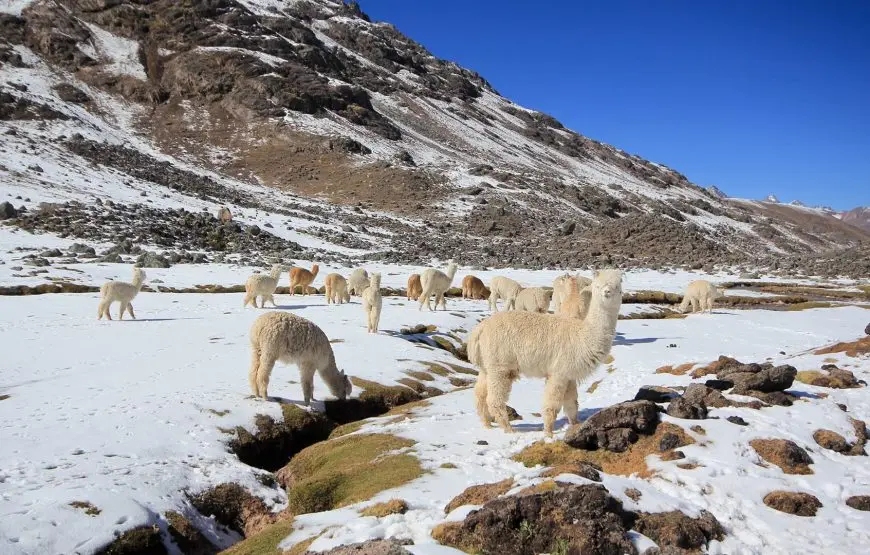
It is common to see:
- Grazing alpacas and llamas.
- Vizcachas (Andean chinchilla-like rodents) in rocky areas.
- High-Andean birds such as Andean geese and caracaras.
- Wildlife lives freely within its natural environment.
Frequently asked questions about the 7 Ausangate Lakes
What time do tours depart from Cusco?
Most tours depart between 4:00 and 5:00 a.m. due to the distance and to take advantage of the best weather conditions.
Can horses be rented for the circuit?
Yes. Horses can be rented in Pacchanta and are ideal for:
- Travelers with lower physical endurance.
- Senior travelers.
- Partial assistance during the hike.
Is the hike suitable for children and older adults?
Children: only if they are well acclimatized and used to walking at high altitude.
Older adults: recommended for those in good health, ideally with the option of renting a horse.
Always subject to individual evaluation.
Where can you eat during the 7 Lakes visit?
Organized tours include breakfast and lunch.
In Pacchanta, there are community-run restaurants serving simple Andean dishes such as soups, quinoa, and trout.
Walking through the 7 Ausangate Lakes means traveling through a sacred landscape where nature and Andean worldview remain alive. Come and join this high-altitude adventure!