Machu Picchu Citadel: Circuits, Attractions, and Tips for Your 2026 Visit
Within this content, we will see all the information related to the citadel of Machu Picchu: what its origin was, what its function was, the different circuits of the citadel, which circuits can be visited, and some tips to make the visit better.
We will also see where the citadel of Machu Picchu is located and, lastly, some recommendations, restrictions, and important aspects about the circuits that take you to Machu Picchu, so you can identify which may be the best option according to your trip.
What is the citadel of Machu Picchu (Llaqta)?
The citadel of Machu Picchu, also known as the Llaqta of Machu Picchu, is a historical sanctuary of great importance for Peru. It is believed to have been a center where the Inca elite resided and that it also fulfilled ceremonial, religious, and administrative functions

Origin and function: Was it a city, a sanctuary, or a royal residence?
According to research, there are different interpretations about the function of Machu Picchu. One of the most widespread holds that it was a sanctuary intended for ceremonial activities and religious worship, frequented by important people.
Another interpretation indicates that it was an Inca city with administrative and religious functions. Also, one of the most accepted theories indicates that Machu Picchu would have been a royal residence linked to the Inca Pachacutec
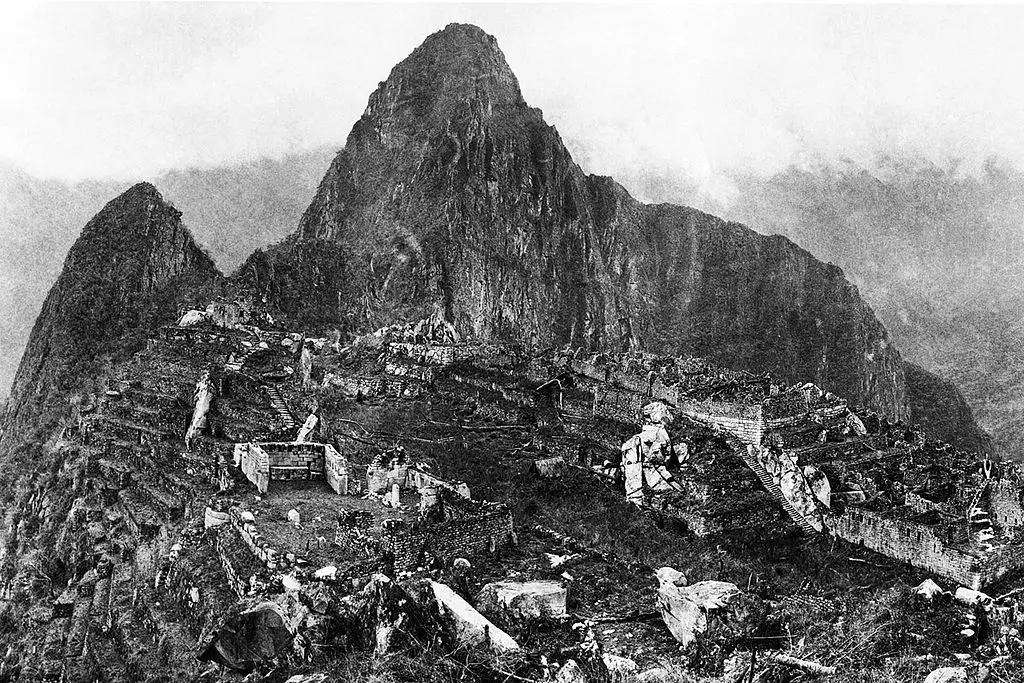
The mystery of its abandonment and Hiram Bingham’s rediscovery in 1911
Machu Picchu was an Inca city that remained hidden among the vegetation for centuries. This ancient citadel, built with stone, terraces, granite buildings, and finely crafted walls, was part of an important religious and administrative center.
Before the arrival of Hiram Bingham, the Cusco native Agustín Lizárraga had already reached the archaeological complex. However, he did not receive the necessary support to spread news of his finding.
Nine years later, on July 24, 1911, the American professor Hiram Bingham arrived at Machu Picchu while searching for Vilcabamba, the so-called lost city of the Incas. Bingham was guided by the tenant Melchor Arteaga and accompanied by members of the Peruvian Civil Guard.Upon arrival, they found two families who used the southern terraces for farming and who still took advantage of the water from the Inca canal, which was still functioning. Finally, a local boy guided Bingham to the urban area of the citadel, which was still covered by abundant vegetation.

How many hectares does it have and how is the citadel organized?
Machu Picchu is part of a protected territory of more than 32,592 hectares, equivalent to approximately 325.92 square kilometers.
The citadel is organized around the main complex, which constitutes the archaeological heart of the sanctuary. In addition, there are more than 30 archaeological sites connected by the network of Inca roads. Among them are ceremonial centers such as Wiñay Wayna, archaeological sites such as Sayacmarca, and agricultural complexes such as Intipata
Where is the citadel located and how do you get there?
Machu Picchu is part of a protected territory of more than 32,592 hectares, equivalent to approximately 325.92 square kilometers.
The citadel is organized around the main complex, which constitutes the archaeological heart of the sanctuary. In addition, there are more than 30 archaeological sites connected by the network of Inca roads. Among them are ceremonial centers such as Wiñay Wayna, archaeological sites such as Sayacmarca, and agricultural complexes such as Intipata.
Exact location: Coordinates, altitude, and site map
The citadel of Machu Picchu is located in Peru, in the Cusco region, province of Urubamba.
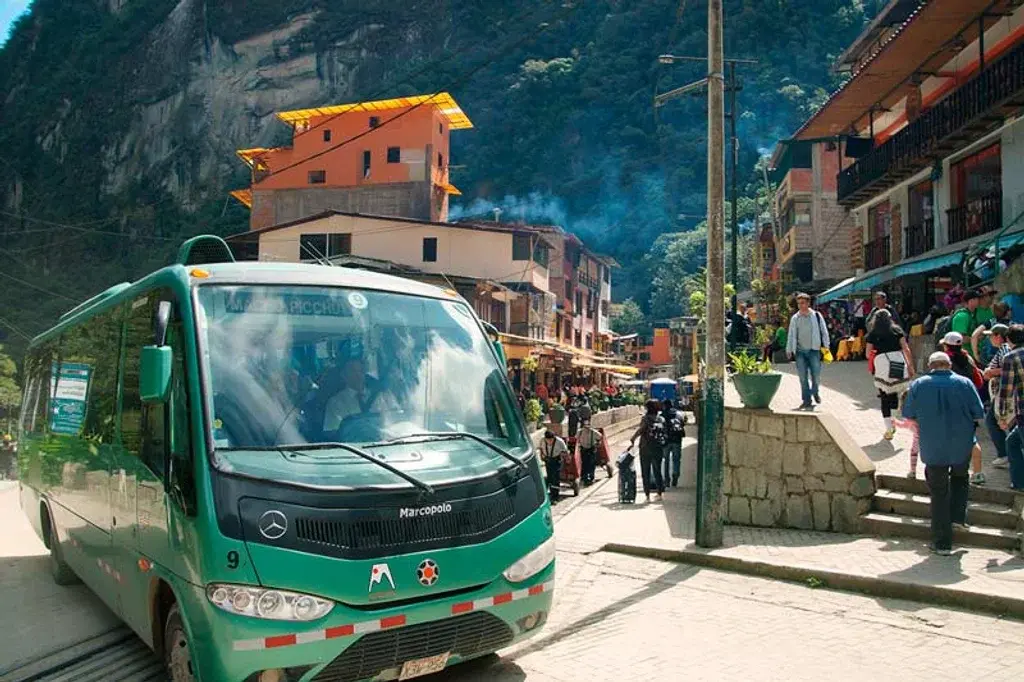
It can be accessed by bus from Aguas Calientes, by train from Ollantaytambo to Aguas Calientes, and also by the Inca Trail, an attractive option for people who enjoy hiking.
Transportation from Aguas Calientes: Updated schedules and price for 2026
Transportation from Aguas Calientes to Machu Picchu runs frequently during the day. Buses usually depart approximately every 10 minutes, depending on demand and the visiting schedule.
Hike up by the stairway route: Time and difficulty
Although most visitors make the trip by bus, some people decide to hike up to Machu Picchu. The route is safe but demanding, since the ascent can take approximately 2 hours due to the steepness of the path.
The descent is usually faster. However, it is recommended to take precautions, especially if you also plan to do the hike to Huayna Picchu, since the physical effort will be greater.
The 3 visiting circuits inside the citadel (Complete detail)
Below, we will see the three main circuits of Machu Picchu and which one is the most recommended according to your type of visit
Circuit 1 Panoramic: The iconic photo and the upper viewpoint
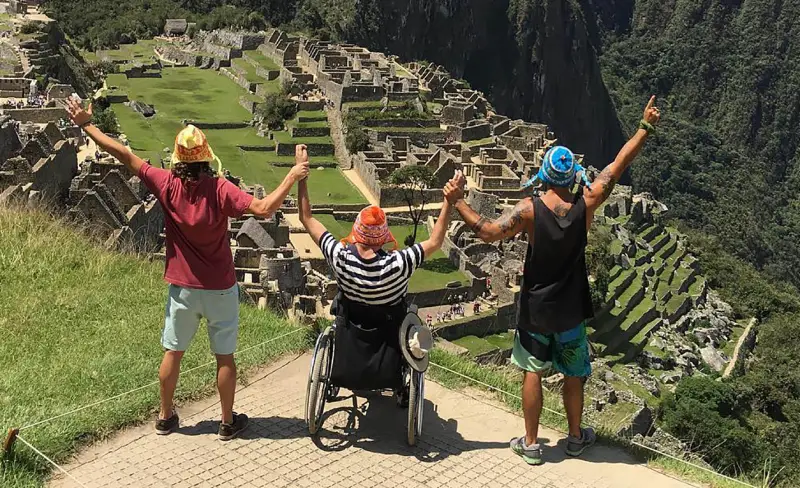
Circuit 1 is ideal for those who want to get the classic photo of Machu Picchu from the famous Guardhouse.
This circuit does not explore the archaeological complex in depth, but it offers access to viewpoints such as Inti Punku (Sun Gate) or the Inca Bridge. It is a short route, perfect if you have little time or are mainly looking for panoramic views.
Circuit 2 Classic: The most complete route through the main ruins
Circuit 1 is ideal for those who want to get the classic photo of Machu Picchu from the famous Guardhouse.
This circuit does not explore the archaeological complex in depth, but it offers access to viewpoints such as Inti Punku (Sun Gate) or the Inca Bridge. It is a short route, perfect if you have little time or are mainly looking for panoramic views
Circuit 3 Royalty: The temples of the lower sector and the ceremonial area
This circuit allows access to less crowded areas, focused on the lower and ceremonial sectors of the citadel.
From this circuit, the visit can be complemented with mountains such as Huayna Picchu or Huchuy Picchu, as long as you have the corresponding additional ticket.
Which circuit should you choose according to your time and objective?
The choice depends on your goal:
- If you are looking for the classic photo, circuit 1 is the best option.
- If you want a complete experience inside the citadel, circuit 2 is the most recommended.
- If you are looking for a more specific experience and want to combine it with mountains, circuit 3 can be a good alternative.
If you have little time, circuit 1 is enough; but if you want to better understand Machu Picchu, circuit 2 offers the most balanced experience.
Additional mountains: Adventure and views from the summits
There are additional mountains that can complement the visit and offer unique panoramic views of the surroundings.
Huayna Picchu: Requirements, difficulty, and what you can see from the top
The hike to Huayna Picchu is demanding due to its steep slopes and narrow paths. Along the ascent, you walk along trails built by the Incas, with steep sections and stairways.
Although it may seem like a challenging route, it is a highly valued experience among visitors. From the summit, you get panoramic views of Machu Picchu and the surrounding valley, making it one of the most remarkable experiences of the journey.
Machu Picchu Mountain: The most accessible and panoramic alternative
Machu Picchu Mountain is an imposing peak located near the Inca citadel. It is one of the highest mountains in the area, and from its summit, you can enjoy panoramic views of the cloud forest, the towering mountains, the deep valleys, and the Urubamba River in the distance
Huchuy Picchu: The option for families and travelers without experience
Machu Picchu Mountain is an imposing peak located near the Inca citadel. It is one of the highest mountains in the area, and from its summit, you can enjoy panoramic views of the cloud forest, the towering mountains, the deep valleys, and the Urubamba River in the distance
Must-see attractions inside the citadel
There are several attractions inside Machu Picchu that you should not miss. It is important to keep them in mind when planning your visit
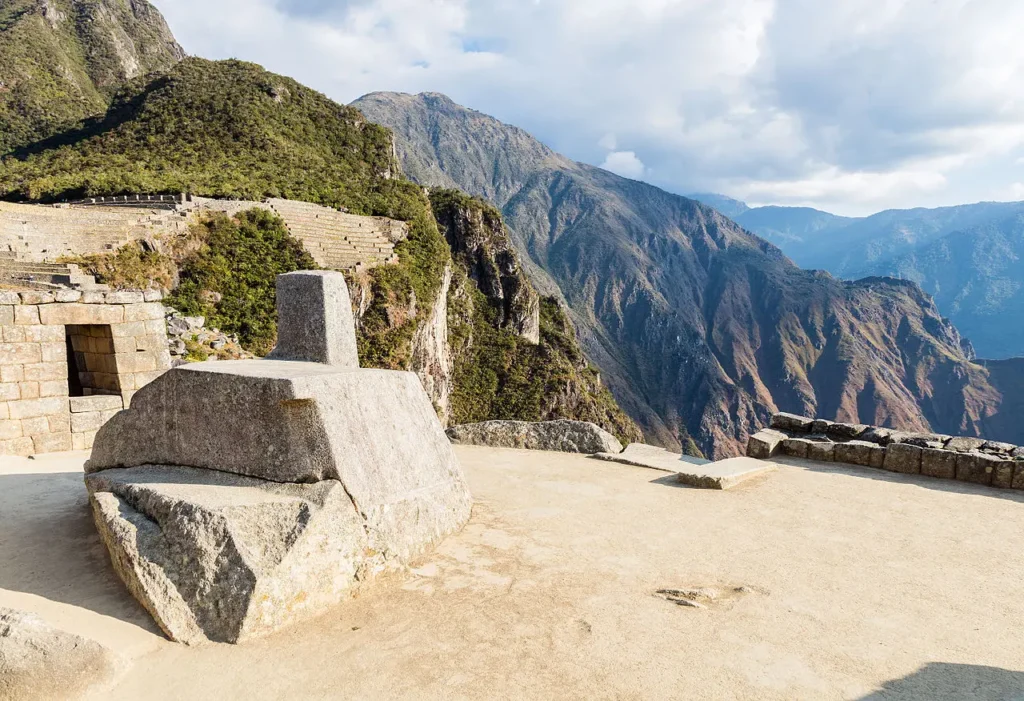
The Intihuatana: The sundial and its astronomical function
The Intihuatana is a carved rock on a natural outcrop. It is characterized by its highly polished surfaces.
It is believed to have fulfilled an astronomical function related to solar observation. Although many people consider it an “energy rock,” this interpretation is part of modern beliefs rather than proven historical evidence.
The Temple of the Sun and the Circular Tower: Sacred architecture
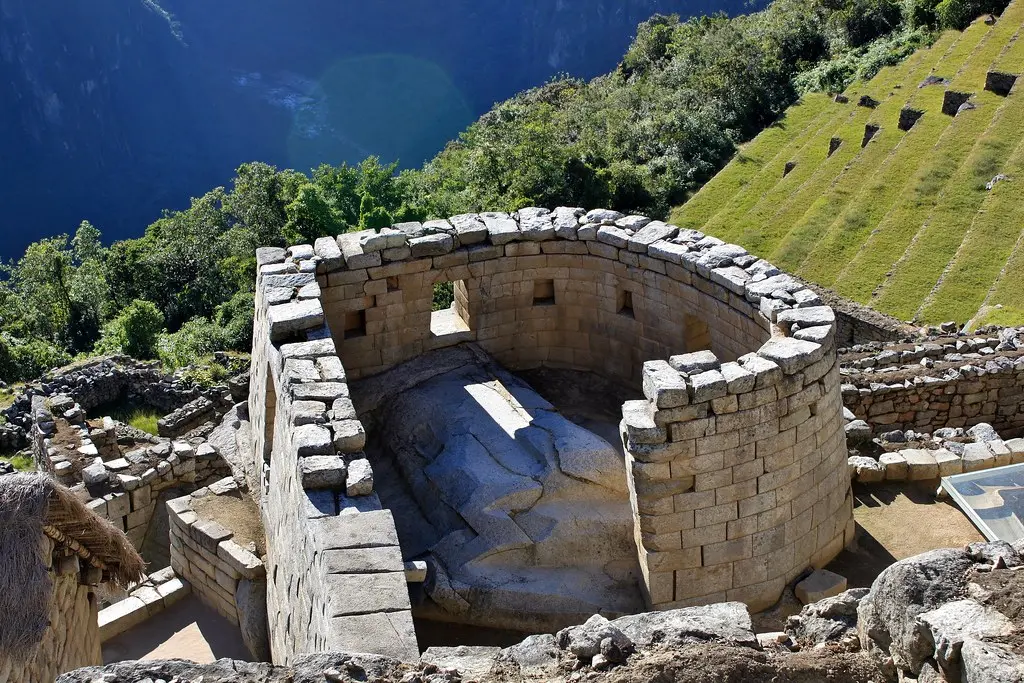
The Temple of the Sun, also known as the circular tower, is one of the finest stone structures within Machu Picchu.
It features finely polished walls and a semicircular shape. It is believed to have been used for astronomical observations, especially during the June solstice, when sunlight enters through one of its windows and illuminates an inner rock.
Below the temple there is a cave that was also part of the ceremonial complex.
The Temple of the Condor: Symbolism and design in living rock
The Temple of the Condor is formed by stone structures that simulate the wings of a condor, together with a carved rock on the ground that represents its head.
This design is related to the Andean worldview, where the condor symbolizes the connection with the upper or spiritual world
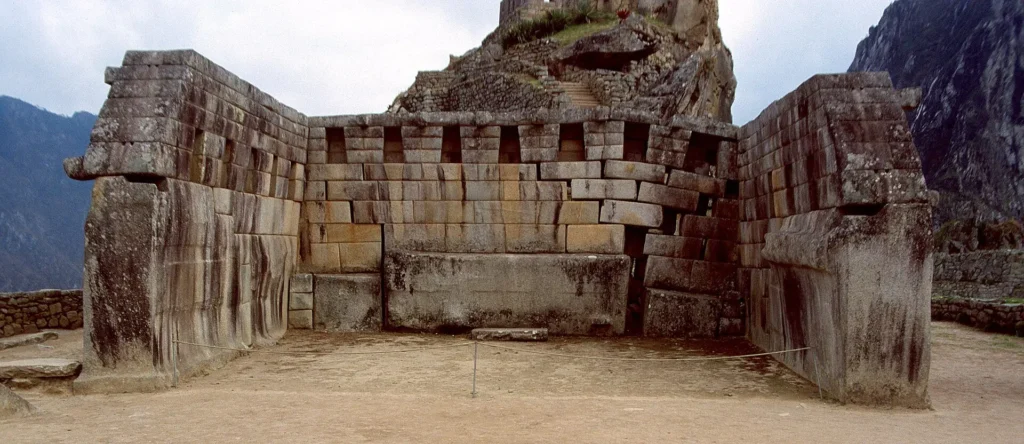
The Sacred Rock and the Main Plaza
The Sacred Rock stands out for its size and for its similarity to the surrounding mountains, which gives it important symbolic value within the site.
For its part, the Main Plaza was one of the central spaces of the citadel, where social and ceremonial activities took place.
The agricultural sector: Terraces, irrigation systems, and Inca engineering
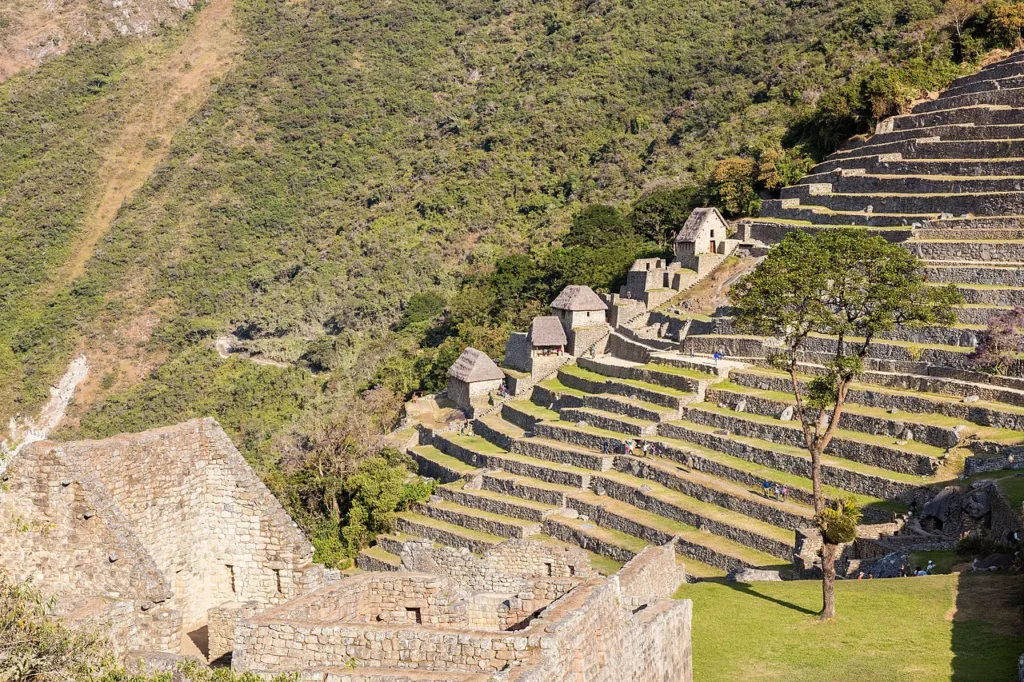
The agricultural sector is made up of terraces built on the mountain slopes.
These structures allowed the Incas to adapt agriculture to the terrain, control erosion, and optimize the use of water. They are a clear example of the advanced agricultural engineering knowledge of the Inca civilization.

The water fountains: The aqueduct that still works today
Machu Picchu has a hydraulic system made up of approximately 16 water fountains, which still function today.
This system includes stone channels that distribute water throughout the citadel, demonstrating the high level of hydraulic engineering of the Incas.
Citadel entrance prices 2026
Below, we will see a reference of the entrance rates to Machu Picchu, which vary according to the visitor’s nationality and the type of circuit chosen.
Rate for foreign tourists
The entrance price for foreign tourists varies approximately from 30 to 45 USD, depending on the circuit and the available categories established by the Ministry of Culture.
Rate for Peruvian nationals and students
For Peruvian citizens, prices may vary according to the circuit, but on average they are around 64 soles for adults and 32 soles for minors, with differentiated rates also for students.
Rules and restrictions داخل the archaeological site
There are mandatory rules that all visitors must respect in order to preserve the cultural heritage.
Prohibited items: What you cannot bring in under any circumstances
It is not allowed to enter with:
- Large backpacks
- Selfie sticks
- Drones
- Tripods
- Food
- Walking sticks with metal tips
Official guide required: How to hire one and how much it costs
The tour guide is not mandatory in all cases, but it is highly recommended in order to better understand the history and meaning of Machu Picchu.
The price may vary depending on the language and the type of service (group or private).
Code of conduct: Restricted areas and heritage protection
There are marked and restricted areas within the citadel. It is prohibited to carry out any action that damages or deteriorates the heritage.
In addition, the site has ecological protection, so all rules established by the Ministry of Culture must be respected.
Tips to make the most of your visit
To better enjoy your visit to Machu Picchu, it is important to plan your route well and know the most suitable schedules.
What time should you enter to avoid the crowds?
The best times to avoid the largest number of visitors are:
- Early in the morning (6:00 a.m. – 8:00 a.m.)
- In the afternoon (2:00 p.m. – 5:00 p.m.)
These schedules allow for a calmer experience.
How much time do you need to tour the entire citadel?
The tour time depends on the chosen circuit, but on average it lasts between 2 to 3 hours.
Some circuits may take more time if they include additional hikes such as Huayna Picchu or Machu Picchu Mountain
What to bring: Clothing, footwear, sunscreen, and documents
It is recommended to bring:
- Light clothing
- Comfortable shoes or trekking shoes
- Sunscreen
- Insect repellent
- Water
- ID document (passport or DNI)
- Entrance tickets
Frequently asked questions about the citadel
Now we will see some frequently asked questions about the citadel.
Can you re-enter the citadel with the same ticket?
No. The ticket allows only one entry. To enter again, it is necessary to purchase a new ticket.
Which circuit has the best view for photography?
Circuit 1 (especially route 1B) is the most recommended for getting the classic panoramic photograph of Machu Picchu.
What is the best time to visit and avoid the fog?
The best time is between April and September, during the dry season, when there is a greater chance of clear skies.
How long does the tour through each circuit last on average?
The tour through each circuit lasts approximately between 2 to 3 hours, depending on the visitor’s pace and the chosen circuit.