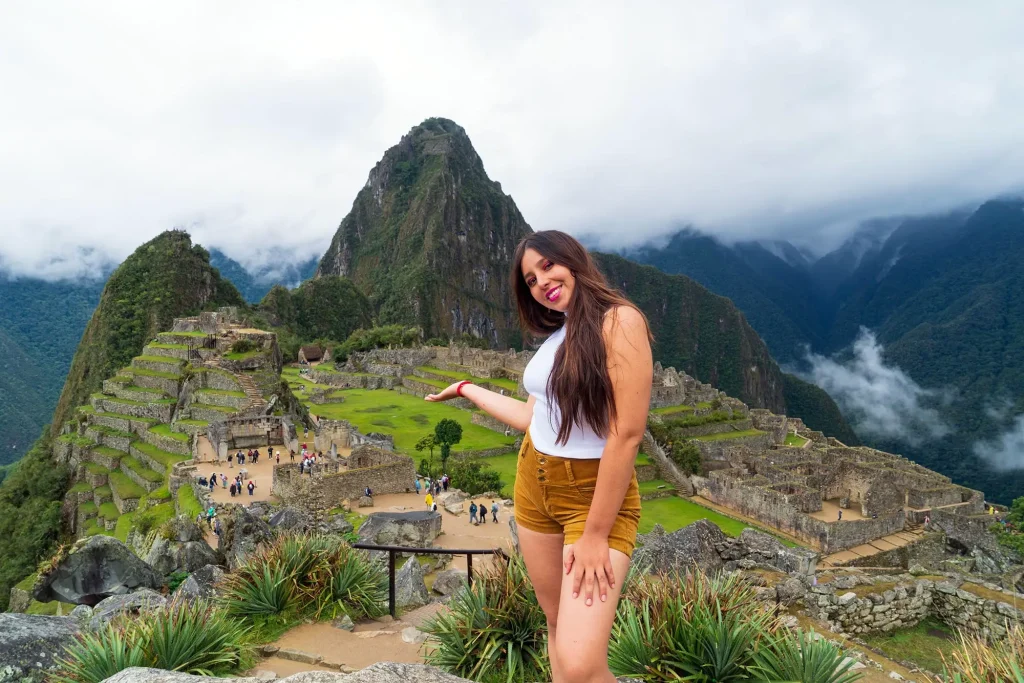
Intihuatana of Machu Picchu: Meaning, Function, and Visit
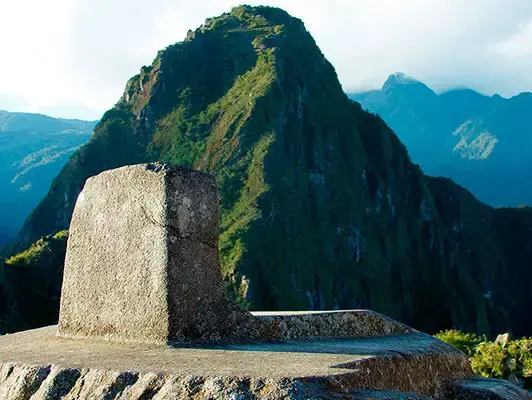
The Intihuatana was a solar clock carved in stone that preserved the Andean worldview. Previously called “Inti watana,” it is believed to have acted as a sacred link between the earthly world (Kay Pacha), the spiritual world (Hanan Pacha), and the underworld (Uku Pacha). In addition, it was a ceremonial instrument dedicated to the sun god. It is located in circuit 2 or the classic route and fulfilled astronomical functions related to agricultural cycles.
What is the Intihuatana and what does its name mean?
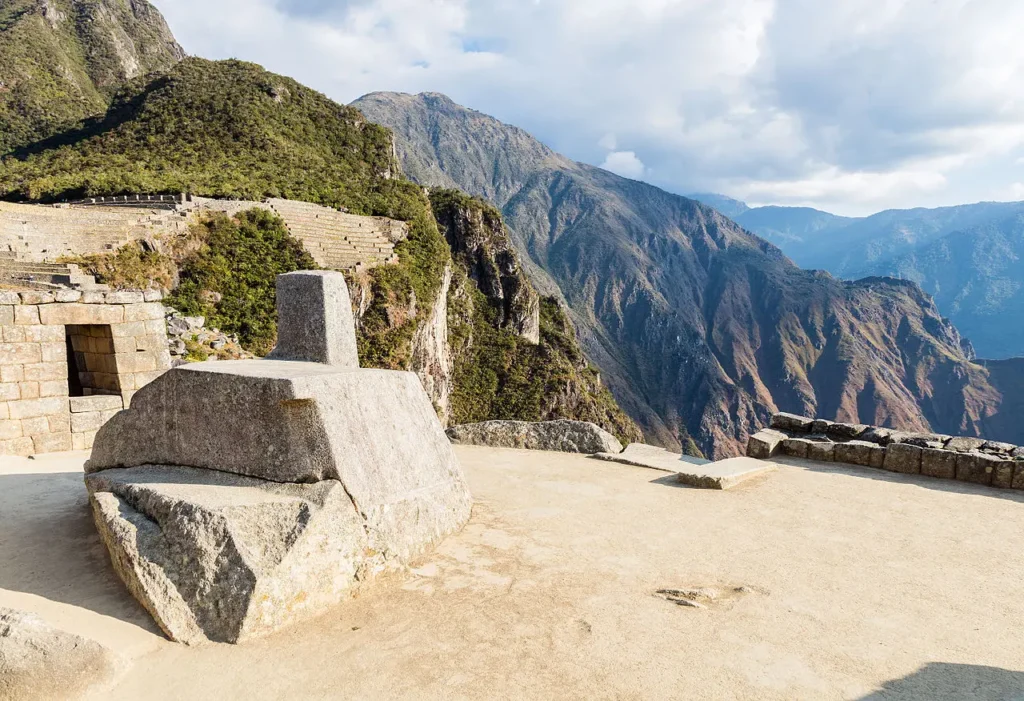
The Intihuatana is a rock carved on a rocky outcrop, with various surfaces polished with great precision. Its main function was to serve as a solar clock. It is also popularly known as a stone linked to energy, although this is not scientifically proven.

Etymology of the name Intihuatana
The term “Inti” means sun and “huatana” means to tie, which translates as “place where the sun is tied.” It is believed that this name was spread in modern times, although its original name is not known with certainty.
Its importance in the Andean worldview
The Intihuatana is one of the most sacred elements within the Andean worldview, acting as a link between the earthly world, the spiritual world, and the underworld. It was an astronomical and ceremonial instrument that allowed the Incas to organize their activities in relation to natural cycles.
History of the Intihuatana in Machu Picchu
Located in the Peruvian Andes, within Machu Picchu, this ancient solar clock was built by the Incas. It not only measured time, but also represented the connection between the sky and the earth within their worldview.
Its relationship with Inca planning and the period of Pachacútec
It was a precision instrument linked to the organization of the agricultural calendar and rituals. Its location in elevated areas allowed better observation of the natural surroundings.
Why was it preserved after the conquest?
It is believed that it was preserved because the Spanish did not discover Machu Picchu during the conquest, which allowed its conservation.
Possible functions of the Intihuatana
One of its main functions was to serve as an astronomical observatory and solar clock to mark solstices, equinoxes, and agricultural cycles. It also fulfilled a ceremonial role dedicated to the sun god.
Was it a ritual altar, a solar marker, or both?
It was both: a ceremonial altar and an astronomical marker.
Its possible relationship with solar cycles and the agricultural calendar
It allowed the identification of changes in solar cycles linked to agricultural activities.
Architecture and location of the Intihuatana
The Intihuatana is located in the Hanan sector of the urban area of Machu Picchu, on an elevation. It is made of granite rock and shows integration with the natural environment.
The Intihuatana Pyramid within the ceremonial sector
It is located on a stepped structure that allows access to the upper part, where ceremonial activities were carried out.
The visual relationship with Huayna Picchu and the sacred landscape
Huayna Picchu is part of the sacred landscape and visually aligns with the Intihuatana, reinforcing its symbolism within the environment.
The 2000 incident and the conservation of the monolith
During the filming of a commercial in the year 2000, a crane damaged one of the corners of the Intihuatana. This incident caused outrage and led to stricter protection measures.
Why stricter protection measures exist today
There are currently strict restrictions to preserve the archaeological site and prevent damage.
Myths and realities about the Intihuatana
The Intihuatana is surrounded by various myths. One of the most common is that it is a solar clock, which is an accepted interpretation, although not fully confirmed in all its uses.
Is it correct to call it a “solar clock”?
It can be considered a solar clock due to its relationship with the observation of the sun.
Can you touch the stone?
It is not allowed to touch the stone or get too close to it.
Which interpretations are not confirmed by archaeology
Its exact function, its original name, and certain theories about its symbolic relationship with Huayna Picchu have not been fully confirmed.
Practical information for the visit
Now we will see some practical information for your visit.
In which circuits can the Intihuatana be seen?
It can be seen on circuit 2 (classic route 2A or 2B).
Access restrictions and conservation
It is forbidden to touch the structure, bring food, or cause any kind of damage.
Recommendations for a respectful visit
Follow the site rules, avoid bringing large backpacks, and respect the environment.
Frequently asked questions about the Intihuatana
Now we will see some frequently asked questions about the Intihuatana.
Is it really a solar clock or an altar?
It likely served both functions.
Why is contact with the Intihuatana restricted?
To prevent damage and preserve the archaeological site.
From which areas of Machu Picchu can it best be appreciated?
From circuit 2, especially along its main routes.