The Best Neighborhoods in Lima for Tourists: What to Visit in 2026

In 2026, the best neighborhoods in Lima for tourists are characterized by being safe, modern areas with important historical and cultural attractions. Some of the most visited districts are Miraflores, Barranco and San Isidro, known for their tourist atmosphere, safety and their gastronomic and cultural offerings.
There are also other interesting places to visit in Lima. For example, in Pueblo Libre you can find one of the most important museums in the country: the Larco Museum. In Callao you can visit La Punta, a seaside resort that is very popular during the summer.
When exploring the city, it is also important for visitors to take basic safety precautions, as in any large tourist city.
Which are the most tourist-friendly neighborhoods in Lima?
One of the most visited districts is Miraflores, where you can find attractions such as Huaca Pucllana, the Miraflores boardwalk, the Larcomar shopping center and Kennedy Park.
Another very popular district is Barranco, known for its bohemian atmosphere. There you can find places such as the Bridge of Sighs, the Museum of Contemporary Art and the Barranco viewpoint.
In the Historic Center of Lima you can visit emblematic places such as the Main Square, Lima Cathedral, the Government Palace, the Archbishop’s Palace, the San Francisco Convent and the Santo Domingo Church.
San Isidro, on the other hand, is one of the most exclusive and residential districts in Lima and also the city’s main financial center. Here you can find spaces such as Roosevelt Park and the Toy Museum.
In Callao you can visit places such as San Lorenzo Island, Plaza Grau and the seaside district of La Punta.
In Santiago de Surco, the Friendship Park stands out as a recreational space with green areas.
The district of Chorrillos offers attractions such as the beaches of Chorrillos, the main square of Chorrillos and the Pantanos de Villa wetlands.
Finally, in San Miguel you can visit places such as the Park of Legends and several shopping centers.
Miraflores: The modern and tourist center par excellence
Miraflores is one of the most recognized districts in Lima for its tourist attractions, its history and its vibrant commercial and cultural activity.
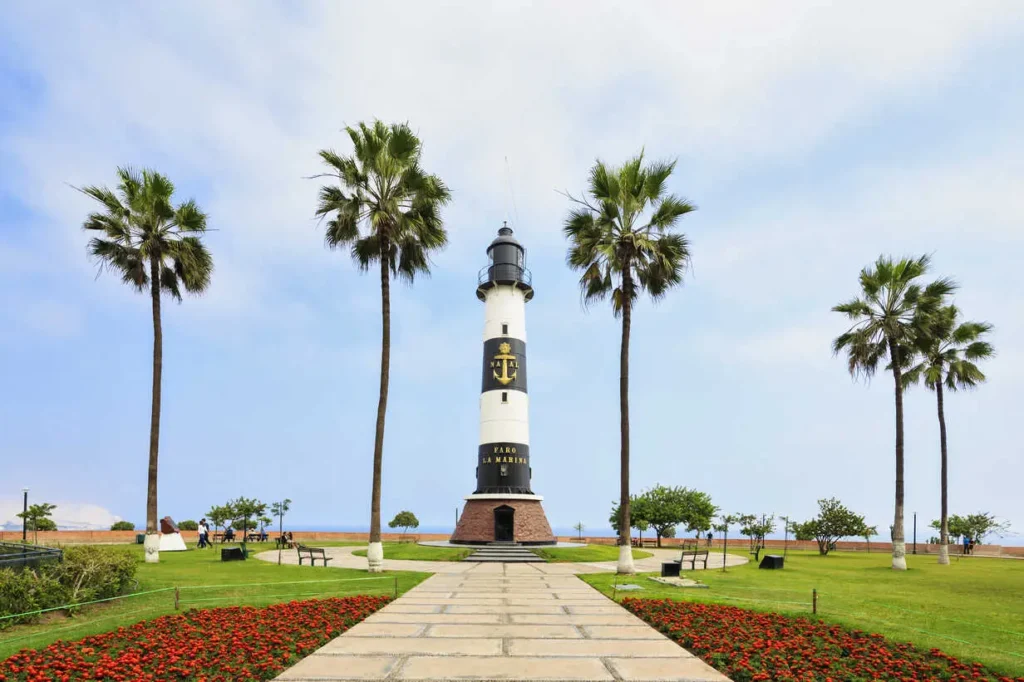
Among its most visited tourist routes are Miraflores Central Park, the coastal boardwalks, the Huaca Pucllana Site Museum, the Ricardo Palma House Museum, the Reducto No. 2 Patriotic Sanctuary, the Love Park, the Larcomar shopping center and its beaches.
The Miraflores Boardwalk and the best views of the Pacific
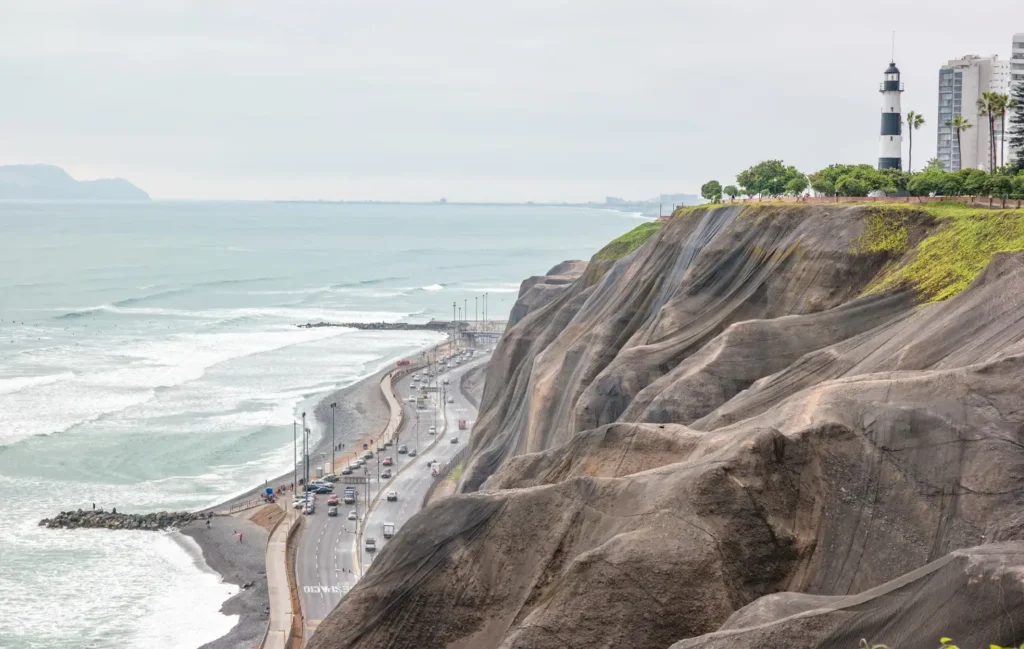
Walking along the Miraflores boardwalk allows visitors to enjoy the fresh air of the Pacific Ocean, admire the well-maintained parks and contemplate the cliffs that characterize this area of the city.
One of the most visited places is the Love Park, famous for its sculpture “The Kiss”, inspired by the style of the Catalan artist Antoni Gaudí. From the boardwalk you can also see the beaches, the cliffs and many people practicing outdoor activities such as running, walking or using exercise machines installed in the parks.
La Victoria: History and tradition
La Victoria is a district known for its plazas, streets and emblematic places that are part of Lima’s history. Among its main attractions are the Huaca Santa Catalina archaeological site and the Alejandro Villanueva Stadium, popularly known as Matute, home of the Alianza Lima football club.
Larcomar and the luxury commercial offer
Larcomar is a modern shopping center located in Miraflores, in one of the most exclusive areas of Lima. Its architecture blends with the cliffs of the Costa Verde, offering a privileged view of the Pacific Ocean.
The shopping center resembles an amphitheater facing the sea, where stairs and ramps connect different levels of a structure built over the cliffs, between the Malecón de la Reserva and Larco Avenue.
In this place visitors can find restaurants, shops, handicrafts and a wide variety of gastronomic options, making it one of the most visited tourist spots in the city.
Why choose Miraflores to stay in Lima?
Miraflores is a strategic place to stay in Lima due to its proximity to top-level restaurants and its wide range of tourist attractions.
It is also a central district with good transportation connections, green spaces, full services and an active but balanced urban lifestyle. Its quality of life has generated a high demand for accommodations and tourist rentals.
Barranco: The bohemian and artistic soul of the city
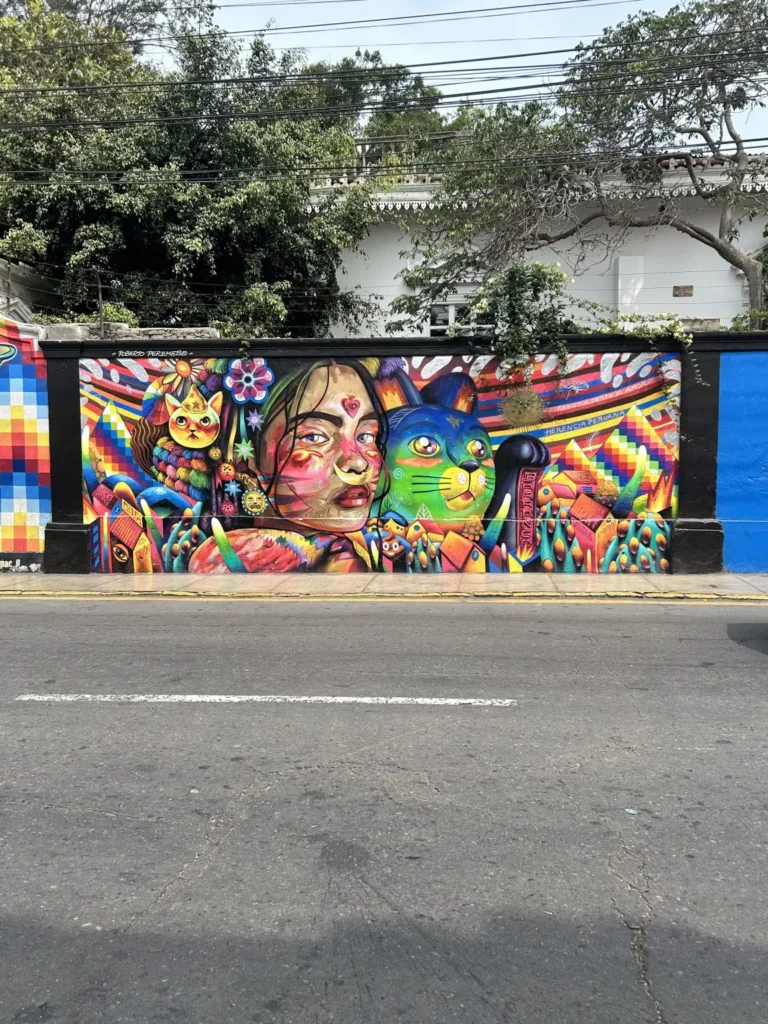
Barranco is one of the most artistic and bohemian districts in Lima. In its streets you can find murals, art galleries, historical architecture and old mansions that combine traditional styles with colonial houses.
This district is considered one of the main cultural centers of the city.
The Bridge of Sighs and colonial architecture
The Bridge of Sighs is the most representative symbol of Barranco. It was built in 1876 and connects both sides of the park that descends toward the sea.
According to a popular tradition, if a person crosses the bridge while holding their breath and making a wish, the wish may come true.
The area around the bridge stands out for its traditional architecture, with wooden balconies and colorful houses that preserve the historic style of the district.
Art galleries, murals and nightlife in Barranco
If you are looking for urban art, murals and nightlife, Barranco is one of the best places to visit in Lima. The district offers live music, traditional bars, cultural venues, art galleries and colorful murals decorating its streets.
The epicenter of culture and live music
The nightlife of Barranco revolves around local and independent bands and young artists presenting innovative musical projects.
Acoustic shows, artistic performances and cultural events take place in its venues, keeping the district’s cultural scene alive.
Historic Center of Lima: The colonial and viceregal legacy
The Historic Center of Lima is one of the most important cultural heritage areas of the city. It was founded in 1535 by the Spanish conqueror Francisco Pizarro under the name “City of the Kings”.
The area became highly important when Lima became the capital of the Viceroyalty of Peru, which explains the presence of many colonial and viceregal buildings that are still preserved today.
Main Square, the Cathedral and the famous Catacombs
The Main Square of Lima is one of the most emblematic places in the city. Around it stand important historical buildings such as Lima Cathedral, the Government Palace and the Archbishop’s Palace.
During a tour of the historic center it is also possible to visit the famous catacombs of the San Francisco Convent, one of the most visited attractions during city tours.
Architecture and museums in the heart of the capital
The center of Lima stands out for its colonial architecture, churches and traditional wooden balconies.
Among the most representative buildings are the Archbishop’s Palace, the colonial balconies and several historical museums. During a city tour it is also possible to visit important museums such as the Larco Museum and the Gold Museum.
San Isidro: The financial district with historic charm
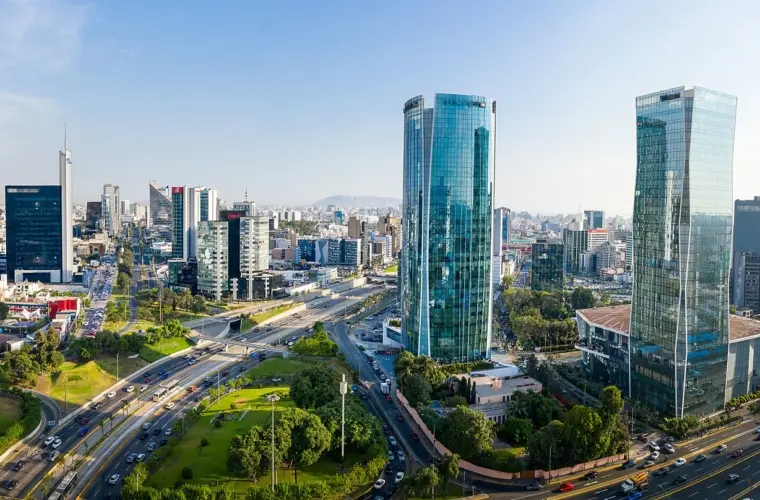
San Isidro is considered the main financial district of Lima. However, it is not only known for its corporate buildings but also for the way modernity coexists with historical and cultural spaces.
This district has become an important hub for tourism and business in the city.
El Olivar Park: A peaceful refuge in the city
El Olivar Park is one of the most representative natural spaces in San Isidro.
This park is formed by ancient olive trees dating back to the viceregal era. More than 22 species of birds live among the trees, making it a peaceful natural space within the city.
El Olivar symbolizes an important part of the district’s colonial and republican tradition.
High-end gastronomy and exclusive shopping
Peruvian gastronomy combines history, innovation and tradition. Peru has more than 3,500 varieties of potatoes as well as a wide diversity of peppers and fresh seafood.
This culinary richness is part of the country’s identity and is internationally recognized. Chefs such as Virgilio Martínez and Gastón Acurio have helped position Peruvian cuisine on the global stage.
Pueblo Libre: The neighborhood of museums and tradition
The district of Pueblo Libre is known for its historical and cultural heritage. It was formerly called Magdalena Vieja.
This quiet neighborhood houses some of Lima’s most important museums, including the Larco Museum and the National Museum of Archaeology, Anthropology and History of Peru.
Larco Museum and the National Museum of Anthropology
The Larco Museum is one of the most important cultural spaces in Lima, where visitors can learn about more than 5,000 years of history of ancient Peru through its pre-Columbian art collection.
Meanwhile, the National Museum of Archaeology, Anthropology and History of Peru houses important historical and archaeological pieces that help explain the cultural evolution of the country.
Historic taverns and the origin of pisco in Lima
In Lima there are historic bars where visitors can enjoy pisco and traditional cocktails.
One of the most famous is Bar Cordano, located at the historic corner of Carabaya and Áncash streets in the historic center of Lima. This bar is well known for its traditional pisco sour.
Another option is the English Bar, located inside the Country Club Hotel in the exclusive district of San Isidro, known for its wide variety of Peruvian and international cocktails.
The bar at the Gran Hotel Bolívar is also notable. Opened in 1924, it is considered an architectural jewel of Lima and an important place connected to the city’s history.
Monumental Callao and La Punta: History, art and the sea
Just a few minutes from the center of Lima, Callao reveals a vibrant combination of history, art and sea.
More than just a port, it has become a cultural destination where visitors can explore places such as the Real Felipe Fortress, the murals of Monumental Callao and the Palomino Islands.
Monumental Callao: Urban art and avant-garde galleries
Monumental Callao is one of the main cultural spaces dedicated to urban art in Peru.
This project brings together art galleries, urban murals and cultural venues where exhibitions, festivals of art, photography and design are promoted.
It also hosts artistic residency programs and initiatives that promote contemporary art in the city.
La Punta: The traditional seaside district with views of Real Felipe
La Punta is one of the most attractive traditional seaside areas in Lima. During the summer season it is highly visited by national and international tourists.
Here visitors can enjoy a swim in its calm waters or take relaxing walks along its boardwalk surrounded by historic houses.
From La Punta it is also possible to see the Real Felipe Fortress, a major military construction that began in 1747 during the viceregal era.

Comparison: Which is the best neighborhood for your trip?
| Neighborhood | Atmosphere | Main Attraction | Ideal for |
| Miraflores | Modern | Ocean Views | Shopping and Safety |
| Barranco | Bohemian | Art and Nightlife | Couples and Young Travelers |
| Historic Center | Historic | Architecture | Culture and History |
| San Isidro | Exclusive | Parks | Business and Luxury |
Transportation and safety tips between districts
Below are some recommendations when traveling between the different districts of the city of Lima.
How to get from Miraflores to Barranco and the Historic Center
One of the most recommended ways to move around the city is by using the Metropolitano or the Blue Corridor buses, which connect several important districts.
You can also use transportation apps such as Uber. Although it may be slightly more expensive, it offers greater comfort and convenience compared to public transportation.
Safety recommendations when visiting Lima neighborhoods
To visit Lima safely, it is recommended to stay and move around in tourist areas where there are more services and visitors.
It is also advisable to avoid isolated streets or less crowded areas, especially at night.
Frequently asked questions about Lima neighborhoods
Which is the safest neighborhood in Lima for tourists?
There are several safe neighborhoods for tourists depending on the budget and the type of experience travelers are looking for.
The best options include Barranco, Miraflores and San Isidro, which are also very popular tourist areas.
Where is the best food area in Lima?
Some of the best gastronomic areas in Lima are located in Barranco and Miraflores.
These districts are home to internationally recognized restaurants such as Maido and Central, known for their high-end culinary proposals.
Is it possible to visit several neighborhoods in one day?
Yes, it is possible to visit several neighborhoods in one day, although it is recommended to organize your time well and prioritize the places you want to see.
Depending on the route, visitors can explore the main neighborhoods walking or using public transport, taxis or transportation apps.
A complete tour may take between 10 and 14 hours considering that distances between some districts in Lima can be significant.