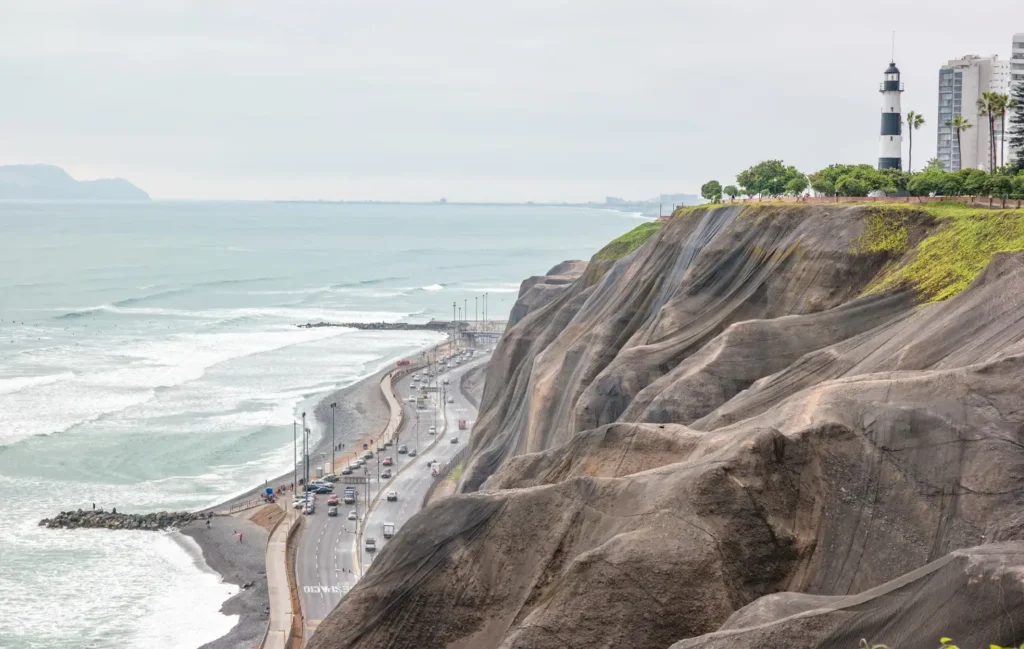
Qenqo Archaeological Complex in Cusco

It is one of the most symbolic ceremonial centers of the Andean world, where astronomy, ritual practices, water, and stone come together with a precision that still amazes scholars today.
History and architecture of the Qenqo ceremonial center
Qenqo was built during the Inca period (15th century), most likely under the reign of Pachacuti. Its original name is believed to have been “Q’inqu,” which in Quechua means labyrinth or zigzag place.
This complex served religious, astronomical, and ritual functions, closely linked to the worship of:
- Inti (the Sun).
- Pachamama (Mother Earth).
- Quilla (the Moon).
Sacred architecture
- Carved directly into a limestone rock outcrop.
- Masterful use of channels, stairways, and internal chambers.
- Integration of water, a sacred element for the Incas, as the ritual axis.
Qenqo demonstrates the profound Inca knowledge of stone engineering, religious symbolism, and astronomical observation.
Where is Qenqo located?
The Qenqo Archaeological Center is located 3 km northeast of Cusco’s historic center, within the Sacsayhuamán Archaeological Park, at an approximate altitude of 3,580 meters above sea level (11,745 feet).
How to get to Qenqo from Cusco city center
You have several practical options:
- Walking (recommended for active travelers)
From the Plaza de Armas, walk toward San Blas and continue uphill toward Sacsayhuamán.
Estimated time: 45–60 minutes.
- Taxi
Departure from the historic center.
Travel time: 10–15 minutes. Ideal if you want to save energy.
- Guided tour (Cusco City Tour)
Includes transportation + professional guide.
Combined visit with Sacsayhuamán, Puka Pukara, and Tambomachay.
Distance between Sacsayhuamán and Qenqo
- The distance between Sacsayhuamán and Qenqo is approximately 1 km.
- Easy walk: 15–20 minutes.
- Well-marked and accessible trail.
- That is why they are always visited together within the same circuit.
Visitor information for Qenqo
Entrance fee: the Cusco Tourist Ticket
Qenqo does not sell individual tickets. Access is granted with the Cusco Tourist Ticket.
Most common options:
Partial Ticket – Circuit I
- Foreign visitors: S/. 70.00 or approx. US$ 25.00
- Peruvian nationals: S/. 40.00 or approx. US$ 15.00
Integral Ticket
- Foreign visitors: S/. 130.00 or approx. US$ 45.00
- Peruvian nationals: S/. 70.00 or approx. US$ 25.00
Includes: Sacsayhuamán, Qenqo, Puca Pucara, and Tambomachay. (City tour in cusco)
Opening hours at Qenqo
- Open daily
- 09:00 a.m. – 05:00 p.m.
- Last recommended entry: 4:30 p.m.
The best time to visit is in the morning, when there are fewer visitors and better lighting for photography.
Is it necessary to hire a guide at Qenqo?
Yes, it is strongly recommended.
Qenqo is a highly symbolic site, and without explanation it may seem like just “carved stone.”
A professional guide will explain:
- Inca rituals and symbolic sacrifices
- Astronomical use of the site
- The meaning of water, the moon, and the sun
- The difference between myth, colonial chronicles, and archaeological evidence
Without a guide, Qenqo loses more than 70% of its cultural value.
Historical interpretation and official explanation from the Andean worldview
Qenqo is one of the most complex and symbolic ceremonial centers of Inca Cusco, designed not for habitation but for sacred rituals related to time, nature, the cosmos, and spiritual transformation. Nothing at Qenqo is decorative: everything has a function and meaning.
The underground gallery and the sacrificial chamber
This space corresponds to the most sacred ritual core of Qenqo.

Archaeological description
- Underground chamber carved into living rock.
- Central monolithic ceremonial table.
- Internal channel for ritual liquids.
Historical and symbolic meaning
Contrary to popular myth, this was not a place of systematic human sacrifice. Archaeological evidence and symbolic interpretation suggest:
- Ritual offerings (chicha, water, animal blood).
- Ceremonies of symbolic death and rebirth.
- Possible ceremonial mummification rituals.
In the Inca worldview, this space represents Ukhu Pacha (the inner world), the place of origin of life and spiritual return.
The Qenqo amphitheater
Located on the outside of the complex, it is one of the most visible areas.

Key features
- Semicircular shape.
- Tiered seating carved directly into the rock.
- Estimated capacity: 300 to 400 people.
- Ceremonial function.
- It was not a theater.
- A space for public rituals.
- Linked to the agricultural calendar and state ceremonies.
Ritual acts were performed here while the people observed, and priests led ceremonies from the central area.
The zigzagging channel
One of the most important features of the site.

Function
- A channel carved in a zigzag pattern across the rock.
- It allowed the controlled flow of water or ritual liquids.
Symbolic meaning
- Represents the Amaru, the sacred serpent.
- A symbol of vital energy.
- A connector between worlds.
- Renewal, fertility, and movement.
For the Incas, the path of water was a way of reading agricultural and spiritual destiny.
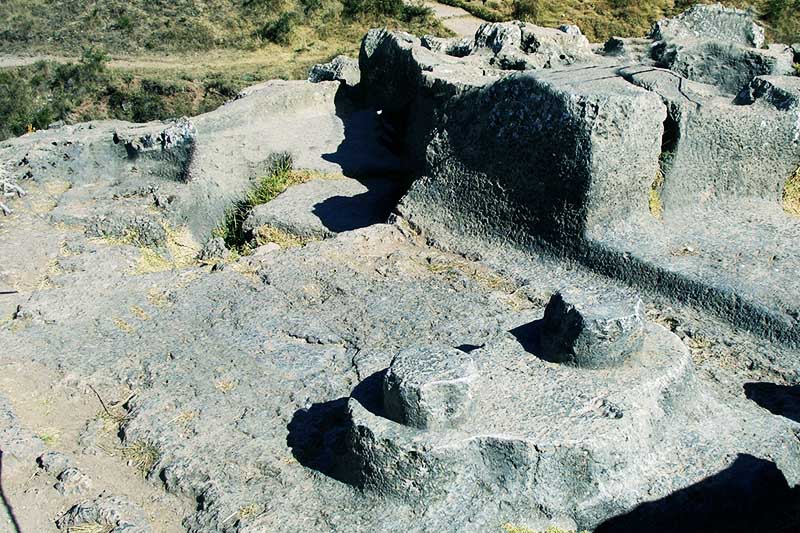
The Intihuatana, or astronomical observatory
Qenqo features a solar and lunar observation system—less known, but highly significant.
What is the Intihuatana?
It means “the place where the Sun is tied.”
A ritual stone used to mark solstices and equinoxes.
Astronomical use
- Control of the agricultural calendar.
- Observation of solar shadows.
- A ritual to harmonize the Sun, the Earth, and humankind.
- The precision of its angles confirms advanced Inca astronomical knowledge.
Differences between Qenqo Grande and Qenqo Chico
| Aspect | Qenqo Grande | Qenqo Chico |
| Size | Large and complex | Smaller |
| Function | Main ceremonial center | Complementary |
| Tourist access | Included in the Cusco City Tour | Less visited |
| Architecture | Monumental carved rock | Simpler carvings |
| Importance | Ritual and astronomical | Secondary rituals |
Qenqo Chico likely served as a space for ritual preparation or smaller ceremonies.
History and meaning of Qenqo
Theories about its religious and astronomical use
The most widely accepted theories in modern archaeology indicate that Qenqo was:
- A center for solar and lunar rituals.
- A site for ceremonial mummification.
- A place for priest initiation rites.
- An agricultural calendar carved in stone.
- A setting for Inca state rituals.
These functions are not mutually exclusive—Qenqo was a multifunctional ceremonial center.
The importance of carved rocks in Inca culture
For the Incas, stone:
- Had life (kawsay).
- Held spiritual energy.
- Was a sacred being.
At Qenqo, the rocks:
- Are not “cut”—they are revealed.
- Follow the natural shape of the hill.
- Maintain harmony with Pachamama.
Carving stone was a ritual act, not only an architectural one.
Recommendations for your visit to Qenqo
What to bring to Qenqo
Although the visit is not long, Qenqo is located in a high-Andean area, exposed to weather and strong sun.
Recommended items:
Comfortable, non-slip footwear (rocky and uneven terrain).
- A windbreaker or light jacket.
- A hat or cap.
- Sunscreen (high UV radiation year-round).
- Sunglasses.
- A water bottle.
- A camera or phone with a fully charged battery.
❌ You don’t need a large backpack.
❌ Avoid sandals or smooth-soled shoes.
Best time of year to visit the complex
Qenqo can be visited year-round, but each season offers a different experience.
Best season: Dry season
- April to October, when weather is more stable.
- Less rain.
- Better conditions for walking and photography.
Rainy season
- November to March.
- Frequent rain (especially January and February).
- Greener landscapes.
- Fewer tourists.
If you visit during the rainy season, go early and bring a rain jacket.
Frequently asked questions about Qenqo
How long does the Qenqo visit take?
- Without a guide: 20–30 minutes.
- With a professional guide: 40–60 minutes.
- With historical interpretation, Qenqo becomes one of the most fascinating sites on the Cusco City Tour.
Can you visit Qenqo without the tourist ticket?
❌ No.
Entrance to Qenqo is included exclusively with the Cusco Tourist Ticket.
There is no individual ticket for Qenqo.
What is the altitude of Qenqo?
Approximately 3,580 meters above sea level (11,745 feet).
It is slightly higher than Cusco’s historic center.
Recommendation:
Visit after you’ve acclimatized.
Ideally on day 2 or 3 of your trip.
Is it suitable for children and older adults?
Yes, with a few considerations.
For children:
- Short walk.
- Open spaces.
- Supervise them and avoid letting them climb rocks.
For older adults:
- Light walk.
- Some uneven ground and natural steps.
Recommended:
- A walking stick.
- Good footwear.
- A relaxed pace.
It is not recommended to enter the underground gallery if there are severe mobility limitations.
Important cultural recommendations
As a ceremonial site:
🚫 Do not touch or climb the rocks.
🚫 Do not sit on ritual structures.
🚫 Do not eat inside the complex.
🚫 Do not leave trash behind.
Remember: Qenqo is not just an archaeological site—it is a sacred Andean place.