Huchuy Qosqo: What to See and How to Get There

Detailed History of Huchuy Qosqo
According to chroniclers, Huchuy Qosqo was built by order of Inca Wiracocha, who, feeling worn down by old age, wished to step away from ruling the Tawantinsuyu Empire and seek rest with his family.
However, it was not until the 20th century that the site was given the name Huchuy Qosqo, due to its similarity to the capital of the Inca Empire. Originally, its name was Caquia Jaquijahuana.
Huchuy Qosqo served key functions:
- Administrative center for territorial control
- Royal and noble residence
- Agricultural storage area
- Strategic lookout point over the Sacred Valley
With the arrival of the Spanish conquest, Manco Inca used Huchuy Qosqo as a route to move the Inca army from Cusco to Vilcabamba in an attempt to recover this area. However, the conquistador Gonzalo Pizarro later invaded and destroyed Huchuy Qosqo.
Huchuy Qosqo was declared a National Cultural Heritage site in 2003.
Location of the Huchuy Qosqo Archaeological Complex
The Huchuy Qosqo archaeological complex is located high above the Sacred Valley of the Incas, in the Cusco region of Peru.
Specific location:
- District: Lamay
- Province: Calca
- Region: Cusco
- Altitude: approximately 3,600 m a.s.l.
The site sits on a natural plateau facing the Vilcanota (Urubamba) River, with a privileged strategic view of the Sacred Valley—explaining its administrative and military importance during Inca times.
Key fact:
Huchuy Qosqo has no direct vehicle access. Entry is only on foot via trekking routes from Lamay, Chinchero (Tauca), or Tambomachay.
What Does Huchuy Qosqo Mean?
Huchuy Qosqo is a Quechua name:
Huchuy = small
Qosqo = Cusco
Its translation into English is “Little Cusco.”
This name reflects its historical role:
Huchuy Qosqo was conceived as an elite administrative and residential center, with urban organization, architecture, and symbolism similar to the capital of the Inca Empire—but on a smaller scale.
What to See at the Huchuy Qosqo Archaeological Complex
Three-story building
A building with the first two levels made of stone and the third made of adobe. The structure has a rectangular floor plan and excellent craftsmanship. It is believed to have been a space for work-based learning for women in the Inca settlement.
Agricultural terraces
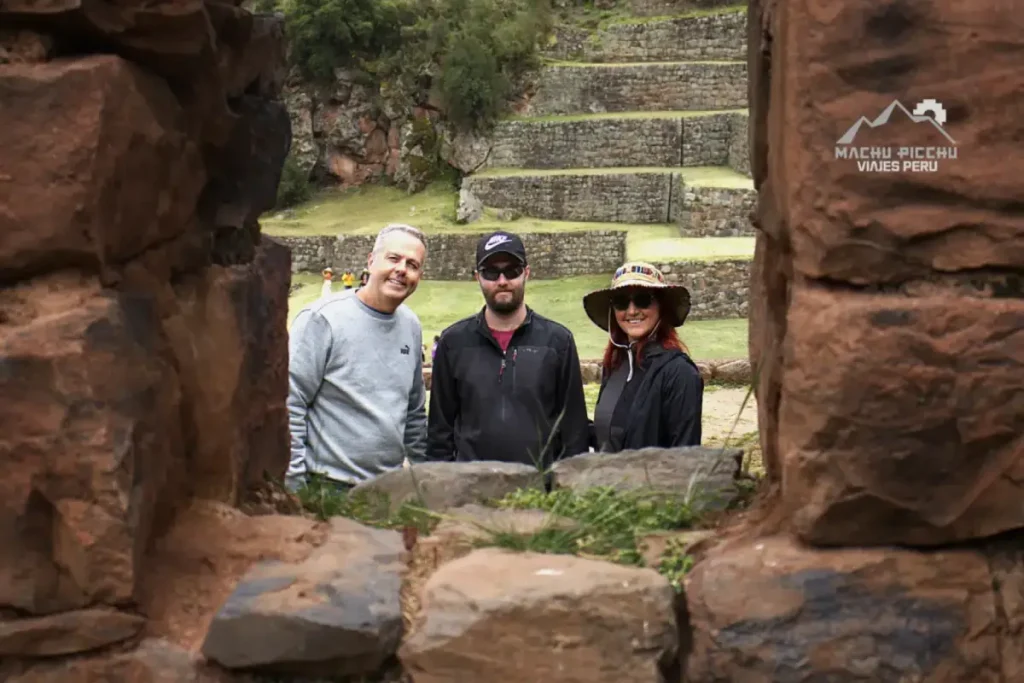
A long set of terraces supported by retaining walls, creating platforms oriented for farming.
Qallanca
The Qallanca is a rectangular plaza-like space approximately 50 meters long, located in the center of the archaeological site. This area was important because it served as a meeting place for high-ranking Inca authorities.
Smaller enclosures
Many of the smaller enclosures are scattered throughout the site and are in poor condition. Even so, you can still see adobe structures, Inca pathways oriented toward the city of Cusco, and small lookout posts with views across the entire Sacred Valley.

Huchuy Qosqo Entrance Fee (Updated)
Average general admission: S/ 15.00 soles – $ 4.50
Reduced rates for students and minors:
- Not included in the Cusco Tourist Ticket
- Payment is made directly at the site entrance.
Best Time of Year for the Hike
Recommended Season
April to October (dry season):
- Stable weather.
- Safer trails.
- Better panoramic views.
November to March (rainy season):
- Frequent rain (January and February are the heaviest)
- Slippery trails
- Possible delays
Best months: May, June, and September.
Frequently Asked Questions About Huchuy Qosqo
What does Huchuy Qosqo mean in English?
Huchuy Qosqo comes from Quechua:
Huchuy = small
Qosqo = Cusco
Its literal translation is “Little Cusco.”
Can you get to Huchuy Qosqo by car or train?
No. Huchuy Qosqo has no road or rail access.
The only way to get there is on foot via trekking routes that start from:
- Chinchero (Tauca).
- Lamay (Sacred Valley).
- Tambomachay (Cusco).
Do I need the Cusco Tourist Ticket to enter Huchuy Qosqo?
No. Huchuy Qosqo is not included in the Cusco Tourist Ticket.
General admission: S/ 15.00 soles. Payment is made directly at the site entrance.
Recommendation: bring cash in soles.
Where can I sleep near Huchuy Qosqo?
There are no hotels inside the archaeological complex, but there are rustic and authentic options in the surrounding area:
- Camping.
- Designated areas near the site.
- Ideal for 2-day routes.
- You must bring a tent, sleeping bag, and proper gear.
For more comfort, many travelers hike down to Lamay after the visit and spend the night in the Sacred Valley.
Is it necessary to hire a guide for the route from Chinchero?
It is not mandatory, but it is highly recommended.
Benefits of going with an official guide:
- Accurate historical interpretation of the site
- Proper navigation on high-Andean routes
- Safety in changing weather conditions
- Support in case of altitude sickness
From Chinchero, the route crosses puna grasslands above 4,000 m, where trail signage is not always clear.
What gear should I bring for the Huchuy Qosqo hike?
- Small backpack (20–30 L).
- Hiking shoes or trekking boots.
- Comfortable warm clothing (layers).
- Windbreaker / waterproof jacket.
- Hat, sunglasses, and sunscreen.
- Water (at least 1.5–2 L).
- Energy snacks.
- Trekking poles (optional, but helpful).
Additional recommendations:
- Rain poncho (during the wet season).
- Water purification tablets.
- Cash.
- Lip balm (for cold and wind).
Don’t underestimate the altitude, even if the hike is not long.
Book Your Huchuy Qosqo Adventure Tour
If you want a complete, safe, and well-organized experience, the best option is to go with an authorized local operator that includes:
- Transportation to the starting point.
- Specialized official guide.
- Box lunch or lunch.
- Assistance during the trek.
- Coordination with local communities.
Huchuy Qosqo is perfect for travelers looking for authentic history, real Inca trails, Sacred Valley landscapes, and fewer crowds than Machu Picchu.