The Best Museums in Arequipa: Art, History, and the Juanita Mummy

Andean Sanctuaries Museum (Juanita the Mummy)
Who was the mummy Juanita and why is she famous?
The mummy Juanita, also known as The Lady of Ampato, was a young Inca girl of approximately 13 years old who was offered in a religious ritual known as Capacocha during the 15th century. This ritual was a ceremony of great spiritual importance, in which children and young people were selected for their purity to be offered to the apus (spirits of the mountains and volcanoes) during times of drought, natural disasters, or to seek blessings for the Inca Empire.
Juanita’s body was discovered in 1995 by American archaeologist Johan Reinhard and Arequipa mountaineer Miguel Zárate on Mount Ampato, at an altitude of over 6,000 meters (19,685 ft). The exceptional preservation of her body in ice made it possible to study aspects of her life, ritual clothing, and the offerings that accompanied her.

Juanita is the crown jewel of the museum, and her story offers a powerful window into the spiritual and political world of the Tahuantinsuyo. The Inca not only ruled, but also legitimized his power through these ceremonies carried out on the most sacred peaks of the Andes.
Recommendation: Don’t miss the city tour of this White City to perfectly complement your guided visit through its historic center.
Visiting hours and entrance fees
Schedule:
• Tuesday to Saturday: 9:00 a.m. – 6:00 p.m.
• Sunday: 9:00 a.m. – 2:00 p.m.
Entrance fees:
• Peruvian adults: approximately S/ 3–5.
• Peruvian students: approx. S/ 1.50–S/ 3.
• Foreign adults: around S/ 20 – $7.
• Foreign students: approx. S/ 15 – $5.
Prices may vary slightly depending on the season and museum policies.
The museum visit follows a narrated route through five thematic rooms, covering everything from Inca cosmovision to the Capacocha ritual and the routes used to take offerings to the sacred mountain summits.
It is recommended to start with the introductory video (included in the visit), which places you within the geographic and spiritual complexity of the Andes, and then continue to the room where Juanita rests inside a special climate-controlled chamber at sub-zero temperatures, preserving her skin and tissues as if time had stopped.

Santa Teresa Viceregal Art Museum
Just across the historic center, this museum operates within the former Monastery of Santa Teresa, founded in 1710 by the Discalced Carmelite nuns. It combines religious history, art, and colonial architecture.
The cloistered monastery and its religious art collection
The monastery is still home to cloistered nuns, and its sacred silence offers a beautiful contrast to the lively atmosphere of downtown Arequipa. Inside its halls, you will find altarpieces, sculptures, liturgical ornaments, and goldsmith works dating from the Viceregal period, reflecting religious devotion expressed through art between the 16th and 18th centuries.
The Nativity Hall and Cusco School paintings
Among the museum rooms, the Nativity Hall stands out for its deeply emotional scenes rich in detail. Other rooms reveal the influence of the famous Cusco School, a mestizo artistic style that blends European techniques with Andean worldview.

Visiting hours and how to get there
- Hours: Monday to Saturday: 10:00 a.m. – 5:00 p.m.
- From the Main Square: 5–8 minute walk along Melgar Street.
- Entrance fees: Adults S/ 20; University students S/ 6; Seniors S/ 10; School students S/ 3.50.
Arequipa Cathedral Museum
This museum is part of the majestic Basilica Cathedral of Arequipa complex, a symbol of faith and colonial history.
Treasures of the basilica and the Loret organ
The museum preserves ceremonial ornaments of extraordinary value, including gold and silver chalices, ciboriums, archbishop vestments, sculptures, and liturgical objects used since colonial times. One of the most striking pieces is the Loret Organ, a magnificent musical instrument with over 1,200 pipes, brought from Europe and carefully assembled to resonate within this impressive cathedral.
Access to bell towers and city views
On some guided visits, it is possible to climb the cathedral towers and bell towers, offering a unique panoramic view of the historic center and the volcanic landscape surrounding the city.
Ticket information and guided visits
Museum hours: 10:00 a.m. – 4:15 p.m. (Monday to Saturday).
Many visits are guided to protect the artworks, and in some cases a voluntary contribution to the guide is requested at the end.

The Founder’s Mansion and the Goyeneche Palace
Although it’s not a traditional museum, this historic old mansion—once home to the family of Arequipa’s founder—is a fascinating stop to understand what life was like for the colonial elite. Today it offers interpretive tours through its rooms, gardens, and courtyards, featuring furniture, art, and objects that evoke past eras.
The Founder’s Mansion takes you through a more social and domestic side of history, while MUCEN—the Central Reserve Bank Museum, also located in downtown Arequipa—offers art and interesting temporary exhibitions if you have extra time and want to deepen your perspective on Peruvian and international art.
Goyeneche Palace
The impressive Goyeneche Palace is another colonial architectural gem. Built in the 18th century for a prominent Arequipa family and later remodeled by Bishop Juan de Goyeneche, this palace features elegant courtyards, wrought-iron balconies, viceregal art, a numismatic collection, and historic rooms that safeguard important works, including paintings from the Cusco School and period European furniture. Admission is often free or by voluntary contribution, but be sure to check local hours before your visit.
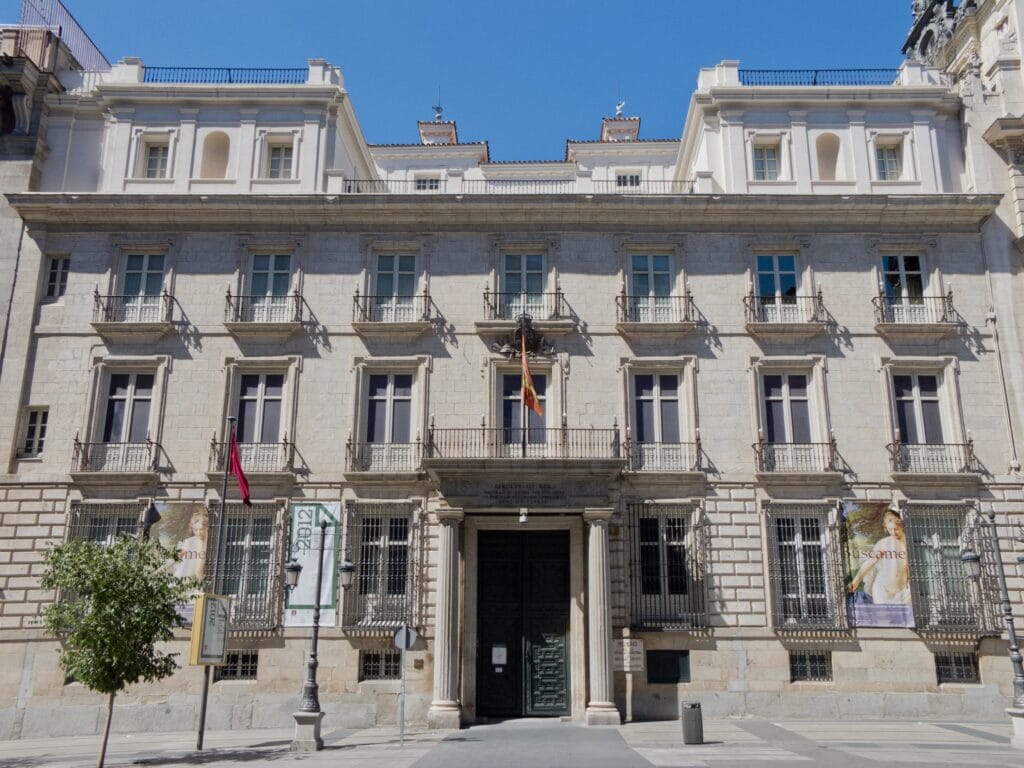
Sillar civil architecture outside the Historic Center
Arequipa isn’t “white” because of paint it’s white because of sillar, a lightweight volcanic stone (tuff) that can be cut like bread when fresh and hardens as it’s exposed to air. This made it possible to build thick walls, carved façades, and bright inner courtyards.
If you’re looking for sillar civil architecture outside the Historic Center, the most representative examples are found in traditional neighborhoods where everyday life continued to follow the same colonial logic: wide walls, clay tile roofs, courtyards, carved stone doorways, and iron grilles.
Yanahuara: sillar mansions and carved stone façades, plus the famous viewpoint area. The neighborhood church dates to the 18th century and preserves sillar Baroque—very “Arequipa” in its details and proportions.
San Lázaro: a traditional area with narrow streets, walls that reflect the light, and that old-neighborhood feeling where sillar takes center stage.
Cayma: also preserves traditional homes and sillar façades in older parts of the district (ideal for explaining “how courtyard-style Arequipa used to live”).
The founding of Arequipa (and why its period furniture matters)
The Spanish founding was formalized on August 15, 1540, carried out by Garcí Manuel de Carbajal in the Chili Valley, under the long and symbolic name “Villa de la Asunción de Nuestra Señora del Valle Hermoso de Arequipa”.
What was really founded that day? Not just a “city,” but an order (main square, plots, church, town council) and a way of life. That’s why when you step into a mansion-museum and see colonial or republican furniture, you’re not just looking at “old things”—you’re seeing how domestic life was organized (reception rooms, raised seating areas, courtyards, oratories, dining rooms), and how a local elite built identity in a city that has always been strong and proud.
Other recommended museums in Arequipa
1) Museum of Contemporary Art (MAC Arequipa)
- Address: Alameda San Lázaro 120 (Casa Museo).
- Hours (public references): opening is reported Monday to Friday (with schedules posted by the museum on Facebook).
- Admission: some sources list it as affordable and sometimes free during municipal campaigns; others mention set fees. Best practice: confirm on social media the same day.
- Taxi from the Main Square: it’s a short ride (San Lázaro area). By taxi/app it’s usually quick. Ask for: “Alameda San Lázaro 120, Casa Museo MAC”.
2) Municipal Historical Museum “Guillermo Zegarra Meneses”
- Official tourist hours: Monday to Friday, 8:00 a.m. – 3:00 p.m.
- Highlights: collections donated by Arequipa families; great for “period furniture/objects”.
- Admission: tourist guides mention an entry fee (varies by category). Practical tip: confirm at the entrance or on social media on the day of your visit.
- Taxi: if you’re staying downtown, it’s usually a short transfer (depending on your exact location). Always say: “Museo Histórico Municipal Guillermo Zegarra Meneses”.
3) Casa del Moral (House Museum)
- Location: Calle Moral 318, just steps from downtown.
- Hours: Monday to Saturday, 9:00 a.m. – 5:00 p.m. (tourist references consistently report this range).
- Admission: around S/ 5 (and in some references, a discounted rate for Peruvians).
- Taxi: if your travelers are staying in central hotels, it’s often easier to walk.
Practical guide for visiting museums in Arequipa
Are there days with free admission to museums?
Yes mainly in two ways:
Museos Abiertos (MUA): an initiative by Peru’s Ministry of Culture that offers free admission on the first Sunday of every month at participating museums (public/state museums that are part of the program).
Special dates like International Museum Day (around May 18): several museums run free-entry days or special campaigns (for example, municipal announcements for the Historical Museum).
How much time do you need to visit the main museums?
It depends on your pace, but as a practical guide:
- Casa del Moral: 30–60 min (short, very visual, great for explaining sillar + domestic life).
- Municipal Historical Museum: 60–90 min (if you include storytelling and pause in the rooms).
- MAC Arequipa: 45–75 min (depending on temporary exhibits and guided interpretation).
Contact us to start planning your trip to Peru.