Experiential tourism in the sacred valley: authentic experiences with andean communities

The Sacred Valley of the Incas is not just a destination of breathtaking landscapes and ancient ruins. It is also a living territory, inhabited by Andean communities that preserve traditions, knowledge, and ways of life inherited from their ancestors. Experiential tourism allows you to cross that invisible boundary between observing and participating, between visiting and truly sharing life with others.
What Is Experiential Tourism in the Sacred Valley?
Experiential tourism is a type of travel in which the visitor becomes directly and respectfully involved in the daily life of a local community. In Cusco’s Sacred Valley, this means sharing agricultural activities, learning ancestral textile techniques, preparing traditional dishes, or taking part in spiritual ceremonies alongside Quechua families who have lived in these valleys for centuries.
Unlike conventional tourism, where the traveler observes from the outside, experiential tourism offers a genuine exchange: you bring your curiosity and openness, and the community shares its time, culture, and worldview. The result is one of the most transformative memories a traveler can take away from Peru.
Why Experience Experiential Tourism in the Sacred Valley?
The Sacred Valley is home to some of the country’s best-preserved Andean communities. Its geography of mountains, terraces, and rivers has allowed many villages to maintain their own customs, language, and social organization. Exploring this territory through experiential tourism is, without a doubt, one of the most complete and meaningful experiences Cusco has to offer.
A Connection with Local Communities and Ancestral Traditions
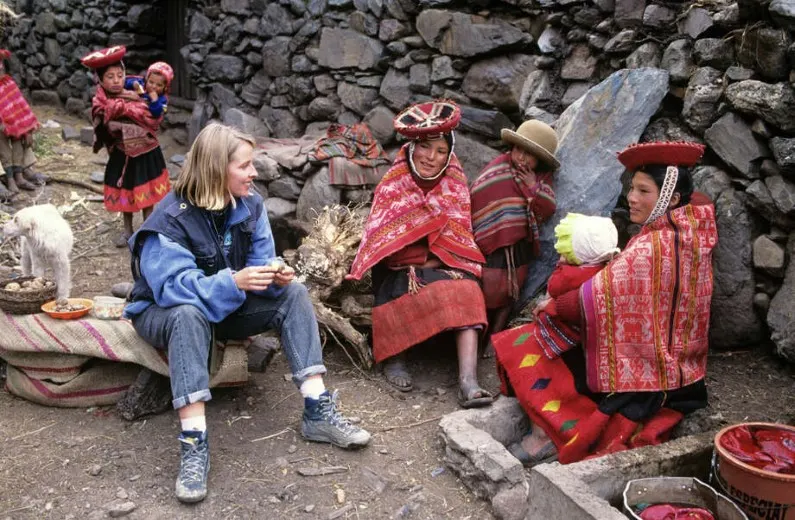
The communities of the Sacred Valley are guardians of ancient knowledge about astronomy, high-altitude agriculture, natural medicine, and Andean spirituality. Taking part in their daily activities is not simply a tourist outing; it is a window into a different worldview, where the land is not a resource but a mother Pachamama and time is measured not in hours but in cycles of planting and harvesting.
By living alongside these families, travelers build real connections, learn a few words in Quechua, and understand from the inside why this culture has survived centuries of historical change.
A different way to discover Cusco beyond the classic circuits
Machu Picchu, Qorikancha, and Cusco’s Plaza de Armas are must-see sites, but they do not tell the whole story. Experiential tourism in the Sacred Valley takes you to places that do not appear in the mainstream guidebooks: a weaver’s workshop in Chinchero, the cultivated terraces of Pisac, a clay kitchen in Ollantaytambo. These corners reveal the human and living dimension of a culture that many people know only through stones and museums.
Experiential tourism activities you can enjoy
Activities vary depending on the community and the season, but they all share one common feature: local families play the leading role as hosts. These are some of the most sought-after experiences among travelers who choose the Sacred Valley as an experiential destination.
Traditional textiles, andean agriculture, and local cuisine
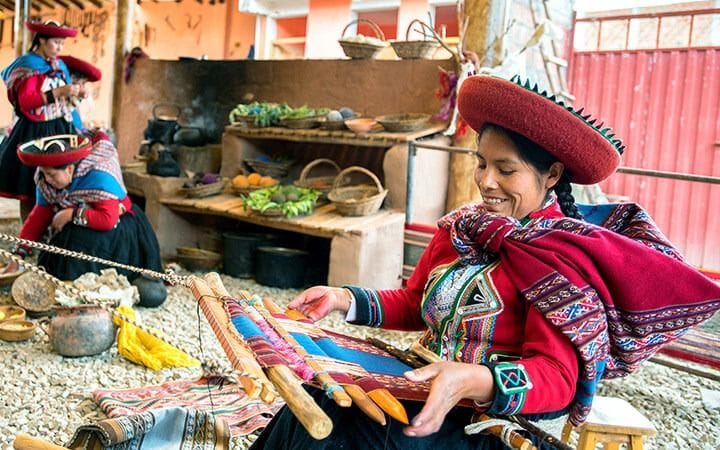
Textile art is one of the cultural pillars of the Andean world. In communities such as Chinchero or Ccaccaccollo, Quechua artisans teach the entire process, from dyeing with plants and natural minerals to weaving on a backstrap loom using techniques passed down from generation to generation. Many visitors are surprised to discover the symbolic complexity of each design and the amount of time each piece requires.
Andean agriculture, meanwhile, is a lesson in engineering and adaptation to the land. Taking part in preparing the soil with the chakitaqlla, the Andean foot plow, planting native potatoes, or harvesting corn alongside local farmers is a physical and emotional experience that connects the traveler with the natural cycles of the Andes.
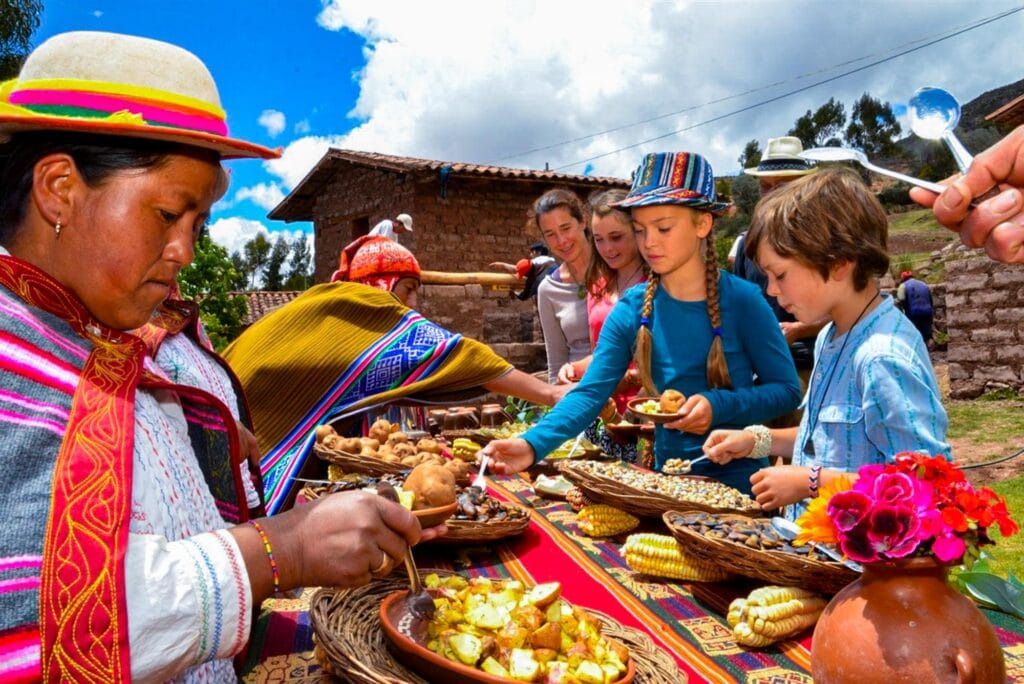
Local cuisine completes the picture. Preparing a pachamanca buried among hot stones, cooking chuño over a wood-burning stove, or learning how to make chicha de jora are activities that spark conversation, laughter, and a sense of belonging that is hard to find in other types of tourism.
Rituals, community Hikes, and daily activities
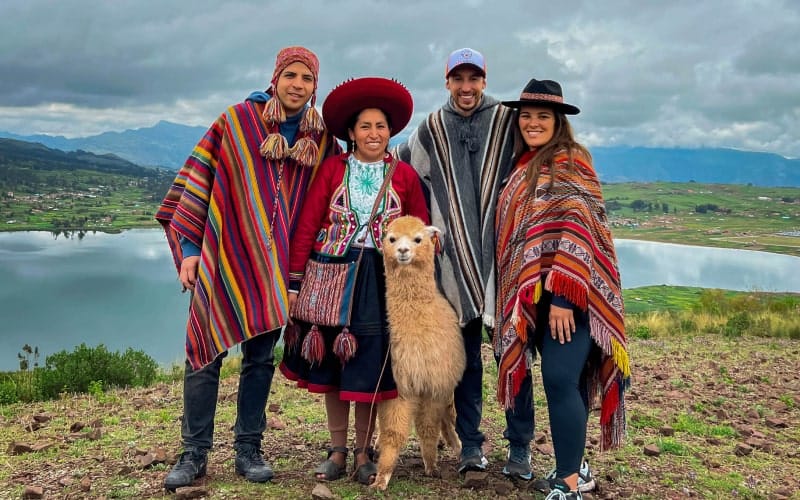
Some families and communities also share spiritual rituals with visitors, always with the permission and guidance of local elders. Offerings to Pachamama, known as pagos a la tierra, are deeply meaningful ceremonies in which gratitude, balance, and reciprocity are the central values.
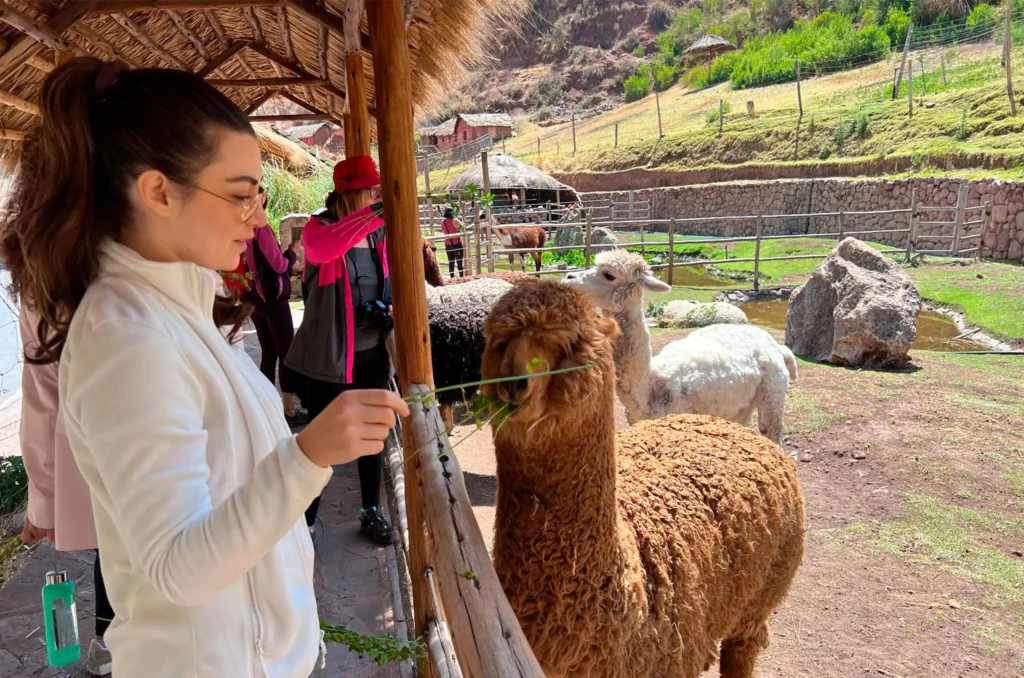
Community hikes along trails that pass through terraces, apachetas, and queñua forests add a landscape and spiritual dimension to the experience. Daily activities such as herding llamas and alpacas, gathering medicinal herbs, or making handicrafts allow travelers to understand what an ordinary day in the Andes is really like.
Experiential Sacred Valley Tour and Machu Picchu
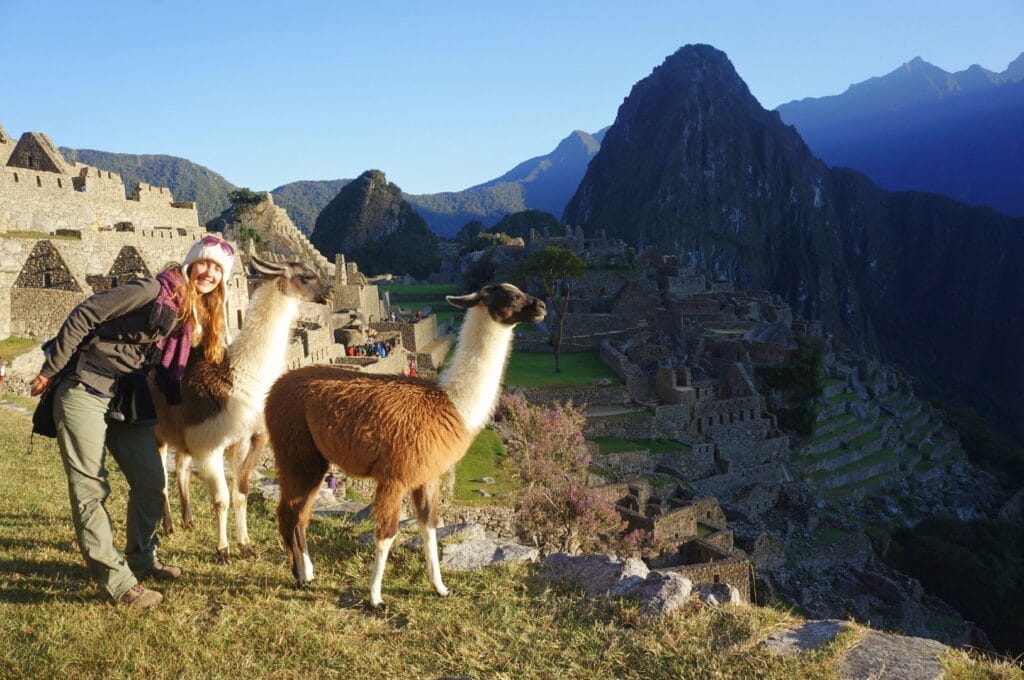
One of the most complete options for those visiting Cusco for the first time is to combine experiential tourism in the Sacred Valley with a visit to Machu Picchu. At Machu Picchu Viajes Peru, we offer itineraries that combine Sacred Valley communities with cultural activities, time spent with local families, and a visit to the Inca citadel. In this way, travelers gain a complete view of the Andean world: its living roots in the communities and its monumental expression in the ruins.
Sacred Valley communities where You can enjoy this experience
The Sacred Valley is home to dozens of communities with their own unique identities. Some have more infrastructure for welcoming visitors; others offer a more intimate and less crowded immersion. Below, we highlight the most relevant ones for experiential tourism.
Andean villages with a living cultural identity
Chinchero: known as the land of the rainbow, this community at 3,762 meters above sea level is one of Cusco’s most important textile centers. Its weavers are internationally recognized and work in cooperatives that guarantee fair trade.
Pisac: in addition to its famous artisan market, Pisac has active communities focused on terrace farming. Visitors can take part in pottery workshops, hikes through the terraces, and planting activities with local families.
Ollantaytambo: the oldest continuously inhabited town in the Americas, where the original Inca urban layout is still preserved. Here, experiential tourism blends with history: staying with families who live in stone houses built by the Incas is a truly unique experience.
Ccaccaccollo: a community specialized in experiential tourism, with organized programs in textile art, Andean cooking, and family-based cultural exchange. It is ideal for those looking for a structured and well-planned immersion.
What makes each Community special for visitors
Each community has its own character. Chinchero stands out for the quality of its textile work and the organization of its weavers. Pisac combines archaeology and rural life in a setting of remarkable scenic beauty. Ollantaytambo allows visitors to feel the living weight of Inca history in its streets. Ccaccaccollo, meanwhile, is the most suitable option for families or groups seeking a structured experience with sequential activities and specialized guidance.
What to expect from an experiential tourism experience
Before booking, it is helpful to have clear expectations about how an experiential tourism experience unfolds. This is not a themed hotel or a performance for tourists; it is a real interaction with real people, with everything that implies.
What interaction with local families Is like
Interaction is usually warm and direct, although often supported by a guide or interpreter when language is a barrier. Host families are accustomed to receiving visitors and know how to make guests feel comfortable without losing their authenticity. Quechua is the everyday language in many of these communities, and learning a few basic words such as allin p’unchaw (good morning) or sulpayki (thank you) creates an immediate and genuine connection.
Duration, types of activities, and comfort Level
Experiential tourism experiences can last from half a day to several days with accommodations in the community. The activities are mostly participatory and low-intensity, although some hikes may require a certain level of effort because of the altitude. The comfort level is basic but decent: communities do not offer luxury, but they do offer warmth, cleanliness, and genuine hospitality. For those traveling with children, these experiences are especially enriching and often create memories that last a lifetime.
Benefits of experiential tourism for communities and travelers
Experiential tourism does not only enrich the traveler. When it is well managed, it generates real and lasting benefits for the communities that take part in it.
A Positive impact on the local economy
Unlike mass tourism, where most of the money stays with large operators or hotel chains, experiential tourism distributes income directly among local families and cooperatives. Every payment for a textile workshop, a communal meal, or rural lodging goes straight to the people providing the experience. This strengthens the local economy, reduces migration to cities, and gives economic value to cultural preservation.
Cultural Lessons that enrich the Journey
For the traveler, experiential tourism offers something no museum or guided tour can replicate: learning through direct experience. Understanding how potatoes are grown at 3,500 meters above sea level, why each color in a textile carries symbolic meaning, or how an Andean family organizes daily life around reciprocity the ayni transforms the way one understands the world.
How to choose an experiential tourism experience in the Sacred Valley
Not all experiential tourism experiences are the same. Quality, authenticity, and the real impact on the community vary considerably depending on the operator and the type of program. Here, we guide you so you can make the best decision.
What to consider before booking
Prioritize operators that work directly with the communities and distribute income fairly. Ask whether the program was designed with the participation of the families or whether it simply uses them as a backdrop. Make sure there are guides with genuine cultural knowledge, not just language skills, and that the experience includes participatory activities rather than simple demonstrations. It is also a good idea to read reviews from other travelers to confirm that the experience was authentic and respectful.
Differences between a short visit and a full cultural immersion
A half-day visit to a community allows for a first contact, the opportunity to learn about a specific activity, and a general impression to take away. An immersion of one or more days, with accommodations in the community, completely changes the level of understanding: meals are shared, you sleep under the same roof, take part in the morning routine, and build a real bond with people. If time allows, full immersion is always the most enriching option.
Tips for Travelers
A successful experiential tourism experience depends as much on the community as on the visitor. With the right attitude and preparation, the encounter can be deeply transformative for both sides.
What to bring and how to prepare for the experience
Bring warm layered clothing, as temperatures in the Sacred Valley can vary significantly throughout the day. A hat or beanie, sunscreen, insect repellent, and comfortable shoes for walking on dirt paths are essential. If you have issues with altitude, consult your doctor before the trip and consider drinking coca tea during the first few days. Bring some cash in Peruvian soles for direct purchases from artisans, since many communities do not have access to electronic payment terminals.

Best practices for respectful coexistence in andean communities
Always ask permission before photographing people, especially children and elders. Avoid asking intrusive questions about income or personal circumstances. Accept invitations to share food with gratitude, even if it is not what you are used to eating. Listen more than you speak. Respect sacred spaces and follow the guide’s instructions during ceremonies or rituals. And remember that you are in someone’s home: respect and humility are the best passports to an authentic experience.
Book an experiential tourism experience with Machu Picchu Viajes Peru
At Machu Picchu Viajes Peru, we work with selected communities in the Sacred Valley that offer authentic experiential tourism experiences, managed responsibly and with direct benefits for the participating families. Our specialized guides speak Quechua, Spanish, and English, and they have a deep understanding of the Andean culture they will help you discover.
If you want your trip to Cusco to go beyond monuments and connect you with the living essence of the Andes, contact us and we will design together the experience that best matches your interests, your time, and your style of travel.