Colca Canyon: Tours and the Best Viewpoints

What is the Colca Canyon?
The Colca Canyon is one of the deepest canyons in the world, with an approximate maximum depth of 4,160 meters, located in the Arequipa region in southern Peru. Beyond its dramatic geography, Colca is a living cultural landscape—where nature, history, and Andean communities have coexisted for more than 1,500 years.
Before the Inca expansion, the valley was home to the Collagua and Cabana cultures, peoples specialized in high-altitude agriculture. They built an extensive system of pre-Hispanic agricultural terraces (andenes), many of which are still used today. During the Inca period, Colca became part of the Qhapaq Ñan network, strengthening its strategic and economic importance.
Today, the Colca Canyon is recognized not only for its depth, but also as one of the best places in the world to see the Andean condor. It also preserves traditions, clothing, dances, and colonial architecture that remain part of everyday life.
How to Get to Colca Canyon from Arequipa
The usual starting point is the city of Arequipa, located at 2,335 m a.s.l. (7,661 ft.).
Main route
Arequipa – Chivay – Colca Valley
The route crosses the Salinas y Aguada Blanca National Reserve, a vast protected area where you can spot vicuñas, alpacas, llamas, and high-Andean birds.
Transportation options
- Tourist transport (minivan or bus): the most common and safest option.
- Private car: recommended only for drivers experienced with high-altitude roads.
- Local bus: cheaper, but slower and with fewer scenic stops.
Average travel time:
- Tourist transport: 3.5 to 4 hours.
- Private car: about 3 hours.
- Local bus: 4.5 to 5 hours.
Don’t think of the drive as just transportation—it’s part of the experience, with volcanic landscapes, wet highland plains, rural villages, and wildlife along the way.
Is it better to go on your own or with an organized tour?
Traveling with an organized tour (recommended)
- Ideal for first-time visitors.
- Includes transportation, a professional guide, and full logistics.
- Early access to the viewpoints.
- Better management of altitude symptoms.
- Better time efficiency on long routes.
Traveling independently
- Requires detailed planning.
- Harder to arrive early at the Condor’s Cross.
- Higher risk of missing important cultural and historical context.
For most travelers—especially international visitors-an organized Colca Canyon tour offers a more complete, safe, and enriching experience.


Information on Colca Fees and Tickets
Colca Tourist Ticket (updated)
This ticket is mandatory to enter the valley and helps fund maintenance of the area.
- Foreign visitors: approx. S/ 70 – $ 24
- South American tourists: approx. S/ 40 – $ 14
- Peruvians: approx. S/ 20
Payment is made at the valley control points and is valid for the duration of your visit.
Colca Canyon tour prices
1-day tour
- Average price: USD 35–50.
- Very early departure (3:00 a.m.).
- Panoramic-focused itinerary.
- Less time in towns and at hot springs.
2-day / 1-night tour (recommended)
- Average price: USD 65–100.
- Includes basic lodging in Chivay.
- More relaxed pace.
- More cultural and scenic immersion.
- Better altitude acclimatization.
What does a Colca Canyon tour usually include?
- Round-trip tourist transportation.
- Professional guide (Spanish/English).
- Scenic stops.
- Visits to the main viewpoints.
- Ongoing assistance during the trip.
- Services not always included:
- Colca entrance ticket.
- Full meals.
- Hot springs entry.
- Personal expenses.
What to See in Colca Canyon: Top Attractions
Condor’s Cross Viewpoint (Cruz del Cóndor)
This is the most famous spot in the valley and one of the best places in the world to observe the Andean condor, a sacred bird in Andean cosmology.
Best time: between 8:00 and 10:00 a.m.
During these hours, condors use thermal currents to rise.
In the right season, you may see them flying just a few meters from the viewpoint.
La Calera Hot Springs (Chivay)
Located just minutes from Chivay, these natural hot springs reach temperatures of 38 to 40°C (100 to 104°F).
- Great for relaxing muscles and fighting the cold at high altitude.
- Basic but functional facilities.
- Approx. entry fee: S/ 15–20.
Traditional towns in the Colca Valley
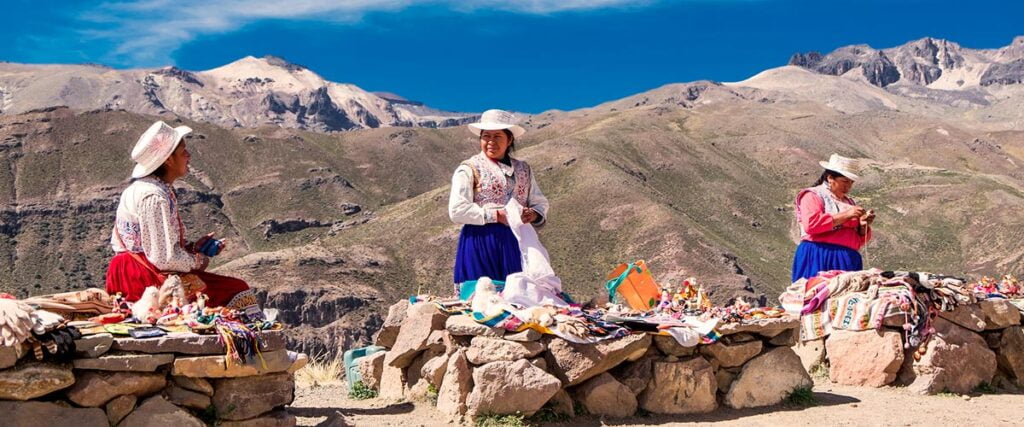
- Chivay: The valley’s tourism hub, with hotels, restaurants, markets, and basic services.
- Yanque: Known for its colonial church and traditional dances such as the Wititi.
- Cabanaconde: A key base for trekking routes into the canyon, with spectacular views.
Altitude and Trekking Difficulty
- Average valley elevation: 3,600 m a.s.l. ≈ 11,811 ft
- Condor’s Cross: 3,800 m ≈ 12,467 ft
- Chivay: 3,635 m ≈ 11,926 ft
- Cabanaconde: 3,200 m ≈ 10,499 ft
What is the maximum depth of Colca Canyon?
Maximum canyon depth (from the rim down to the river): 3,800 m ≈ 12,467 ft. This is the most commonly cited figure when people ask “how deep is Colca Canyon?”
Note: Many people assume “Colca = extreme altitude sickness” because of Chivay/Patapampa, but in Sangalle you’re actually lower. What’s hard there is the elevation gain and the heat during the climb back up—keep that in mind.
Physical challenge level: trekking to the Sangalle Oasis
- Difficulty: moderate to high (because of elevation change), not technical.
- Total time: ~6–7 hours (down 2.5–3.5 hours / up 3–4 hours)
- Hardest part: the climb from Sangalle back to Cabanaconde with early sun, dust, and a steady incline.
Tips to prevent altitude sickness in Colca
What works best (travel medicine basics):
- Acclimatize: if possible, spend 1 night in Arequipa before going up to the valley.
- First 48 hours: avoid alcohol and don’t do “full effort” right after arriving.
- Ascend gradually (when possible): avoid gaining too much sleeping altitude too quickly.
- Hydration + light meals and carbs (can help you tolerate altitude better).
- If you’re prone to altitude issues: preventive medication like acetazolamide exists, but only with medical guidance (don’t self-medicate).
Warning signs: If a headache is severe and worsening, confusion, significant shortness of breath at rest, etc. → descend and seek medical attention.
Best Time to Visit Colca Canyon
For trekking and clear skies: dry season (roughly May–October).
Some operators extend the “best window” to April–December due to more stable conditions for hiking.
Rainy season (roughly Nov–Mar): muddier trails, more slips, and fog (worse for trekking).
Weather in the Colca Valley: dry vs. rainy season
- Dry: clearer days, cold nights (ideal for viewpoints and trekking).
- Rainy: greener landscapes, but with showers and variable conditions (and the climb to Sangalle gets tougher).
Practical Recommendations for Your Trip
What to pack for Colca (clothing and gear)
- Layering system: moisture-wicking shirt + warm jacket (cold mornings/nights), plus a windbreaker.
For the Sangalle trek:
- Trail shoes/boots with good grip, trekking poles, cap/hat, sunglasses, sunscreen.
- Water + salts (or electrolytes) and snacks.
- Flashlight/headlamp if you leave very early.
- Rain poncho if you’re traveling in rainy months.
- Basic services in Chivay (banks, internet, and healthcare).
Money: bring enough cash. There is a Banco de la Nación branch in Chivay (Plaza de Armas).
Health: there is the Chivay Health Center (Arequipa–Caylloma Health Network).
Internet: hotels often have Wi-Fi; mobile signal can vary due to the terrain and altitude (it’s safest not to depend 100% on data).
At Machu Picchu Viajes Peru, we design authentic adventures that combine trekking, culture, and nature in the Andes.
Contact us to start planning your trip to Peru.