


Llactapata Viewpoint: The Scenic Overlook of Machu Picchu on the Salkantay Route
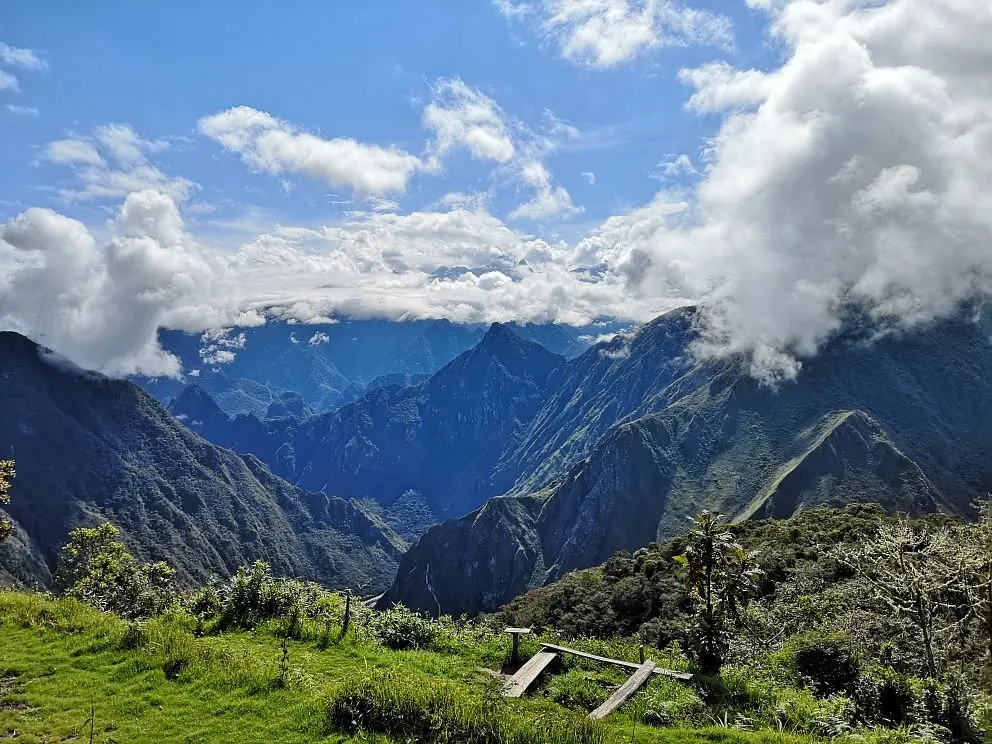
Llactapata Viewpoint is one of the most interesting scenic viewpoints included in some 5-day Salkantay Trek routes. From this area, travelers can see Machu Picchu in the distance, surrounded by mountains and cloud forest vegetation.
The site is more than just a viewpoint. Llactapata is also an Inca archaeological site located on a mountain ridge west of Machu Picchu. Its position offers a different perspective of the citadel from the traditional images taken inside the sanctuary.
The visit usually takes place during the stage connecting Lucmabamba with Aobamba, Hidroeléctrica, and Aguas Calientes. However, not every Salkantay Trek itinerary includes this route, so it is important to review the itinerary before booking.
What Is Llactapata Viewpoint?
Llactapata Viewpoint is a scenic overlook located near the Llactapata archaeological site. It sits at an elevation of approximately 2,700 to 2,800 meters above sea level, in a cloud forest area within the district of Santa Teresa.
From this location, Machu Picchu can be seen from the southwest, across the valley. You can also make out the mountains surrounding the citadel and, when weather conditions are favorable, the outline of Huayna Picchu.
Why This Viewpoint Is One of the Most Anticipated Moments of the Trek
For many travelers, Llactapata offers the first glimpse of Machu Picchu along the Salkantay route.
After several days of hiking, seeing the citadel in the distance provides a sense of how close the final destination is. The view also helps travelers better understand the area’s geography, characterized by steep mountains, deep valleys, and abundant vegetation.
What You Will See from the Viewpoint on Clear Days
On a clear day, Machu Picchu can be seen resting on its mountain ridge, accompanied by Huayna Picchu and other mountains within the sanctuary.
The view is distant, so the citadel cannot be seen in the same level of detail as during an on-site visit. However, this perspective reveals its position within the Andean landscape and the surrounding cloud forest.
You can also see ravines, vegetation-covered mountains, and part of the Aobamba Valley.
Where Is Llactapata Viewpoint?
Location Along the Salkantay Route to Machu Picchu
In many 5-day itineraries, Llactapata is visited on the fourth day of the Salkantay Trek.
The day usually begins in Lucmabamba. After ascending to Llactapata, the route descends toward Ahobamba and Hidroeléctrica. From Hidroeléctrica, travelers can continue on foot or take the train to Aguas Calientes, depending on the booked itinerary.
Connection to the Llactapata Archaeological Site
The viewpoint forms part of the surroundings of the Llactapata archaeological site. The complex includes the remains of buildings, walls, open spaces, and structures built on elevated ground.
Several studies suggest that Llactapata was connected to the network of Inca roads and centers associated with Machu Picchu. Researchers have also proposed that it may have served ceremonial, administrative, and astronomical observation purposes.
This Llactapata should not be confused with Patallacta, another archaeological site seen along the Classic Inca Trail near kilometer 82.
What Can Be Seen from Llactapata Viewpoint
The main attraction is the distant view of Machu Picchu from an unusual perspective. Visitors can also see mountains, ravines, and extensive areas of cloud forest.
The quality of the view depends on weather conditions. Mist and clouds can appear quickly, especially during the rainy season.
Panoramic View of Machu Picchu and the Valley
From Llactapata, Machu Picchu can be seen across the valley, resting on a ridge surrounded by mountains.
This perspective highlights how the citadel blends into the landscape and provides a better understanding of the complex geography in which it was built.
To see smaller details, it may be helpful to bring binoculars or use a camera with a good zoom lens.
Mountains, Rivers, and High-Jungle Landscapes
The route crosses a transition zone leading into the high jungle. The landscape features green mountains, deep ravines, cultivated fields, trees, and sections of cloud forest.
During the hike, it is also possible to spot birds, butterflies, and different plant species, although sightings depend on the season, weather, and the group’s noise level.
Llactapata: Viewpoint vs. Archaeological Site
Llactapata can be understood as both an archaeological site and a scenic viewpoint.
The viewpoint refers to the areas that provide views toward Machu Picchu. The ruins, on the other hand, are part of the ancient Inca complex spread across the ridge.
Differences Between the Scenic Viewpoint and the Ruins
The scenic viewpoint is the area used to observe and photograph Machu Picchu in the distance.
The archaeological site consists of the remains of Inca structures. Research suggests that the complex had an important connection with Machu Picchu and the ancient roads that crossed this area.
The visit combines scenery, hiking, and history in a single stage of the journey.
What a Visit During the Trek Usually Includes
A visit to Llactapata is usually part of a complete Salkantay Trek program. Services may include transportation from Cusco, a professional guide, meals, accommodation along the route, camping equipment, admission to Machu Picchu, and a return train ticket.
The exact services depend on the tour operator, the selected category, and the itinerary. For this reason, it is important to confirm that Llactapata is specifically listed in the program before booking.
How to Get to Llactapata Viewpoint
The most common way to reach the viewpoint during the Salkantay Trek is to begin the hike in Lucmabamba.
From this community, the trail climbs through farmland and cloud forest. After visiting Llactapata, the descent begins toward Aobamba and Hidroeléctrica.
The viewpoint cannot be reached directly by train.
Which Section of the Salkantay Route Provides Access to the Viewpoint
Access usually begins in Lucmabamba during one of the final stages of the trek.
The trail gradually climbs to the Llactapata ridge. After the visit, the route descends toward the Ahobamba area and Hidroeléctrica station.
Hiking Time and Difficulty Level
The ascent from Lucmabamba to Llactapata can take approximately 3 to 4 hours, depending on the starting point and the group’s pace.
The descent toward Hidroeléctrica may take an additional 2 to 3 hours. The full day is long and includes uphill and downhill sections, humidity, and areas that may be slippery.
The difficulty level is moderate. No technical experience is required, but hikers should have an adequate level of fitness and wear footwear with good traction.
Best Time to Visit Llactapata Viewpoint
Llactapata can be visited during most of the year, but visibility conditions vary by season.
The drier months generally provide a better chance of seeing Machu Picchu without cloud cover, although mountain weather can change quickly.
Dry Season vs. Rainy Season
The dry season generally runs from April or May through October. During these months, there is usually less rainfall and better conditions for hiking and taking photographs.
However, the trail may be busier, and some parts of the landscape may display less intense colors because of the lower rainfall.
The rainy season runs approximately from November through March. During these months, the vegetation becomes greener, but the likelihood of mist, rain, mud, and slippery trails increases.
Clouds may completely hide Machu Picchu, so the view from the viewpoint is never guaranteed.
Recommended Time for the Best Views and Photos
It is best to begin the hike from Lucmabamba early in the morning. This allows travelers to proceed at a more relaxed pace and provides additional time in case weather conditions change.
The exact arrival time will depend on the itinerary and the group’s pace. Mist can appear even in the morning, so there is no specific time that guarantees a completely clear view.
What to Pack for This Section of the Trek
The hike to Llactapata crosses a warm, humid, and changeable environment. It is important to bring lightweight clothing, rain protection, and suitable hiking accessories.
Useful Gear for a More Comfortable Ascent
Trekking poles can provide greater stability during both the ascent and descent, especially when the trail is wet.
It is also advisable to bring a waterproof backpack cover, a small quick-drying towel, and protective bags for electronic equipment.
Is Llactapata Viewpoint Worth Including in Your Trip?
Yes. Llactapata can be one of the most interesting stages of the Salkantay Trek for travelers who enjoy hiking, archaeology, and natural landscapes.
In addition to offering a different view of Machu Picchu, it provides the opportunity to follow an ancient trail and visit a less crowded archaeological site.
Who Is This Experience Ideal For?
This experience is ideal for travelers with a moderate level of fitness who enjoy hiking through cloud forest areas.
It is also recommended for those who want to get their first glimpse of Machu Picchu before reaching Aguas Calientes and discover a place that receives fewer visitors than Cusco’s main tourist attractions.
How It Fits with Machu Picchu, Santa Teresa, and Aguas Calientes
Llactapata is included in some itineraries that pass through Santa Teresa or Lucmabamba before continuing toward Hidroeléctrica and Aguas Calientes.
It serves as one of the final major hiking stages before reaching Machu Picchu Pueblo. The following day, travelers usually visit the Machu Picchu citadel.
Frequently Asked Questions About Llactapata Viewpoint
Can You Always See Machu Picchu from the Viewpoint?
No. Machu Picchu can be seen when the sky is clear, but mist, clouds, and rain may partially or completely block the view.
The dry season provides better chances of visibility, but there is no absolute guarantee.
How Long Is the Stop at the Scenic Viewpoint?
The duration depends on the itinerary, weather, and the group’s pace. Some visits last between 30 minutes and one hour, while others may take longer when the program includes a more detailed explanation of the archaeological site.
Is It Suitable for Travelers with Limited Trekking Experience?
It may be suitable for travelers without technical trekking experience, provided they have an adequate level of fitness and are prepared to walk for several hours over sloping terrain.
People with mobility limitations or health concerns should check in advance whether this stage is suitable for them.
Is Llactapata Visited on the Classic Salkantay Route or Only on Alternative Routes?
Llactapata is included in many versions of the 5-day Salkantay Trek, especially itineraries that pass through Lucmabamba.
However, not all classic routes visit it. Some programs continue directly toward Santa Teresa or Hidroeléctrica, so it is necessary to review the itinerary before booking.


