Salkantay Trek: Complete Guide to the Route, Difficulty, and Travel Tips
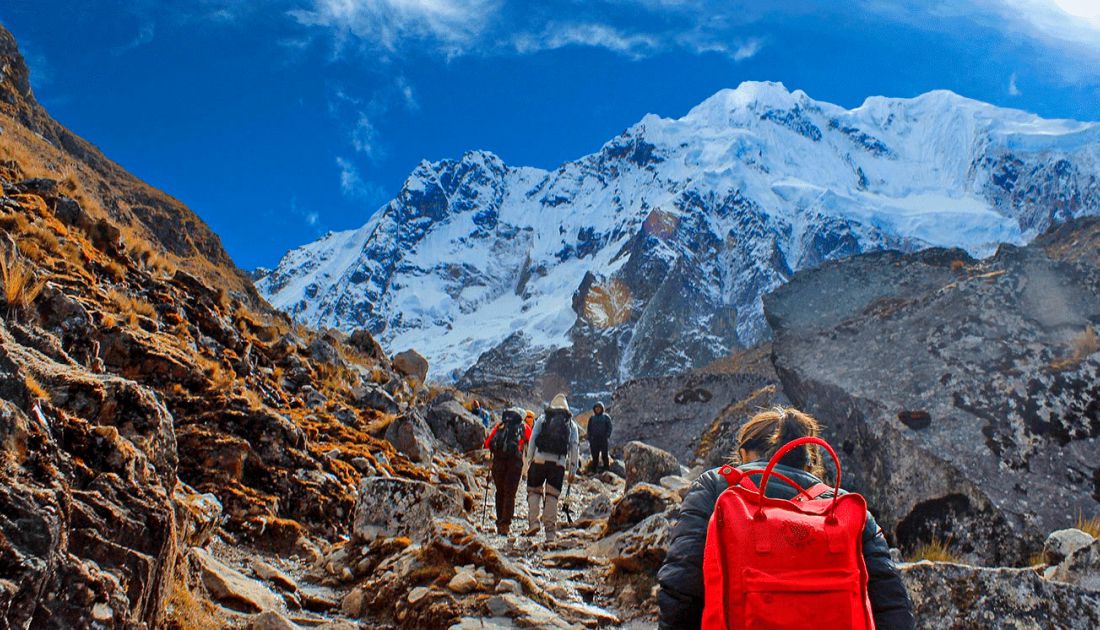
The Salkantay Trek is one of the most impressive hiking routes in Cusco and one of the best-known alternatives to reach Machu Picchu. Along the route, travelers can enjoy high-mountain landscapes, Humantay Lake, the imposing Salkantay snow-capped mountain, cloud forest areas, coffee plantations, and campsites surrounded by nature.
This hike can be done in different options, from shorter 3 or 4-day routes to the classic 5-day and 4-night version. It is a recommended experience for travelers looking for adventure, contact with nature, and a different way to reach Machu Picchu.
What is the Salkantay Trek and why is it one of the best routes to Machu Picchu?
The Salkantay Trek is a trekking route that connects Andean landscapes and tropical areas before reaching Machu Picchu. It is an excellent alternative to the Inca Trail, especially for those who want a challenging hike with varied landscapes and close-up views of the Salkantay snow-capped mountain.
The Salkantay snow-capped mountain reaches approximately 6,271 meters above sea level and is considered one of the most important sacred mountains in the Andean worldview. During the route, the highest point of the hike is located at the Salkantay Pass, at around 4,630 meters above sea level.
What makes the Salkantay Trek special compared to other hikes in Cusco
What makes the Salkantay Trek special is the variety of landscapes you can experience in just a few days. The route allows travelers to go from snow-capped mountains and turquoise lakes to cloud forests, waterfalls, rivers, and warmer climate areas.
One of the main highlights is Humantay Lake, located at the foot of the snow-capped mountain of the same name. Another important highlight is the Salkantay Pass, the highest and most demanding section of the route, from where travelers can admire impressive views of the mountain.
What type of traveler is this route recommended for?
This route is recommended for travelers who enjoy adventure, nature, and multi-day hikes. It is ideal for people with good physical condition, those used to hiking at high altitude, or travelers willing to prepare before the trip.
Where is the Salkantay snow-capped mountain located?
The Salkantay snow-capped mountain is located in the Cusco region, within the Vilcabamba mountain range. It is one of the most representative mountains in southern Peru and one of the main attractions for those who take trekking routes toward Machu Picchu.
Location of the Apu Salkantay in the Cusco region
The Apu Salkantay is located between the provinces of Anta and La Convención, in a transition zone between the Andes and the cloud forest. Its presence dominates much of the landscape during the hike and is an important part of the cultural identity of the route.
Altitude, landscape, and spiritual value in the Andean worldview
The Salkantay snow-capped mountain reaches 6,271 meters above sea level. In the Andean worldview, the Apus are sacred mountains considered protectors of the communities, valleys, and nature. For this reason, Salkantay stands out not only for its natural beauty but also for its spiritual value.
History and meaning of Salkantay
The history of Salkantay is linked to Andean tradition and respect for sacred mountains. Since ancient times, this mountain has been seen as a powerful Apu, associated with protection, water, the fertility of the land, and the balance of nature.
Salkantay as a sacred mountain of the Andes
From Inca times to the present day, Salkantay has been considered a sacred mountain. For many Andean communities, it represents strength, respect, and connection with nature.
Its cultural relationship with Machu Picchu and the Inca world
Due to its location and imposing presence, Salkantay is part of the sacred landscape related to Machu Picchu. The route toward the citadel helps travelers better understand the relationship between mountains, valleys, and the ancient paths that connected different areas of the Andean world.
What is the Salkantay Trek route to Machu Picchu like?
The classic Salkantay Trek usually lasts 5 days and 4 nights. It generally starts with a transfer from Cusco to the area of Mollepata or Challacancha, then continues to Soraypampa, the Salkantay Pass, Chaullay, Lucmabamba, Llactapata, Hidroeléctrica, Aguas Calientes, and finally Machu Picchu.
General route from Soraypampa to Aguas Calientes
The route combines high-mountain areas, glacial landscapes, and cloud forest areas. Depending on the itinerary, the complete hike may vary between approximately 60 and 70 km. Along the way, travelers pass through the Salkantay Pass, cloud forests, agricultural areas, and paths that lead to Aguas Calientes, also known as Machu Picchu Pueblo.
How many days does the Salkantay Trek take?
There are different versions of the Salkantay Trek. The most common ones are 3, 4, and 5 days. The most recommended option for a complete experience is the 5-day route, because it allows travelers to walk at a better pace, acclimatize better, and enjoy the main attractions of the route.
Map and altitudes of the Salkantay Trek
The Salkantay Trek route has important altitude changes. It starts in areas close to 3,800 meters above sea level, reaches its highest point at the Salkantay Pass, approximately 4,630 meters above sea level, and then descends toward warmer areas until reaching Aguas Calientes.
Main points of the route and altitude changes
The main points of the route are Mollepata, Challacancha, Soraypampa, Humantay Lake, Salkantay Pass, Chaullay, Lucmabamba, Llactapata, Hidroeléctrica, and Aguas Calientes. Along the way, the climate changes from cold Andean weather to a temperate and tropical environment.
The Salkantay Pass and the most demanding sections
The Salkantay Pass is the highest section and one of the most demanding parts of the hike. The altitude, cold weather, and physical effort make this day one of the most challenging of the entire route.
Difficulty of the Salkantay Trek
The difficulty of the Salkantay Trek is moderate to high. It is not a technical hike, but it does require physical endurance, good acclimatization, and preparation to walk for several hours a day on different types of terrain.
Recommended physical level for the hike
A moderate or good physical condition is recommended. Along the route, there are long ascents, descents, rocky paths, and long hiking days. Ideally, travelers should prepare with previous hikes, cardiovascular exercise, and at least 2 or 3 days of acclimatization in Cusco.
How difficult is it compared to the Inca Trail?
The Salkantay Trek is usually considered more demanding because of the distance, altitude, and climate changes. The Inca Trail, on the other hand, also has an important physical challenge and stands out for its archaeological sites. The best option will depend on the traveler’s profile, available time, budget, and interests.
Best time to do the Salkantay Trek
The best time to do the Salkantay Trek is during the dry season, especially between April and October. During these months, there are better hiking conditions, clearer skies, and a lower chance of heavy rain.
Dry season and rainy season
The dry season generally runs from April to October. During these months, the days are usually clearer, although the nights at camp can be very cold.
The rainy season runs from November to March. During this period, there is more frequent rainfall, especially in the afternoons. However, the landscapes look greener and there are fewer travelers.
Which months offer the best landscapes and hiking conditions?
May, June, September, and October are usually recommended months because of their better weather conditions. April and November can also be good options, although there is a higher chance of rain.
Weather on the Salkantay Trek
The weather on the Salkantay Trek varies greatly depending on the area of the route. In the high sections, it can be intensely cold, while in the cloud forest the climate becomes more temperate and humid.
Temperatures by area and sudden changes along the route
In areas such as Soraypampa and Humantay Lake, daytime temperatures can range between 10 °C and 18 °C, while at night they may drop below zero. At the Salkantay Pass, the cold and wind are more intense. In areas such as Chaullay or Lucmabamba, the climate is more temperate, with approximate daytime temperatures between 15 °C and 22 °C.
How to prepare for cold, sun, wind, and rain
For the cold, it is important to bring thermal clothing and a warm jacket. For the sun, sunscreen, UV-protection sunglasses, and a cap are recommended. For the wind, a windbreaker jacket is useful. For the rain, bring a rain poncho or waterproof jacket. It is also recommended to bring spare clothes and quick-dry garments.
Classic Salkantay Trek itinerary
This itinerary is a reference for the classic 5-day and 4-night route to Machu Picchu.
Day 1: from Cusco to Soraypampa and hike to Humantay Lake
The journey begins early with a transfer from Cusco to Mollepata or Challacancha. From this point, the hike begins toward Soraypampa, where travelers spend the first night. During the day, the hike to Humantay Lake is also done, one of the most photographed landscapes on the route.
Day 2: crossing the Salkantay Pass and descending toward the cloud forest
This is considered the most demanding day of the trek. Travelers ascend to the Salkantay Pass, the highest point of the route, and then begin the descent toward areas with a more temperate climate. The landscape changes from snow-capped mountains to cloud forests and green valleys.
Day 3: hiking through tropical landscapes and coffee-growing areas
The hike continues through cloud forest areas, where travelers can see rivers, waterfalls, orchids, fruit plantations, and coffee crops. Some itineraries include an experience related to the local coffee process.
Day 4: arrival in Aguas Calientes or Machu Picchu Pueblo
During this day, travelers can visit the area of Llactapata, from where they get their first distant view of Machu Picchu. Then, the route descends toward Hidroeléctrica and continues walking to Aguas Calientes. There is also the option to take a train from Hidroeléctrica, depending on the service booked.
Day 5: visit to Machu Picchu and return
On the last day, travelers visit Machu Picchu. The ascent from Aguas Calientes can be done by bus, with an approximate travel time of 30 minutes. Inside the citadel, the guided visit depends on the circuit assigned on the entrance ticket. Afterward, travelers return to Aguas Calientes to take the train to Ollantaytambo and continue the transfer back to Cusco.
Most impressive places on the Salkantay Trek
During the Salkantay Trek, travelers visit some of the most impressive landscapes in Cusco, from snow-capped mountains to tropical areas near Machu Picchu.
Salkantay snow-capped mountain and high-mountain views
The Salkantay snow-capped mountain is one of the great highlights of the route. Its views from the pass and surrounding areas offer one of the most memorable moments of the trek.
Humantay Lake and its natural surroundings
Humantay Lake stands out for its turquoise color and its location at the foot of snow-capped mountains. It is one of the most visited attractions on the first day of the hike.
Cloud forests, waterfalls, and flora of the cloud forest
As the route descends toward the cloud forest, the landscape changes completely. Cloud forests, waterfalls, rivers, orchids, and tropical vegetation appear along the way. This transition makes the route a very varied experience.
Flora and fauna on the Salkantay route
The route allows travelers to observe different ecosystems, from high-Andean areas to high-jungle zones.
What natural landscapes will you see during the hike?
During the hike, travelers can see snow-capped mountains, lakes, valleys, rivers, cloud forests, crops, and tropical areas. Each section has a different landscape, making the experience dynamic and complete.
Typical animals and plants of the Andes and high jungle
Along the route, travelers may observe birds, hummingbirds, torrent ducks, orchids, bromeliads, and different species typical of the Andes and high jungle. With some luck, it is also possible to see local wildlife in less-traveled areas.
Salkantay Trek vs. Inca Trail
Both routes reach Machu Picchu, but they offer different experiences. The Inca Trail stands out for its archaeological sites and traditional entrance to the citadel. The Salkantay Trek stands out for its natural landscapes, variety of climates, and proximity to the Salkantay snow-capped mountain.
Differences in landscape, physical demand, and experience
The Salkantay Trek is more varied in natural landscapes and is usually more demanding because of the distance and altitude. The Inca Trail has a stronger historical and archaeological component, but it requires limited permits and earlier booking.
Which route to choose according to budget, time, and interests
If you are looking for a route with nature, adventure, and mountain landscapes, the Salkantay Trek is an excellent option. If you prefer a route with more archaeological remains and a traditional arrival at Machu Picchu, the Inca Trail may be more suitable. For those with limited time, the Short Inca Trail is also an alternative.
Do you need a permit to do the Salkantay Trek?
To do the Salkantay Trek, you do not need a special permit as you do for the Inca Trail. However, it is mandatory to have an entrance ticket to Machu Picchu, and this must be booked in advance according to the available circuit.
When should you book in advance?
It is advisable to book in advance during the high season, especially between May and October, and also during holiday periods. It is recommended to secure the booking at least 2 or 3 months in advance, especially if you want a specific circuit in Machu Picchu.
Differences between doing the route independently or with an agency
Doing the route independently requires more planning, knowledge of the trail, proper equipment, food, reservations, and experience in high-altitude hikes. It also means taking responsibility for logistics in case of weather changes or difficulties along the route.
With an agency, the traveler has transportation, a guide, meals, campsites, assistance during the route, entrance tickets, train coordination, and general support throughout the entire experience.
How to get to the starting point of the Salkantay Trek
The route usually starts with a departure from Cusco toward Mollepata, Challacancha, or Soraypampa, depending on the chosen itinerary.
Departure from Cusco and transportation to Soraypampa
The most comfortable option is to take tourist transportation from Cusco, usually included in organized tours. If traveling independently, you can take transportation to Mollepata and then hire a local vehicle to Soraypampa or Challacancha. Times and costs may vary depending on the season, type of transportation, and exact starting point.
What you should know before starting the hike
Before starting the Salkantay Trek, it is important to be acclimatized in Cusco for at least 2 or 3 days. It should also be considered that the hike exceeds 4,600 meters above sea level, so there is a risk of altitude sickness. It is recommended to bring appropriate clothing, trekking shoes, sun protection, waterproof gear, and a light backpack.
What is included in a Salkantay Trek tour?
An organized Salkantay Trek tour may include transportation, a professional guide, meals, camping equipment, entrance tickets, accommodation along the route, return train, bus to Machu Picchu, and assistance during the hike. The exact services depend on the category booked.
Common services in an organized hike
Common services include transportation from Cusco, a bilingual guide, meals during the route, camping equipment, a cook, muleteers or mules for the equipment, a first-aid kit, accommodation according to the category, entrance to Machu Picchu, and return by train from Aguas Calientes or Ollantaytambo.
Differences between basic, standard, and premium options
Basic option
Includes traditional campsites, simple meals, larger groups, and essential services. In some cases, travelers must rent the sleeping bag or trekking poles separately.
Standard option
Includes better-equipped campsites, complete meals, medium-sized groups, a professional guide, and more organized services. It is usually the most popular option because of its balance between price and comfort.
Premium option
Includes more comfortable accommodations, such as domes, glamping, or mountain lodges, better meals, small groups, higher-quality equipment, and additional services such as panoramic train or entrance to hot springs, depending on the program.
What to bring to the Salkantay Trek
To do the Salkantay Trek, it is important to bring only what is necessary and choose suitable clothing for sudden weather changes.
Suitable clothing for trekking through different ecological zones
It is recommended to bring thermal clothing, trekking pants, quick-dry garments, a waterproof jacket, a windbreaker, a hat, gloves, UV-protection sunglasses, sunscreen, a rain poncho, trekking shoes, trekking poles, a reusable water bottle, a headlamp, and basic personal items.
Tips to acclimatize before the Salkantay Trek
Acclimatization is key to enjoying the hike better and reducing the risk of altitude sickness.
How many days should you spend in Cusco before the hike?
It is recommended to spend between 2 and 3 days in Cusco before starting the trek. During this time, travelers can do light activities and avoid intense physical effort.
How to reduce the risk of altitude sickness
To reduce the risk of altitude sickness, it is recommended to rest well, stay hydrated, avoid heavy meals and alcohol before the hike, walk at a moderate pace, and consult a health professional if you have any medical history. Coca tea may help you feel better, although it does not replace proper acclimatization.
Meals and campsites along the route
During the route, meals depend on the type of service booked. In organized tours, meals are usually prepared by cooks specialized in campsite cooking.
What are meals like during the trek?
Meals usually include hot breakfasts, lunches, and dinners. In standard or premium services, meals can be more varied and may include vegetarian options or meals adapted to special diets, upon prior request.
Where do you sleep during the Salkantay Trek?
During the trek, travelers sleep in campsites, domes, rural accommodations, or lodges, depending on the tour category. In Aguas Calientes, travelers usually spend the last night in a hotel before visiting Machu Picchu.
Is the Salkantay Trek recommended for international tourists?
Yes, the Salkantay Trek is highly recommended for international tourists looking for adventure, natural landscapes, and a different way to reach Machu Picchu. It is important for travelers to be well informed about the difficulty, altitude, and necessary preparation.
What foreign travelers value most
Travelers usually value the variety of landscapes, the disconnection, the experience of walking among mountains, the closeness to local culture, and the final arrival at Machu Picchu.
Practical tips to enjoy the experience better
To enjoy the experience better, it is recommended to book in advance, acclimatize in Cusco, bring appropriate clothing, walk at a moderate pace, stay hydrated, and choose an itinerary according to the traveler’s physical level.
Frequently asked questions about the Salkantay Trek
How much does the Salkantay Trek cost?
The price of the Salkantay Trek varies depending on the duration, service category, type of accommodation, return train, and included services. The best option is to request a quote according to the chosen itinerary.
What is the recommended minimum age for the route?
The recommended minimum age is usually from 12 years old, as long as the child has good physical condition, hiking experience, and travels with a responsible adult.
Can the Salkantay Trek be done all year round?
Yes, it can be done during most of the year, but conditions change depending on the season. During the rainy season, the route can be more slippery and demanding.
What happens if it rains during the hike?
If it rains during the hike, the route continues with waterproof gear, as long as conditions are safe. That is why it is important to bring a rain poncho, waterproof jacket, and protection for your backpack.
Is it possible to combine Salkantay with other destinations in Cusco?
Yes, it is possible to combine the Salkantay Trek with other destinations in Cusco, such as the Sacred Valley, Rainbow Mountain, Humantay Lake, Maras, Moray, or the city of Cusco. To do it properly, it is important to organize the travel days in advance.
How to choose the best agency for the Salkantay Trek
Choosing a good agency is key to having a safe, organized, and comfortable experience throughout the entire route.
What aspects to review before booking
Before booking, check that the agency is formally registered, provides clear information about included services, entrance tickets, type of accommodation, meals, group size, return train, and assistance during the route.
Signs of a reliable and traveler-focused service
A reliable service offers clear communication, assistance before and during the trip, professional guides, organized logistics, transparent information, and support in case of changes or unexpected situations.
Book your Salkantay Trek experience to Machu Picchu
The Salkantay Trek is one of the best ways to reach Machu Picchu for travelers looking for adventure, nature, and a route different from the traditional ones.
Tour options according to time, budget, and physical level
According to your needs, you can choose 3, 4, or 5-day routes. The 5-day option is the most complete, while the shorter routes are ideal for travelers with less time available.
Why do this adventure with a specialized local agency?
Doing the Salkantay Trek with a specialized local agency allows travelers to enjoy better organization, constant assistance, and safer logistics. It also helps travelers enjoy the route, the landscapes, and the complete experience to Machu Picchu much better.