Gold Museum of Peru: Pre-Inca Treasures and the World Weapons Collection
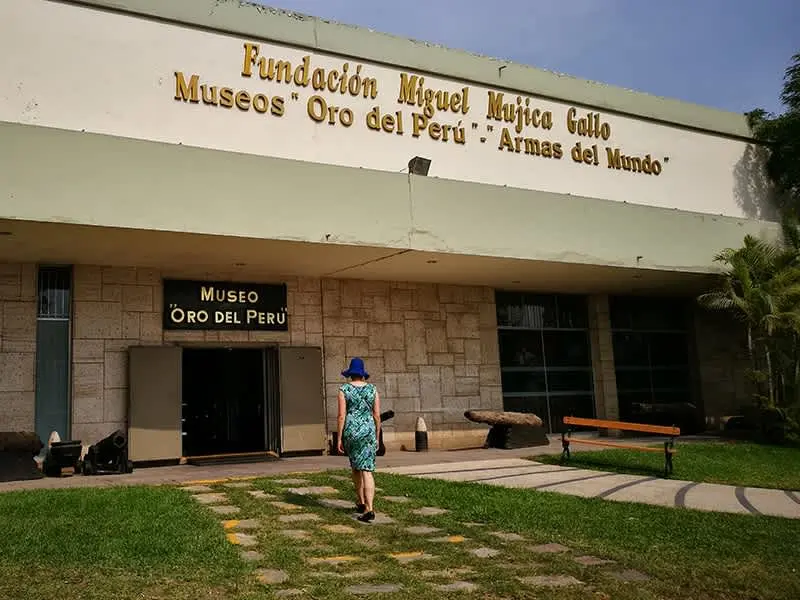
The Gold Museum of Peru is one of the most important cultural spaces in Lima to discover the treasures of the ancient cultures of Peru. This museum houses a valuable collection of gold objects and precious metals crafted by pre-Hispanic civilizations.
Inside its galleries, visitors can appreciate important pieces that demonstrate the technological development achieved by ancient Peruvian peoples, who extracted metals through mining and worked them using advanced techniques of metallurgy and goldsmithing.
Among the most remarkable pieces are funerary masks, jewelry, and ceremonial objects belonging to cultures such as Chimú and Lambayeque. In addition, the museum displays emblematic pieces such as the golden Tumi, as well as an important collection of weapons from around the world.
The Most Important Gold Collection in Lima
Inside the Gold Museum of Peru, visitors can observe important examples of pre-Hispanic art. These pieces demonstrate the level of technological development achieved by ancient cultures of Peru in metalworking.
Ancient inhabitants used advanced techniques of metallurgy and goldsmithing to create ceremonial and ornamental objects. The museum also displays other archaeological objects such as textiles, ceramics, wooden pieces, and lithic objects.
The pieces belong to various pre-Hispanic cultures such as Moche, Chimú, Lambayeque, Frías, and Vicús, among others.
Funerary Masks, Pectorals, and Jewelry from the Chimú and Lambayeque Cultures
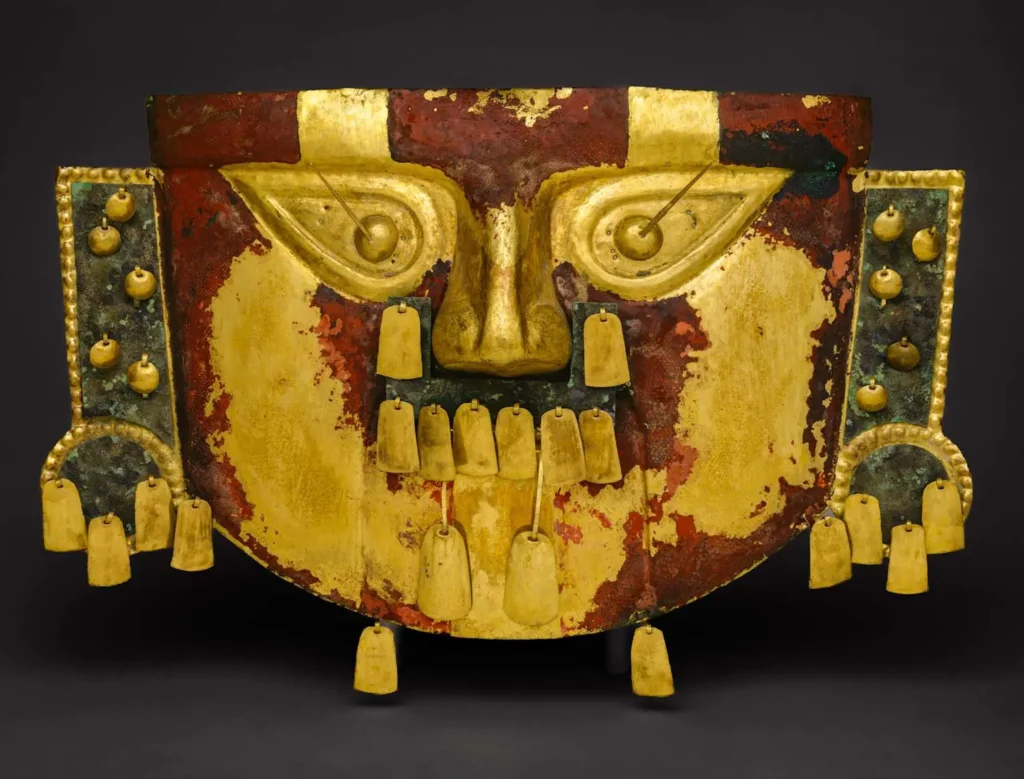
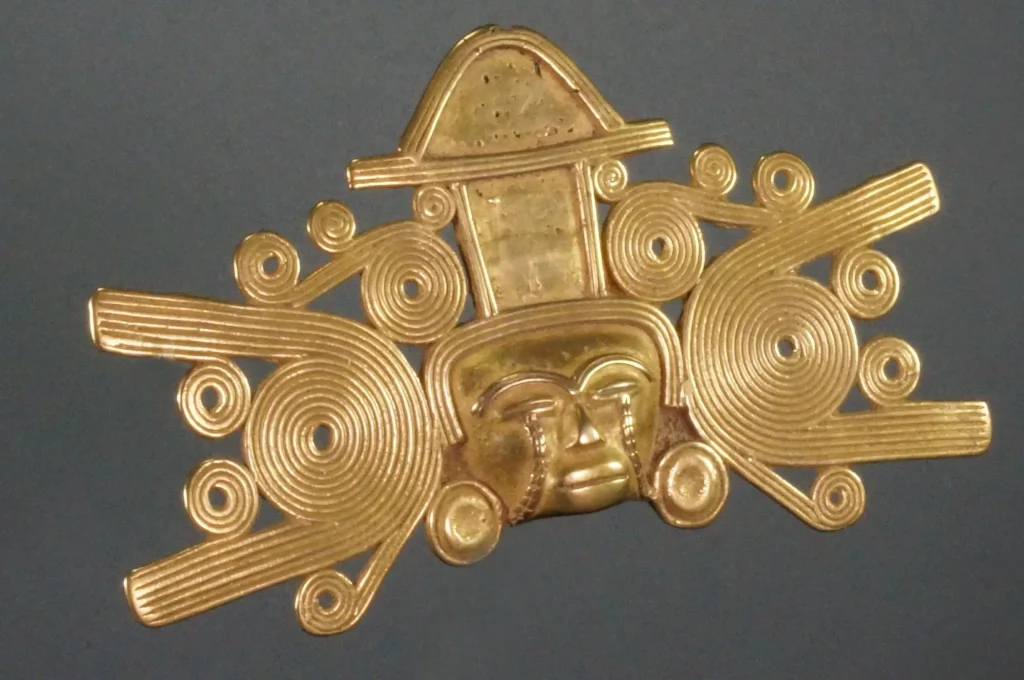
Among the most impressive pieces in the museum are funerary masks and jewelry made of gold, silver, and gilded copper, associated with important burials of the Lambayeque culture.
Archaeological research, such as those carried out at the Chotuna-Chornancap complex, has uncovered funerary treasures composed of masks, necklaces, pectorals, and other ceremonial objects.
These funerary masks feature winged eyes, a characteristic trait of Lambayeque funerary traditions. Researchers have also found necklaces made of metal discs, scepters, and rattles, which were part of the attire of high-ranking individuals.
The Golden Tumi and Its Historical Meaning
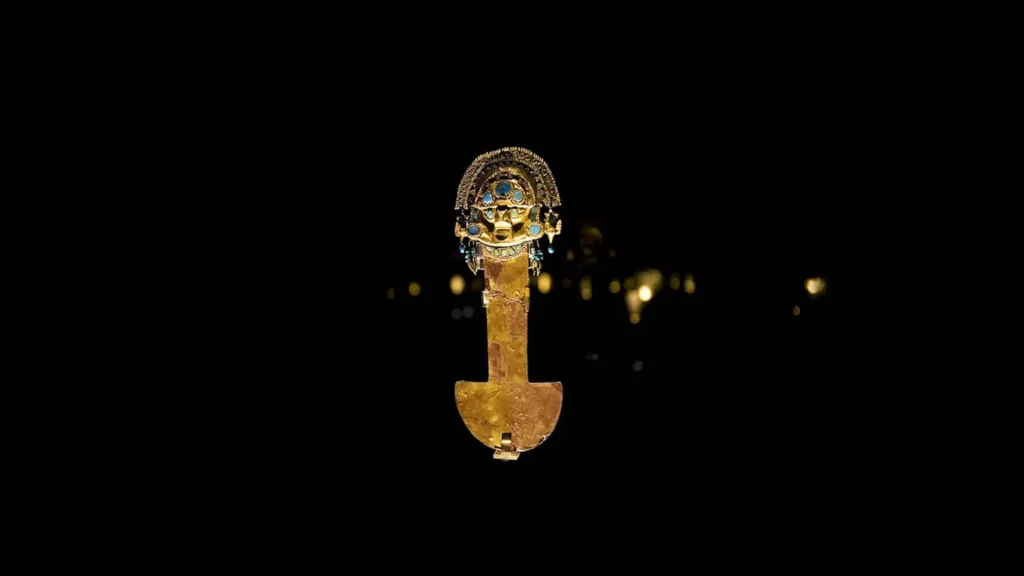
The tumi is one of the most representative symbols of ancient Peru. This ceremonial object was generally made of gold, silver, copper, or bronze.
Its design is characterized by a rectangular or trapezoidal handle and a semicircular blade. The tumi was used by cultures such as Moche, Lambayeque (Sicán), and Chimú.
Although it is often associated with medical procedures, its main function was ceremonial and ritual within the pre-Columbian cultures of the Peruvian coast.
The World Arms Collection
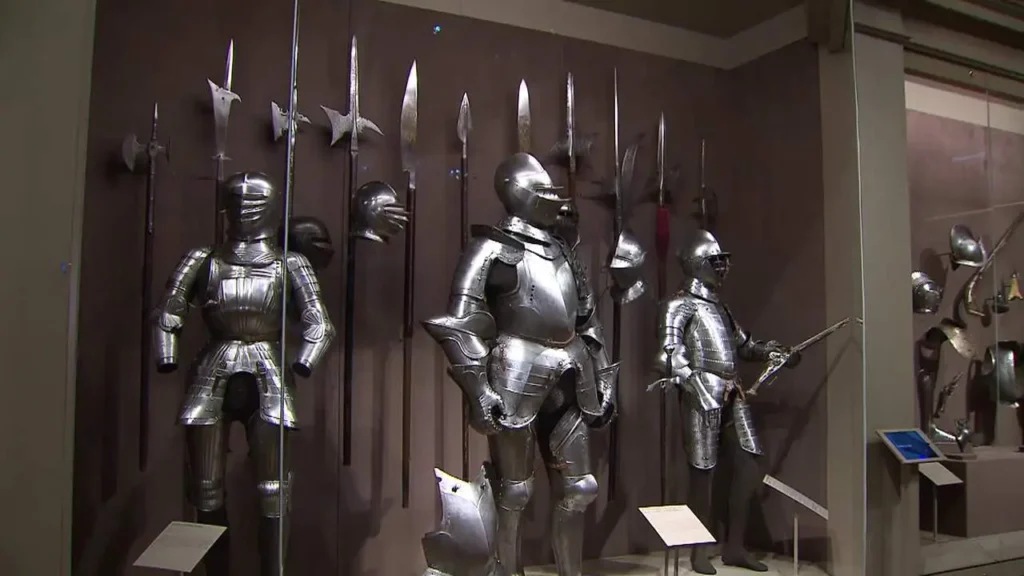
Another of the museum’s most notable sections is the World Arms Collection, which houses an extensive collection of historical weapons from different regions such as America, Europe, and Asia.
This collection includes armor, swords, and firearms used in different historical periods.
Medieval Armor, Swords, and Objects of Historical Figures
Within the collection, visitors can observe medieval steel armor that could weigh between 20 and 30 kilograms.
The museum also displays swords, ceremonial weapons, and objects associated with historical figures. Among them are pieces related to figures such as Napoleon Bonaparte, as well as weapons linked to historical figures from Latin America.
Likewise, visitors can find firearms associated with historical figures such as Ramón Castilla, Andrés Avelino Cáceres, and Pedro II of Brazil.
How to Get to the Gold Museum of Peru?
The Gold Museum of Peru and Weapons of the World is located in the district of Santiago de Surco, in the city of Lima.