Cusco Main Square

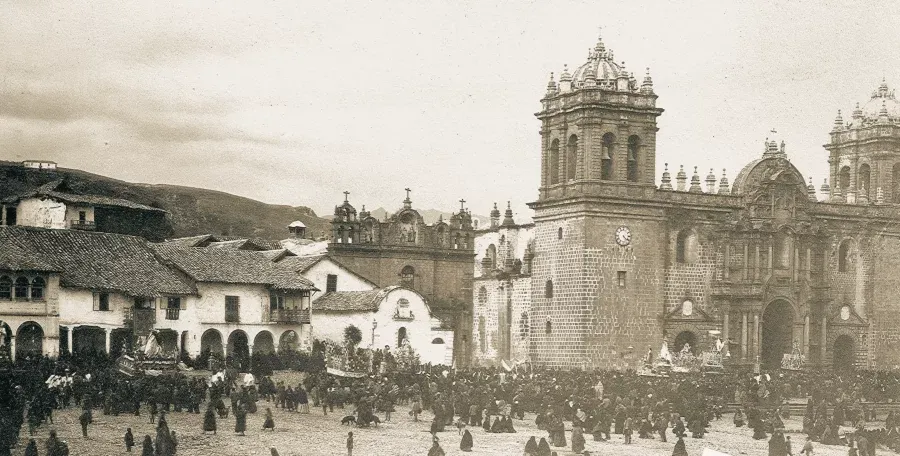
The Plaza de Armas of Cusco is one of the most important squares in Peru and was once the center of the Inca Empire. It witnessed many historical events such as bloodshed, heroic tragedies, and ancient ceremonies. Today, on specific dates, communities gather in the main square to showcase their culture, keeping their traditions alive through reenactments and cultural parades.
History of the Plaza de Armas of Cusco
If we go back thousands of years before the arrival of the first inhabitants, Cusco was known as Lake Morkill. Marine remains have been found, and evidence of this can be seen at the Inca Garcilaso de la Vega Museum. Years later, the lake drained toward the San Jerónimo–Angostura district, which still preserves a humid valley.
The Plaza de Armas of Cusco was formerly called “Huacaypata,” meaning “the place of tears,” as it was the site of many deaths, including events during the rebellion of Túpac Amaru II. It has been the city’s nerve center since ancient times, where major ceremonial events were held and crucial decisions for the empire were made.
Origin of the Name and Controversies
The current name “Plaza de Armas” dates back to the colonial period, when the square was used for military drills and parades. However, its original name, “Huacaypata,” continues to be debated among historians and scholars of Inca culture, with many authors offering different interpretations.
María Rostworowski – “Aucaypata” (place of the warrior), referring to the battles that took place here, including confrontations between the Incas and the Spanish.
Ángeles Vargas – “Huacaypata” (place of weeping), associated with the deaths of heroes and the mourning rituals, particularly carried out by women.
George Squier – “Huacapata” (sacred place), highlighting its importance as a ceremonial site, especially for Inca rituals dedicated to the Sun God.
Pre-Inca Period and the Inca Empire
Before the arrival of the Incas, the area was already an important settlement. With the expansion of the Inca Empire, the square became the epicenter of religious, political, and social life in the city.
Ceremonies such as Inti Raymi and the gathering of the four suyus were held here. During these events, people shared Llaqway Uchu, known today as Chiri Uchu (“cold dish”), where the four regions exchanged products through barter.
Another important event during the Inca period was the procession of mummies. According to their beliefs, mummies belonged to one of the three worlds, known as Uku Pacha, the world of the dead. These processions were led by the high priest under the Inca’s command.
The Conquest and the Colonial Period
The Incas were a remarkable civilization known for their deep spirituality and architectural and artistic achievements. Among their main deities were Wiracocha, the creator god, and Inti, the Sun God, both central figures in their worldview and worshipped through complex rituals.
The Qoricancha, located in the sacred city of Cusco, was the main temple dedicated to the Sun God. It was considered the religious and spiritual center of the Inca Empire. Gold was used extensively to decorate its walls and create animal figures and statues as expressions of devotion.
The arrival of the Spanish in Cusco, led by Francisco Pizarro and accompanied by Father Vicente Valverde, marked the beginning of evangelization and conversion to Catholicism.
From the Spanish and Catholic missionaries’ perspective, the Incas were often described as “pagans” or “idolaters” due to their polytheistic beliefs—terms commonly used at that time.
A defining moment in Inca history occurred when the Spanish stripped the city of its gold and silver, destroying huacas (sacred places) in search of treasure. This led to violent confrontations with the Incas.
Cusco’s Main Square Today
Today, the Main Square is a vibrant and lively place, surrounded by restaurants, shops, and some of the city’s most important landmarks, such as the Cusco Cathedral and the Church of the Society of Jesus. The square remains one of the main attractions that every visitor should see at any time of the year.
In addition, the Main Square hosts a variety of cultural events and festivities throughout the year, including Inti Raymi (the Festival of the Sun) and Holy Week celebrations, which attract large numbers of spectators and participants. These events offer an excellent opportunity to experience Cusco’s rich culture and traditions.

Tourist Attractions in the Main Square
The square is home to several must-see sites during your visit, such as the main Cathedral, the Church of the Society of Jesus, the Church of the Holy Family, the Church of Our Lady of Loreto, and the surrounding arcades. Cultural attractions also include traditional dances, restaurants, hotels, and handicraft shops.
Cusco Cathedral: Exterior and Interior
Cusco Cathedral combines Gothic, Renaissance, and Baroque architectural styles. Inside, you will find works of art such as paintings from the Cusco School and gilded altars. One of the most recognized artworks is “The Last Supper,” painted by Marcos Zapata. Additionally, some tombs can be seen in the basement.

Construction of the Cathedral began in 1560 with the first church, known as El Triunfo. In 1650, a major earthquake struck the city. Interestingly, Inca stone constructions suffered little damage, while the Cathedral’s ribbed vault was affected. Construction lasted approximately 100 years.
Main Nave, Side Chapels, and Main Altar
The main nave is laid out in the shape of a Latin cross, with a vaulted ceiling and a main altar. The side chapels house various religious images and artistic treasures, including the famous painting of The Last Supper featuring a guinea pig as the main dish.
On the main altar, different saints are displayed depending on religious celebrations. For example, during Lent, the Lord of the Earthquakes is placed on the main altar and leads a procession on Holy Monday.
The Cusco Cathedral is flanked by two auxiliary chapels: El Triunfo Church on the right and the Holy Family Church on the left.
Arcades of the Main Square
The arcades are one of the square’s most distinctive features, characterized by stone arches. Among the most notable are:
Portal de Panes
Known for its shops and cafés, this is an ideal place to enjoy a drink while watching daily life go by. The buildings here were constructed over the foundations of the palace of Inca Pachacútec, one of the most important rulers of the Inca Empire. This historically rich site witnessed the arrival of the Spanish conquistadors, and Francisco Pizarro himself took possession of it, turning it into a prison for his enemies.
Over time, the area became known as the “Portal of the Slap.” According to chronicles, Spanish nobleman Benito Suárez de Carbajal slapped the Franciscan friar Orriamún so forcefully that he knocked him to the ground. The incident became part of Cusco’s collective memory and gave the site its name.
Today, the Portal of the Slap is part of Cusco’s historic center and is home to travel agencies, shops, and tourist restaurants.

Portal de Harinas
The name “Harinas” comes from the fact that flour used to be piled against the walls in this area. Today, it is home to tourist restaurants.

Nearby Museums and Art Galleries
Cusco’s Main Square is surrounded by museums and galleries that preserve and showcase the region’s rich history and culture. These institutions offer a detailed look at Cusco’s evolution from pre-Columbian times to the present.
Highlights include the Inca Museum, the Pre-Columbian Art Museum, and Casa Garcilaso.
Historical and Cultural Events in Cusco’s Main Square
The square has been the stage for major historical events, such as the rebellion of Túpac Amaru II, Inti Raymi, and ceremonies from Inca times to modern-day celebrations and parades featuring traditional dances from Cusco’s provinces. It is the perfect place to experience Cusco’s living culture.

What to Do at Cusco’s Main Square
- Explore the Cathedral and surrounding churches
- Visit museums and art galleries
- Enjoy local cuisine at nearby restaurants
- Take part in cultural events and festivals
- Join a walking tour

Weather and Best Time to Visit
Cusco’s climate is generally cool, with sunny days and cold nights. The best time to visit is from April to October during the dry season. The rainy season also has its advantages, as the landscape turns lush and green, offering a different and impressive view of archaeological sites.

How to Get to the Main Square from Cusco Airport
The easiest way to get there is by taxi or private transportation, which takes approximately 20 minutes to reach the city center.
Accommodation and Gastronomy
The area around the Main Square offers a wide variety of accommodation options, including hotels, Airbnbs, hostels, furnished apartments, and dining options for all tastes and budgets.
Hotels, Hostels, and Inns near the Main Square
Around Cusco’s Main Square, you can find hotels ranging from 2 to 5 stars, as well as hostels and budget-friendly accommodations.
Recommended Restaurants and Cafés in the Area
The area features many restaurants showcasing culinary art, including Japanese cuisine and high-quality gastronomy with reinvented traditional Peruvian dishes.

Some recommended cafés near Cusco’s Main Square include:
Jack’s Café: Very popular among tourists and locals for breakfast and brunch, offering pancakes, eggs, sandwiches, and quality coffee. Located on Choquechaca Street.
Café Morena: A cozy spot to enjoy quality Peruvian coffee, pastries, and breakfast. Located on Plateros Street.
Starbucks in Cusco is located near the Main Square. The exact address is Portal de Panes 127, on the second floor of a colonial building that offers a spectacular view of the square. It is a popular spot for both tourists and locals, where visitors can enjoy Starbucks’ signature coffee, beverages, and food while appreciating Cusco’s architecture and historic atmosphere.